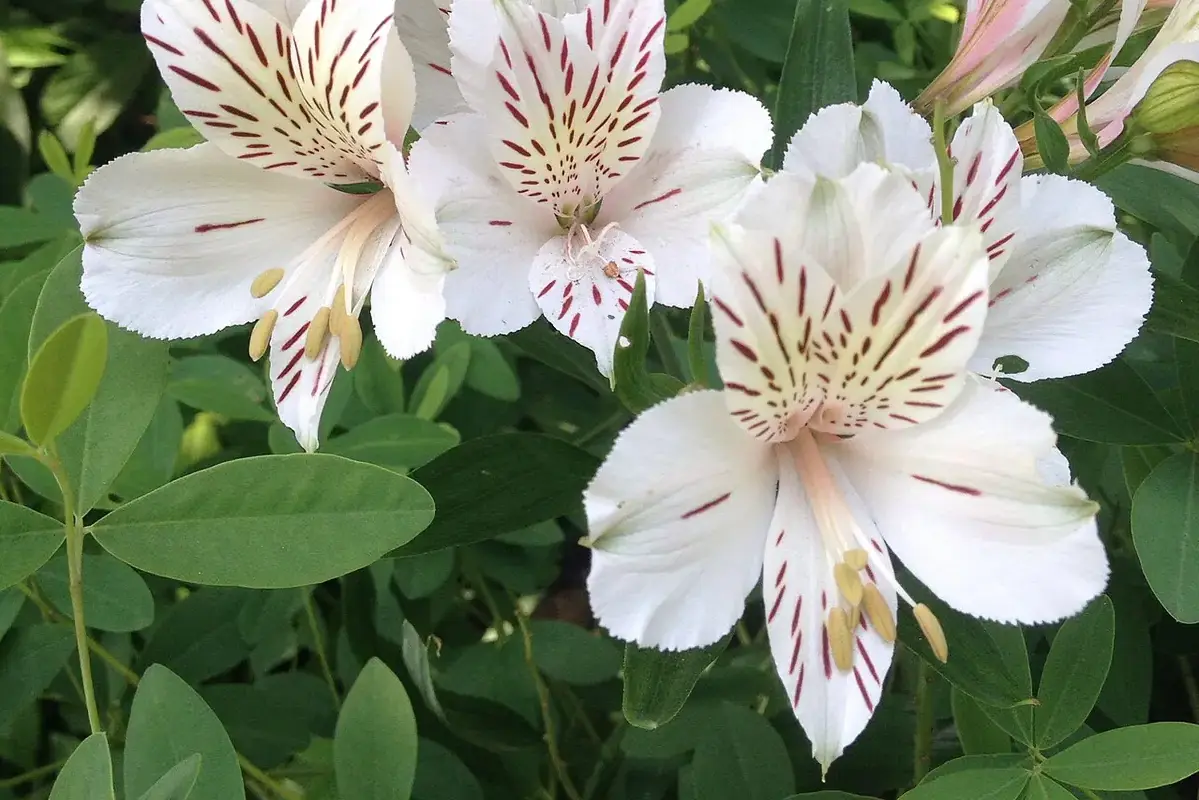
Are the leaves damaged if their apparent underside faces upward on a fresh alstroemeria stem? This guide works alongside the alstroemeria foliage care guide so you can separate the first observation from the next action.
Rotation near the leaf base
A natural twist changes which leaf surface faces upward.
Similar leaves on sound stems
Repeated orientation supports an anatomical explanation rather than one handling accident.
Blade retains its shape
Normal rotation does not require the whole leaf to hang limply.
Crushed tissue or tear
A local injury can occur in addition to the normal twist.
Read the evidence before acting
A measured care sequence
- 01Compare several leaves
Look for where the blade rotates, not only which surface is visible from above.
- 02Trace the main stem
Check for a kink between the vase rim and flower branches while supporting the arrangement.
- 03Remove only what needs removal
Clear submerged or deteriorating leaves without stripping all unusual-looking but healthy foliage.
- 04Record later change
Photograph a representative firm leaf and compare its colour and posture at the next water check.
Keep, adjust or remove?
- Rotation near the leaf baseA natural twist changes which leaf surface faces upward.
- Similar leaves on sound stemsRepeated orientation supports an anatomical explanation rather than one handling accident.
- Blade retains its shapeNormal rotation does not require the whole leaf to hang limply.
- Crushed tissue or tearA local injury can occur in addition to the normal twist.
Learn the normal twist once, then focus subsequent care on genuinely changed colour, firmness and stem integrity. For a related symptom, return to the alstroemeria foliage care guide rather than applying several changes at once.
Research notes
Sources and editorial method
This guide turns general postharvest and preservation advice into visible household checks. Timing and thresholds are starting points: cultivar, harvest stage, transport, room humidity and vase condition can change how a particular flower responds.


