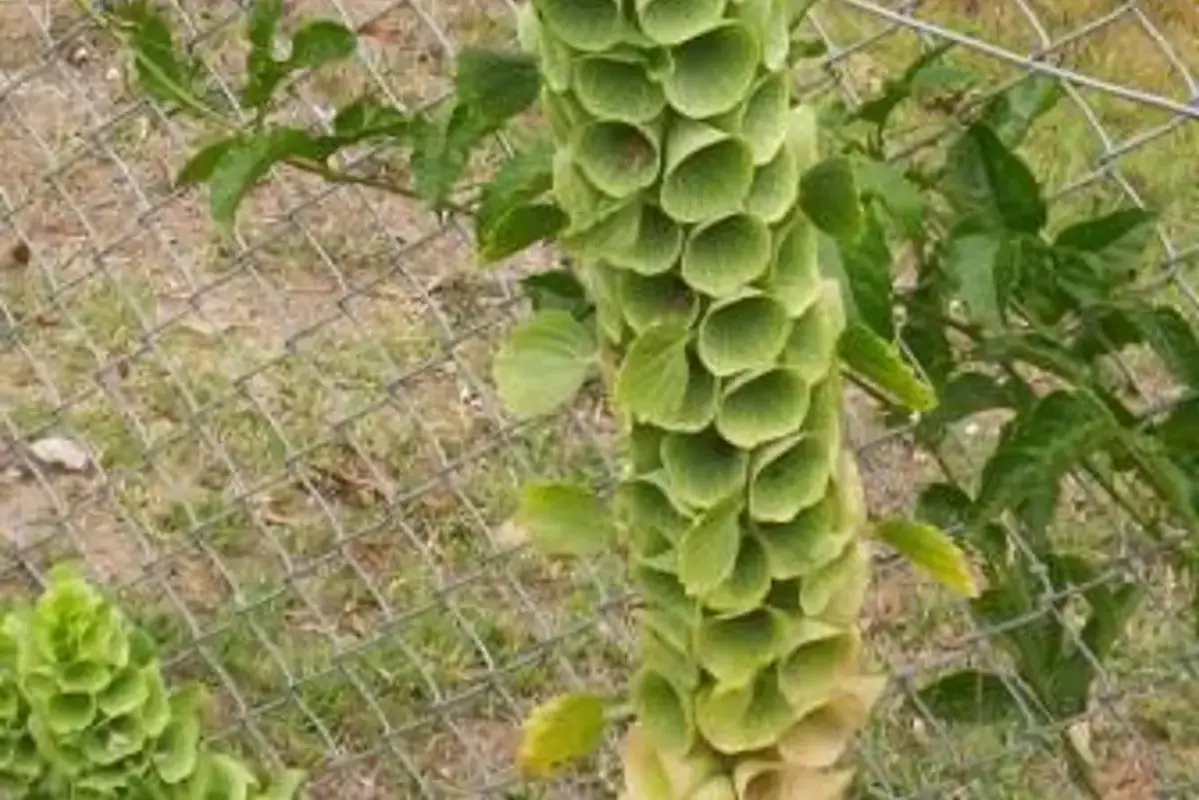
You are waiting for every green bell to turn into a large flower, but the main ornamental feature is already present. In Moluccella laevis, those cups are calyces surrounding much smaller white flowers. This guide works alongside the judging genuinely unopened flower buds so you can separate the first observation from the next action.
Small flower inside a larger cup
The persistent green calyx is not a folded corolla waiting to expand.
Green turning toward beige
Calyces can change colour with maturity; the change does not identify rot by itself.
Firm cup or soft patch
Use tissue condition alongside colour when deciding what remains in a fresh display.
Sharp points along the stalk
Do not slide a bare hand blindly down the stem while stripping leaves.
Read the evidence before acting
A measured care sequence
- 01Inspect a bell from the side
Identify the cup and its small inner flower without opening it with your fingers.
- 02Plan the lower clear section
Measure against the vase so the ornamental cups remain above the water.
- 03Handle with protection
Use suitable gloves and snips where needed; support the stalk rather than crushing the bells in a tight grip.
- 04Review the display texture
At the next water check, compare any beige areas for firmness and spread before removing more material.
Keep, adjust or remove?
- Small flower inside a larger cupThe persistent green calyx is not a folded corolla waiting to expand.
- Green turning toward beigeCalyces can change colour with maturity; the change does not identify rot by itself.
- Firm cup or soft patchUse tissue condition alongside colour when deciding what remains in a fresh display.
- Sharp points along the stalkDo not slide a bare hand blindly down the stem while stripping leaves.
A successful fresh stem may keep its green architecture without producing a dramatic new flower. Preserve that structure while keeping the water-contact area simple and inspectable. For a related symptom, return to the judging genuinely unopened flower buds rather than applying several changes at once.
Research notes
Sources and editorial method
This guide turns general postharvest and preservation advice into visible household checks. Timing and thresholds are starting points: cultivar, harvest stage, transport, room humidity and vase condition can change how a particular flower responds.


