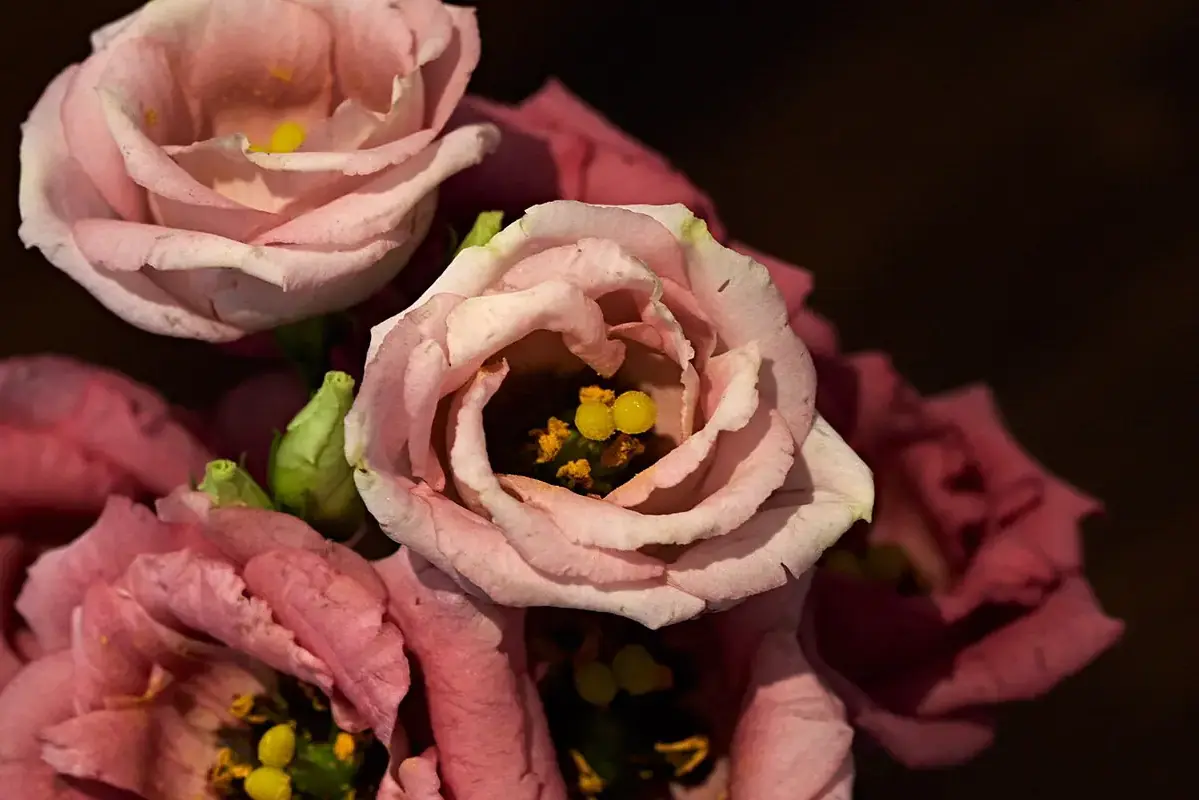
A collapse after a water change is a timing clue, not proof that fresh water harmed the flowers. Check whether the stems were left dry, cut with a dull tool, placed in a hot or cold shock, or returned to a vase that no longer supports their height. This guide works alongside the water-change schedule so you can separate the first observation from the next action.
Immediate or gradual?
A sudden change points to handling or support; a slow change points to water or room conditions.
Clean or crushed?
A ragged cut can reduce water uptake and create a weak point.
Same geometry?
A lower waterline or wider opening can make a refreshed bouquet fall outward.
One or all?
One failing stem is local; a whole-bouquet collapse deserves a shared check.
Read the evidence before acting
A measured care sequence
- 01Stabilise before diagnosing
Place the stems in a clean temporary container with prepared water and support the heads.
- 02Inspect the recut surfaces
Look for pale firm tissue versus crushed, split, dark or dry ends.
- 03Test the vase geometry
Return a few stems to the original vessel and see whether the rim or opening causes the lean.
- 04Wait one quiet hour
Keep the flowers cool and still, then decide whether the full group or only one stem needs correction.
Keep, adjust or remove?
- Immediate or gradual?A sudden change points to handling or support; a slow change points to water or room conditions.
- Clean or crushed?A ragged cut can reduce water uptake and create a weak point.
- Same geometry?A lower waterline or wider opening can make a refreshed bouquet fall outward.
- One or all?One failing stem is local; a whole-bouquet collapse deserves a shared check.
If the bouquet recovers in a test container, the original vase or cut routine was the likely contributor. If it does not, treat the collapse as a condition problem rather than repeating the same recut. For a related symptom, return to the water-change schedule rather than applying several changes at once.
Research notes
Sources and editorial method
This guide turns general postharvest and preservation advice into visible household checks. Timing and thresholds are starting points: cultivar, harvest stage, transport, room humidity and vase condition can change how a particular flower responds.


