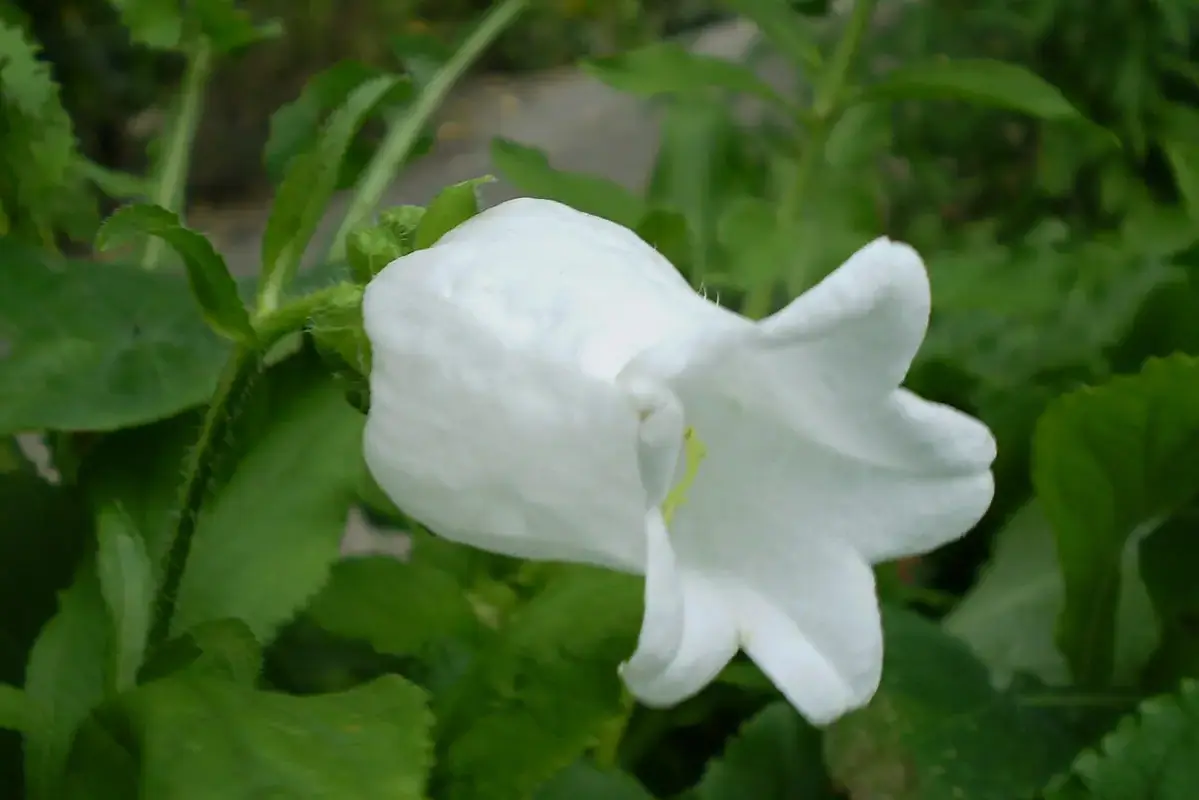
One campanula bell points outward while another hangs lower. The angle alone cannot tell you whether a stem is thirsty, damaged or simply displaying flowers at different orientations. This guide works alongside the interpreting sideways flower heads so you can separate the first observation from the next action.
Bell-shaped corolla
Campanula medium has a hollow bell shape; the opening does not need to point straight up.
Small stalk beneath one bell
A crease or tear here explains a local change better than the main vase water alone.
One flower versus the entire spray
Several soft flowers and limp leaves suggest a broader loss of firmness.
Change since unpacking
A stable angle is different from a newly collapsed flower after sleeve removal.
Read the evidence before acting
A measured care sequence
- 01Look without lifting the bells
Turn the vessel or inspect from the side rather than using a finger to push each flower upright.
- 02Trace the affected stalklet
Find whether the bend is in the small flower stalk or the main stem.
- 03Make the matching correction
Remove a broken bell locally; for generalized limpness, restore clean water contact and evaluate the firm base.
- 04Compare after a quiet rest
Use the same flowers as references and avoid tying or wiring their soft joints into a preferred angle.
Keep, adjust or remove?
- Bell-shaped corollaCampanula medium has a hollow bell shape; the opening does not need to point straight up.
- Small stalk beneath one bellA crease or tear here explains a local change better than the main vase water alone.
- One flower versus the entire spraySeveral soft flowers and limp leaves suggest a broader loss of firmness.
- Change since unpackingA stable angle is different from a newly collapsed flower after sleeve removal.
Keep a sound bell for its natural shape. Escalate the care response only when its tissue, supporting joint or wider stem pattern supplies a reason. For a related symptom, return to the interpreting sideways flower heads rather than applying several changes at once.
Research notes
Sources and editorial method
This guide turns general postharvest and preservation advice into visible household checks. Timing and thresholds are starting points: cultivar, harvest stage, transport, room humidity and vase condition can change how a particular flower responds.


