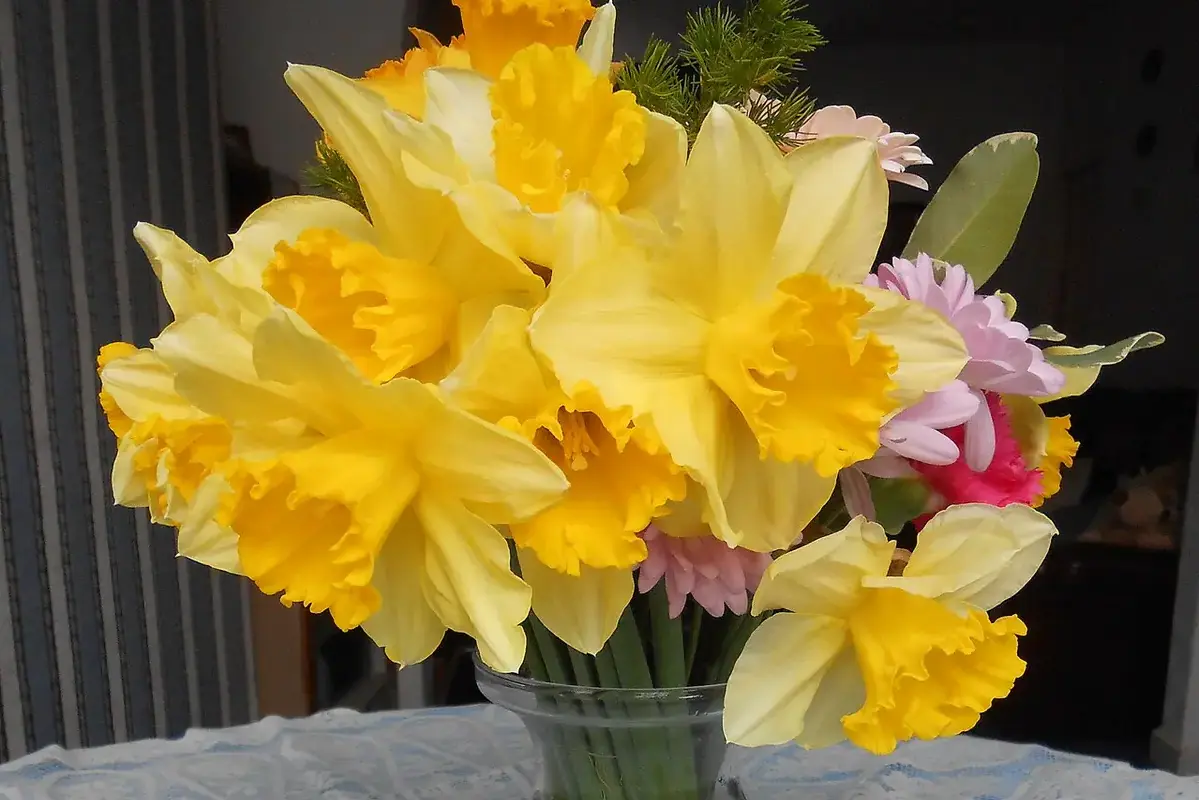
Can you refresh water in a fragile arrangement without pulling every stem out and losing its shape? This guide works alongside the water-change schedule so you can separate the first observation from the next action.
Base and surrounding surface
A slipping vase turns a gentle water change into a stem and glass hazard.
Cloud, smell or floating debris
Bad water is a reason for a complete wash, not endless topping up.
Heads shifting as water leaves
Movement shows that the arrangement needs temporary support or a slower removal rate.
Film at the lower glass
A clear water change cannot replace cleaning when residue remains attached.
Read the evidence before acting
A measured care sequence
- 01Prepare first
Set clean water, a catch bowl and a stable surface beside the vase before touching the arrangement.
- 02Support the stems
Use a clean loose handhold above the waterline; never pull on a single fragile stem.
- 03Exchange slowly
Remove old water in small amounts and add the new solution down the glass wall, not over flower faces.
- 04Decide whether to lift
If smell, film or soft bases remain, stop the in-place method and complete a full wash in a temporary vase.
Keep, adjust or remove?
- Base and surrounding surfaceA slipping vase turns a gentle water change into a stem and glass hazard.
- Cloud, smell or floating debrisBad water is a reason for a complete wash, not endless topping up.
- Heads shifting as water leavesMovement shows that the arrangement needs temporary support or a slower removal rate.
- Film at the lower glassA clear water change cannot replace cleaning when residue remains attached.
Keep the arrangement in place only when the glass and stems are sound; otherwise make the safer full reset. For a related symptom, return to the water-change schedule rather than applying several changes at once.
Research notes
Sources and editorial method
This guide turns general postharvest and preservation advice into visible household checks. Timing and thresholds are starting points: cultivar, harvest stage, transport, room humidity and vase condition can change how a particular flower responds.