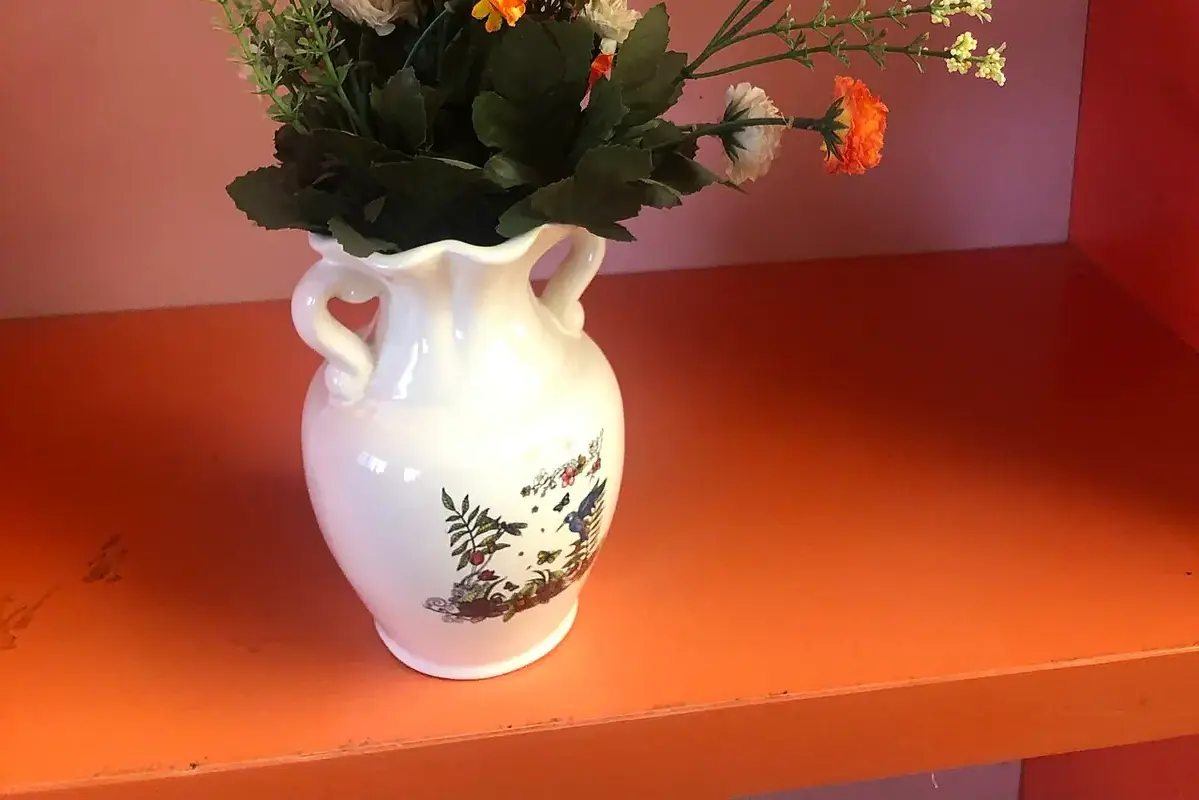
What can a crowded waterline hide when the bouquet still looks upright from above? This guide works alongside the water level by stem type so you can separate the first observation from the next action.
Bases touching or crossing tightly
Contact points stay wet and are harder to inspect for softening.
Leaf tissue at or below the line
Leaves can decay before the flower heads show stress.
Film behind the group
A clean front panel does not prove the hidden back is clean.
Line covers more stem than planned
Evaporation and top-ups can turn a moderate setup into a submerged foliage zone.
Read the evidence before acting
A measured care sequence
- 01Mark the level
Use a removable mark on the glass before touching stems so you can distinguish uptake from an accidental overfill.
- 02Inspect by window
Turn the vase slowly and look between stems at the front, back and sides of the waterline.
- 03Make one correction
Remove submerged foliage or isolate a failing stem; avoid several untracked changes at once.
- 04Refill deliberately
Add measured clean solution only to the safe level and check again after the stems settle.
Keep, adjust or remove?
- Bases touching or crossing tightlyContact points stay wet and are harder to inspect for softening.
- Leaf tissue at or below the lineLeaves can decay before the flower heads show stress.
- Film behind the groupA clean front panel does not prove the hidden back is clean.
- Line covers more stem than plannedEvaporation and top-ups can turn a moderate setup into a submerged foliage zone.
Keep the arrangement when the hidden bases are clean and firm; open or split it when crowding prevents honest inspection. For a related symptom, return to the water level by stem type rather than applying several changes at once.
Research notes
Sources and editorial method
This guide turns general postharvest and preservation advice into visible household checks. Timing and thresholds are starting points: cultivar, harvest stage, transport, room humidity and vase condition can change how a particular flower responds.