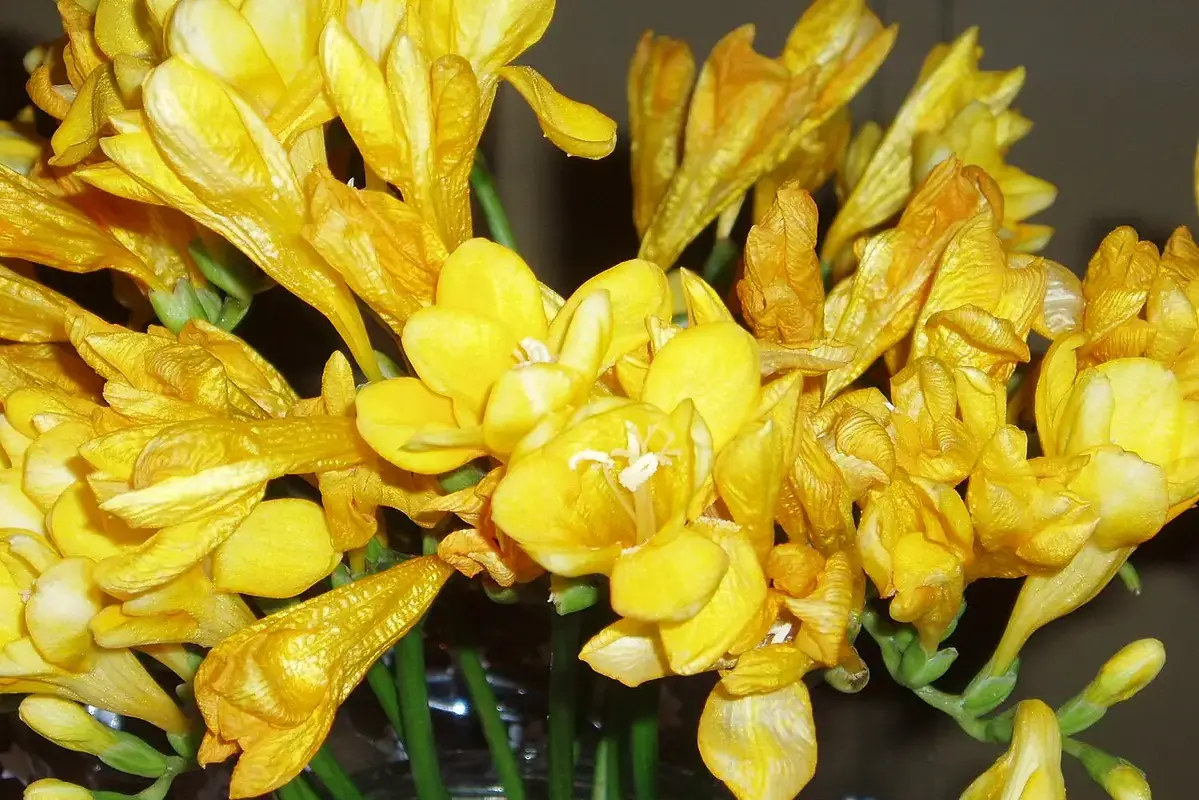
A mixed bouquet becomes easier to place when one flower sets the visual priority. Choose a firm bloom with a clear face, place it slightly off centre and let supporting stems frame it rather than competing at the same height. This guide works alongside the fullness without extra stems so you can separate the first observation from the next action.
Is the anchor firm?
A focal flower carries attention, so a soft neck or spreading petal damage should rule it out.
Is it larger or clearer?
The anchor needs enough visual weight to lead without blocking every supporting bloom.
Can its face be seen?
A small off-centre placement usually gives the bouquet direction and leaves room for the next layer.
Do the companions frame it?
Supporting stems should add rhythm and contrast rather than forming a second competing centre.
Read the evidence before acting
A measured care sequence
- 01Inspect the candidate first
Choose a bloom with a firm base, dry petals and a face that remains attractive from the intended viewing side.
- 02Set the anchor before filling the vase
Place it slightly off centre at a height that leaves room for supporting flowers above and below.
- 03Add contrast in small groups
Use two or three supporting stems at different angles, then rotate the vase before adding more.
- 04Edit the competition
Lower, shorten or remove a nearby large bloom if it pulls attention away from the chosen focal flower.
Keep, adjust or remove?
- Is the anchor firm?A focal flower carries attention, so a soft neck or spreading petal damage should rule it out.
- Is it larger or clearer?The anchor needs enough visual weight to lead without blocking every supporting bloom.
- Can its face be seen?A small off-centre placement usually gives the bouquet direction and leaves room for the next layer.
- Do the companions frame it?Supporting stems should add rhythm and contrast rather than forming a second competing centre.
Keep the anchor visible from the main approach to the bouquet and leave enough space to inspect its stem base tomorrow. If the design only works when every large bloom is pressed together, open the arrangement instead of adding a tighter tie. For a related symptom, return to the fullness without extra stems rather than applying several changes at once.
Research notes
Sources and editorial method
This guide turns general postharvest and preservation advice into visible household checks. Timing and thresholds are starting points: cultivar, harvest stage, transport, room humidity and vase condition can change how a particular flower responds.


