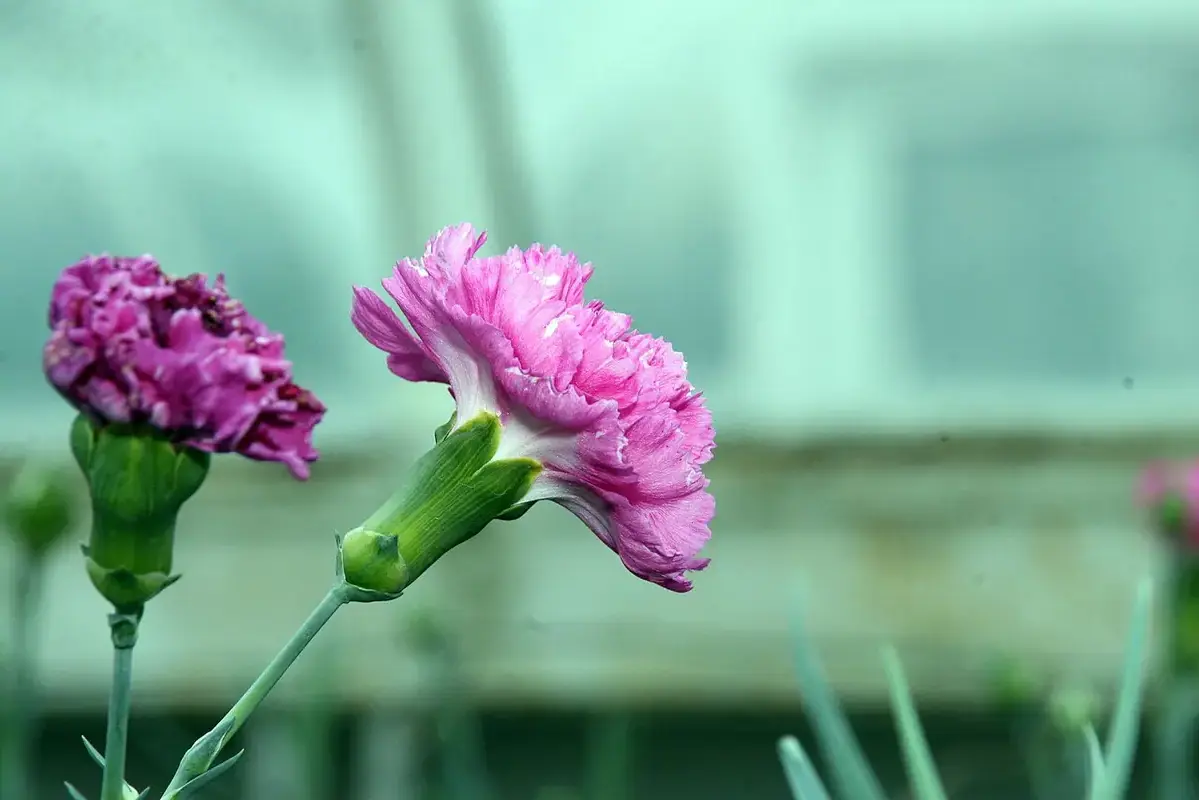
Blue colour on a cut flower may be natural or applied, and the care answer depends on whether colour transfers. Condition dyed stems in a separate clean vessel first, use a protected work surface, and never assume that a blue packet or stem is colourfast in water. This guide works alongside the mixed bouquet separation guide so you can separate the first observation from the next action.
Does the solution change colour?
A visible tint is evidence of transfer, not proof that more flower food is needed.
Does it mark a dry towel?
Surface transfer can stain hands, sleeves and pale petals.
Are nearby flowers pale?
A mixed vase makes any colour movement harder to isolate or correct.
Read the evidence before acting
A measured care sequence
- 01Protect the station
Use a washable tray or disposable liner and keep a white towel nearby as a transfer check.
- 02Make a conservative preparation
Remove submerged foliage and make one clean recut; avoid rubbing the coloured stem.
- 03Test before mixing
Hold the stems in a separate clean vessel and inspect water and towel after the first check.
- 04Set a contained display
Keep dyed flowers alone or with compatible colours, away from porous furniture and light fabrics.
Keep, adjust or remove?
- Does the solution change colour?A visible tint is evidence of transfer, not proof that more flower food is needed.
- Does it mark a dry towel?Surface transfer can stain hands, sleeves and pale petals.
- Are nearby flowers pale?A mixed vase makes any colour movement harder to isolate or correct.
If colour reaches the vase, cloth or companion petals, separate the stems and reset the display. Do not try to bleach a live flower or scrub pigment from its surface. For a related symptom, return to the mixed bouquet separation guide rather than applying several changes at once.
Research notes
Sources and editorial method
This guide turns general postharvest and preservation advice into visible household checks. Timing and thresholds are starting points: cultivar, harvest stage, transport, room humidity and vase condition can change how a particular flower responds.


