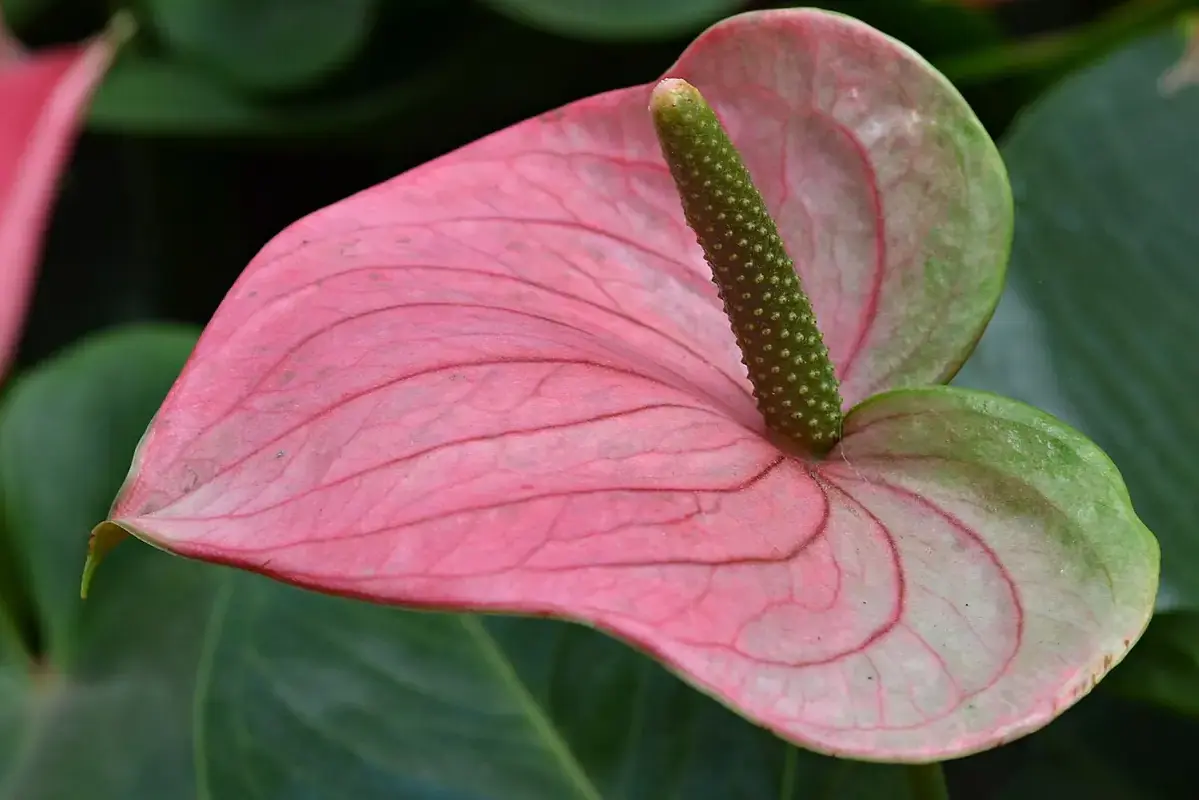
What does a cut anthurium need in a vase? Keep its spathe and spadix dry, prevent the slender stem from rubbing against a sharp rim, use clean water and place it away from direct sun and strong airflow. Judge a blemish by texture and spread, not colour alone. This guide works alongside the smooth-stem flower care guide so you can separate the first observation from the next action.
Surface is dry or water-spotted
Dry marks may be cosmetic; wet translucent tissue needs isolation.
Lower stem is firm or soft
A slender stem can fail even while the spathe still looks bright.
Stem rests on a smooth support
Sharp or tight contact creates a local crease.
Display is calm and indirect
Heat, direct sun and airflow can stress the surface and water balance.
Read the evidence before acting
A measured care sequence
- 01Prepare a clean narrow vessel
Choose support that holds the lower stem while leaving the spathe clear of the rim.
- 02Cut and place promptly
Use a sharp clean tool and move the stem directly into prepared water.
- 03Keep the flower surface dry
Do not mist or wipe the spathe; remove splashes from the table and vase exterior.
- 04Inspect the lower stem
Recheck the base and waterline after the first day, especially if the stem leans.
Keep, adjust or remove?
- Surface is dry or water-spottedDry marks may be cosmetic; wet translucent tissue needs isolation.
- Lower stem is firm or softA slender stem can fail even while the spathe still looks bright.
- Stem rests on a smooth supportSharp or tight contact creates a local crease.
- Display is calm and indirectHeat, direct sun and airflow can stress the surface and water balance.
If the spathe stays dry and the stem remains firm, leave the arrangement alone. Isolate a flower only when softness, odour or a spreading translucent patch changes the decision. For a related symptom, return to the smooth-stem flower care guide rather than applying several changes at once.
Research notes
Sources and editorial method
This guide turns general postharvest and preservation advice into visible household checks. Timing and thresholds are starting points: cultivar, harvest stage, transport, room humidity and vase condition can change how a particular flower responds.


