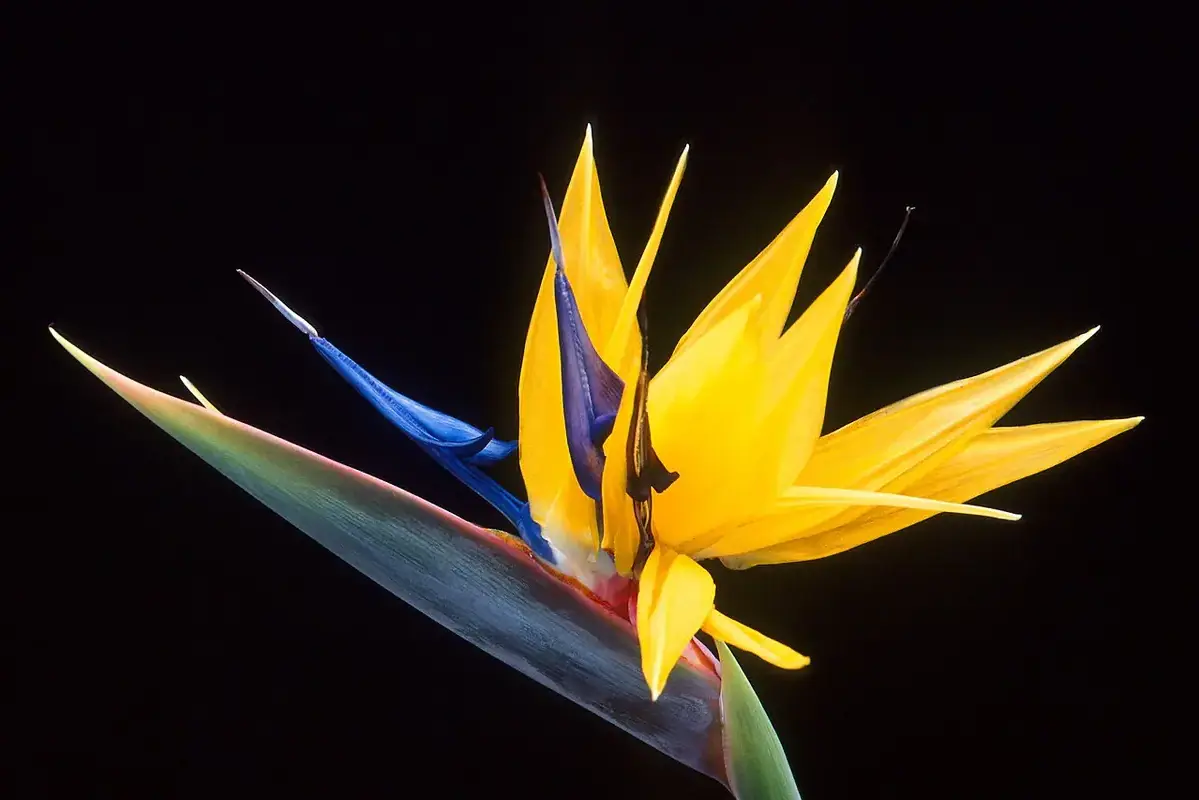
How do you keep a cut bird-of-paradise upright? Use a tall heavy vessel, protect the stem from side pressure, keep leaves and the flower bract dry, and give the arrangement calm indirect light. Do not force a closed bract or straighten a creased neck. This guide works alongside the tall cut-stem support guide so you can separate the first observation from the next action.
Stem sways above the rim
A taller or heavier vessel reduces movement at the support point.
Edges are dry, pressed or wet
Mechanical contact and moisture can leave marks that water cannot reverse.
Cut end is firm and clean
A stable head still depends on a sound water path.
Bract progresses without force
Natural opening is safer than prying the flower structure.
Read the evidence before acting
A measured care sequence
- 01Test the vessel empty
Check the footprint and height with a comparable load before the flower enters.
- 02Prepare the lower stem
Remove submerged foliage and make one clean cut into firm tissue.
- 03Place the bract with clearance
Keep the flower away from the rim, wall, direct sun and moving air.
- 04Wait before grooming
Recheck after a quiet overnight period; do not pull the bract open by hand.
Keep, adjust or remove?
- Stem sways above the rimA taller or heavier vessel reduces movement at the support point.
- Edges are dry, pressed or wetMechanical contact and moisture can leave marks that water cannot reverse.
- Cut end is firm and cleanA stable head still depends on a sound water path.
- Bract progresses without forceNatural opening is safer than prying the flower structure.
A bird-of-paradise is ready for ordinary care when it stands without pressure and the water stays clear. Remove only the stem that becomes soft, odorous or structurally broken. For a related symptom, return to the tall cut-stem support guide rather than applying several changes at once.
Research notes
Sources and editorial method
This guide turns general postharvest and preservation advice into visible household checks. Timing and thresholds are starting points: cultivar, harvest stage, transport, room humidity and vase condition can change how a particular flower responds.


