The middle of a daisy-type chrysanthemum has browned, but the outer rays still look strong. Is the whole stem finished? A disc can change as its small flowers mature, while a wet, mushy or musty centre is a different problem. This guide works alongside the routine cut chrysanthemum care so you can separate the first observation from the next action.
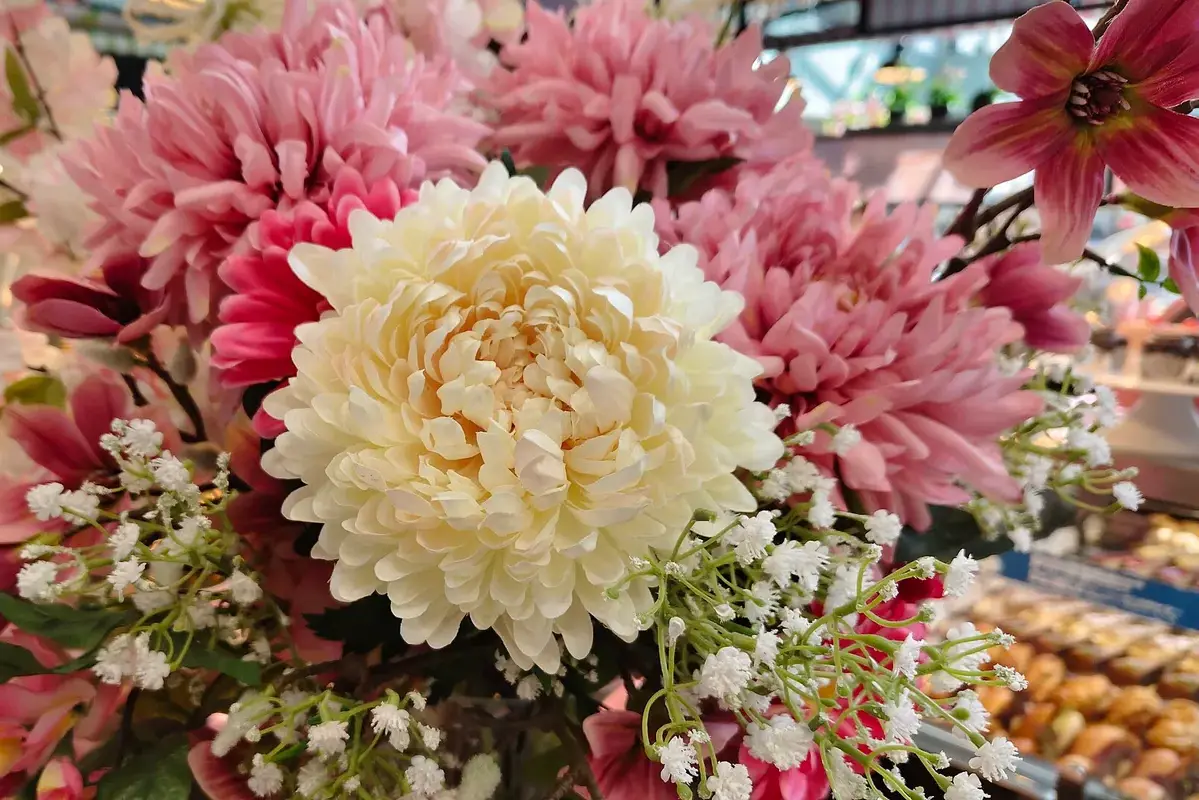
Daisy disc or dense decorative head
The visible centre differs across chrysanthemum varieties; compare like with like.
Dry mature florets or soft wet tissue
A dry centre may be a normal stage; wet breakdown and fuzz are not a useful decorative stage.
Track the next ring of florets
Rapid expansion from a local brown patch supports removing the head.
Check firmness and water smell
A failing base or cloudy water adds evidence that the problem is not confined to the flower face.
Read the evidence before acting
A measured care sequence
- 01Identify a comparable head
Check the cultivar or ask the florist. Photograph the centre in side light without pulling the ray florets apart.
- 02Inspect without wetting
Look at the disc and underside for moisture, soft tissue and any fuzzy growth; do not mist the flower face.
- 03Separate the variables
Keep the cut end in clean water and check the vase and stem base independently of the centre.
- 04Recheck or remove
Compare the same area later. Keep a dry stable disc, but remove wet or expanding deterioration and clean anything it contaminated.
Keep, adjust or remove?
- Daisy disc or dense decorative headThe visible centre differs across chrysanthemum varieties; compare like with like.
- Dry mature florets or soft wet tissueA dry centre may be a normal stage; wet breakdown and fuzz are not a useful decorative stage.
- Track the next ring of floretsRapid expansion from a local brown patch supports removing the head.
- Check firmness and water smellA failing base or cloudy water adds evidence that the problem is not confined to the flower face.
Dry maturation can be a display choice; wet change is a removal decision. The outer petals are only one part of the assessment. For a related symptom, return to the routine cut chrysanthemum care rather than applying several changes at once.
Research notes
Sources and editorial method
This guide turns general postharvest and preservation advice into visible household checks. Timing and thresholds are starting points: cultivar, harvest stage, transport, room humidity and vase condition can change how a particular flower responds.