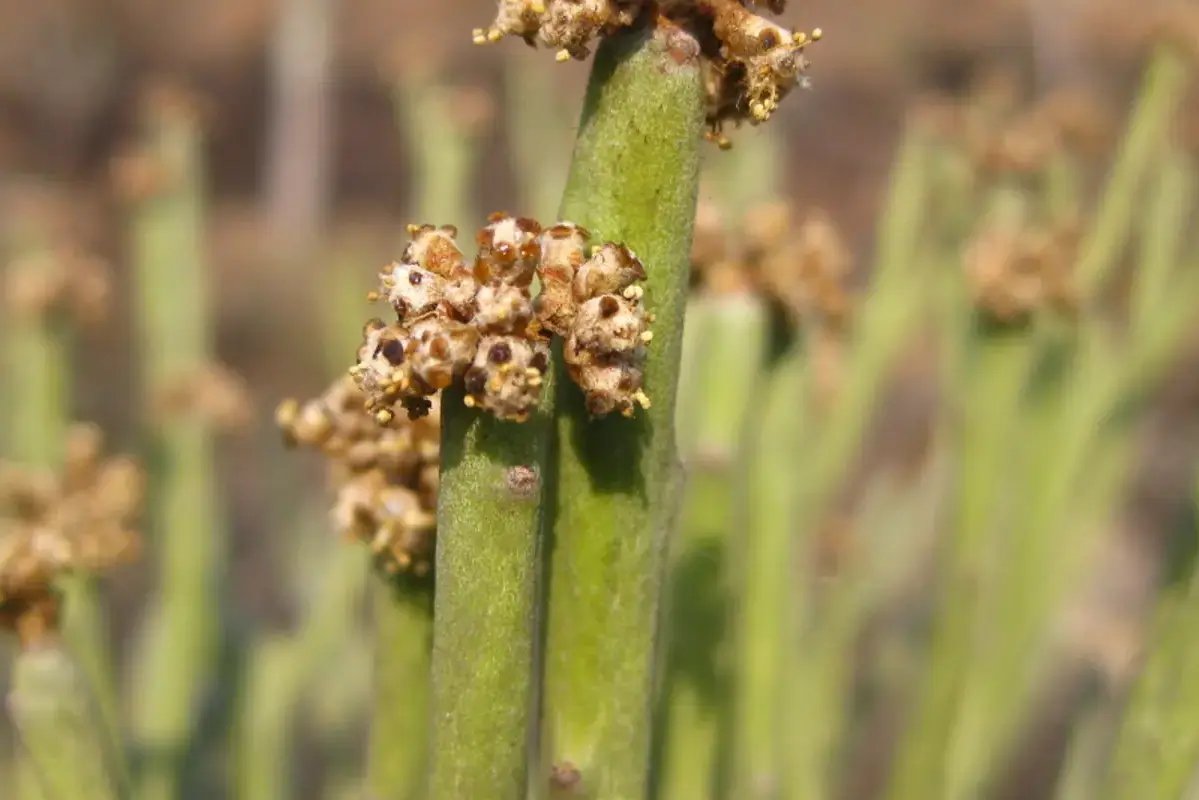
Euphorbia stems can release milky latex that irritates skin and eyes. Treat the sap as a handling hazard before treating the stem as a decorative ingredient: wear suitable gloves, keep hands away from the face, protect the work surface and wash after conditioning. This guide works alongside the first stem-cut guide so you can separate the first observation from the next action.
Is milky latex present?
Visible sap means gloves and containment are needed before more handling.
Did it reach skin or eyes?
Eye exposure is more urgent than a routine vase adjustment.
Will it return to other flowers?
Keep sap-contaminated tools away from food and clean them before reuse.
Read the evidence before acting
A measured care sequence
- 01Set up safely
Use gloves, a washable tray, clean water and a labelled waste towel before making the cut.
- 02Cut and contain
Keep the cut end away from your body and isolate the stem while sap is visible.
- 03Prepare the display
Follow the supplier or florist direction for sealing and keep the plant away from children and pets.
- 04Clean up
Remove gloves carefully, wash hands and clean the tool before any food or household task.
Keep, adjust or remove?
- Is milky latex present?Visible sap means gloves and containment are needed before more handling.
- Did it reach skin or eyes?Eye exposure is more urgent than a routine vase adjustment.
- Will it return to other flowers?Keep sap-contaminated tools away from food and clean them before reuse.
If you cannot identify the Euphorbia or cannot keep sap contained, do not use it in a home display. Contact a poison service or clinician for exposure advice, not a flower-care forum. For a related symptom, return to the first stem-cut guide rather than applying several changes at once.
Research notes
Sources and editorial method
This guide turns general postharvest and preservation advice into visible household checks. Timing and thresholds are starting points: cultivar, harvest stage, transport, room humidity and vase condition can change how a particular flower responds.


