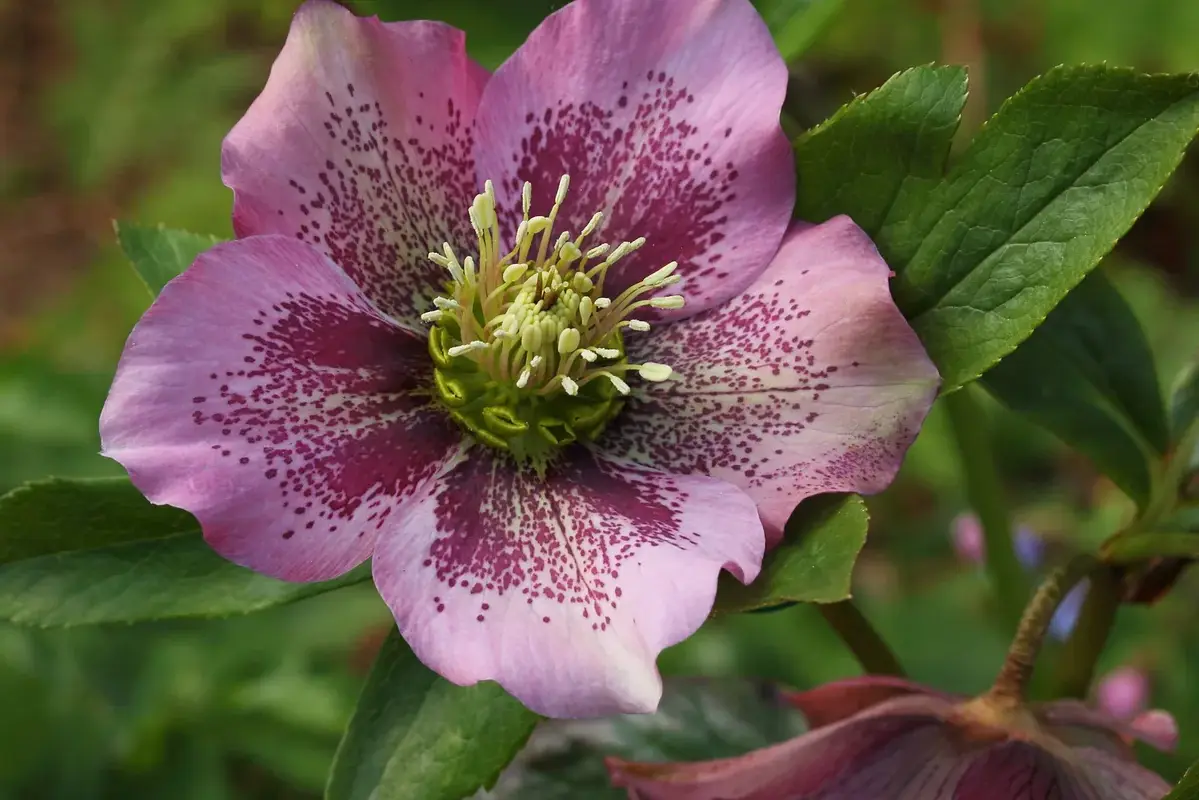
A hellebore flower looks down at the table while its stem feels firm. Should you wire it upright? Many hellebores naturally nod. The important distinction is between the flower position and the condition of the stem, sepals and seed-forming centre. This guide works alongside the distinguishing natural curves from neck damage so you can separate the first observation from the next action.
Compare other flowers on the plant
A repeated downward angle on firm stems may be normal for that cultivar.
Check the centre and outer sepals
A young fresh-looking centre and floppy stem may be less suitable for cutting than a firmer later-stage flower with developing seed structures.
Inspect for a sharp crease or softness
A natural arc differs from a wet, folded or broken junction.
Watch the cut end and uptake
An immersed stem that stays limp after conditioning may be past recovery; orientation alone is not the test.
Read the evidence before acting
A measured care sequence
- 01Check the source
Confirm the cultivar and observe normal flower orientation and maturity on the plant before cutting. Wear gloves if plant sap irritates you.
- 02Select and condition
Take a firm sound stem at a suitable stage, make a clean cut and place it promptly in a clean vessel away from direct heat.
- 03Set a viewing angle
Try a low bowl or a raised display that shows the inside without twisting the flower or pinning the neck.
- 04Compare after a rest
Recheck neck firmness and sepal condition later, using the same flower as a reference rather than straightness as the only criterion.
Keep, adjust or remove?
- Compare other flowers on the plantA repeated downward angle on firm stems may be normal for that cultivar.
- Check the centre and outer sepalsA young fresh-looking centre and floppy stem may be less suitable for cutting than a firmer later-stage flower with developing seed structures.
- Inspect for a sharp crease or softnessA natural arc differs from a wet, folded or broken junction.
- Watch the cut end and uptakeAn immersed stem that stays limp after conditioning may be past recovery; orientation alone is not the test.
Keep the healthy nod and remove only real damage. For future bouquets, harvest stage and a better viewpoint usually matter more than forcing a new shape. For a related symptom, return to the distinguishing natural curves from neck damage rather than applying several changes at once.
Research notes
Sources and editorial method
This guide turns general postharvest and preservation advice into visible household checks. Timing and thresholds are starting points: cultivar, harvest stage, transport, room humidity and vase condition can change how a particular flower responds.