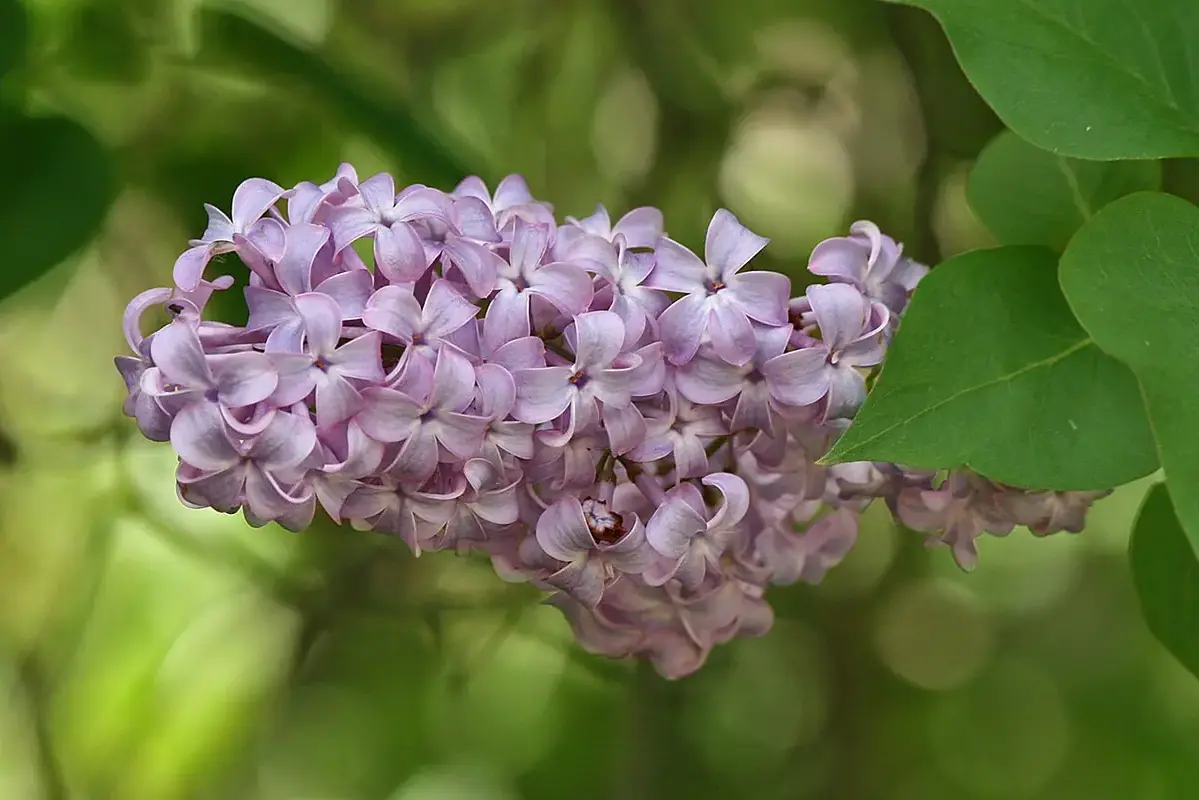
Lilac is a woody cut branch, so the useful preparation is a clean recut and immediate hydration—not smashing the base. A heavy branch also needs a stable vessel and enough room for its foliage to stay above the water. This guide works alongside the first stem-cut guide so you can separate the first observation from the next action.
Is the tissue firm?
A clean firm base can be recut; a soft or sour base should be isolated.
Will the vase carry its weight?
Lilac branches need a broad stable support, not a crowded narrow neck.
Will leaves sit underwater?
Submerged foliage decays and changes the water.
Read the evidence before acting
A measured care sequence
- 01Prepare the vessel first
Fill a clean stable vase and clear a place where the branch will not be knocked.
- 02Recut once
Use sharp secateurs or a knife on firm tissue; do not pound, peel or split the base.
- 03Remove only risky leaves
Keep leaves above the waterline and preserve sound foliage for display.
- 04Review the next day
Check water clarity, base firmness and branch stability before making another small recut.
Keep, adjust or remove?
- Is the tissue firm?A clean firm base can be recut; a soft or sour base should be isolated.
- Will the vase carry its weight?Lilac branches need a broad stable support, not a crowded narrow neck.
- Will leaves sit underwater?Submerged foliage decays and changes the water.
If a lilac branch remains limp despite a clean base and sound water, ask the grower about harvest age or use it as a shorter display. Do not keep pulverising the stem. For a related symptom, return to the first stem-cut guide rather than applying several changes at once.
Research notes
Sources and editorial method
This guide turns general postharvest and preservation advice into visible household checks. Timing and thresholds are starting points: cultivar, harvest stage, transport, room humidity and vase condition can change how a particular flower responds.


