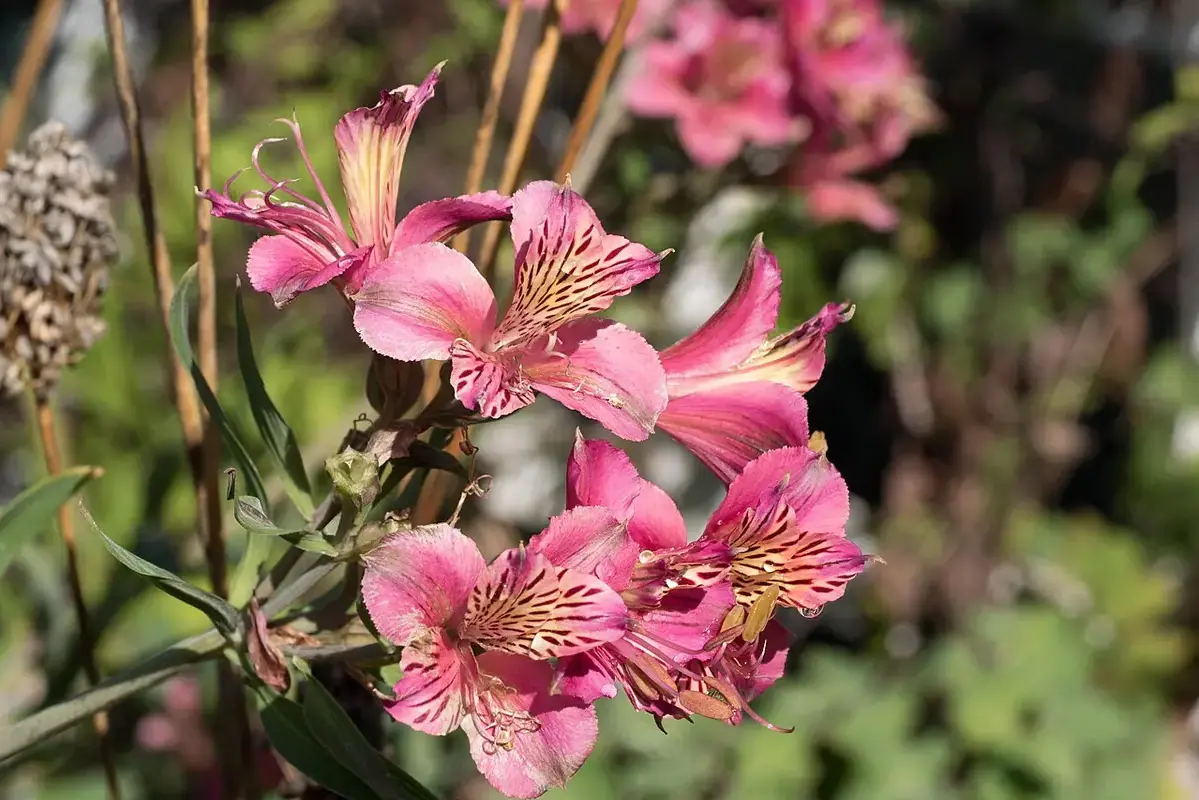
The useful timing window is short: wait until the petals loosen naturally, but work before the anthers look powdery. If the bud is still tight, do nothing. Forcing it open bruises the petals and may leave a flower that never opens evenly. The same principle appears in the first-hour inspection: stabilize and hydrate first; perform delicate grooming only when the flower is ready.
Work over a sheet of paper away from the finished arrangement. If one lily has already shed pollen, separate that stem before handling the others and keep the vase steady. A clean working area matters as much as the tool because one sleeve or fingertip can transfer dry pollen from flower to flower.
The timing window
Use the anther texture as your cue
Bud closed or barely split
Leave it alone. Do not pry petals apart to reach hidden anthers.
Check again laterFlower open, anther still compact
The anther can usually be lifted cleanly before loose pollen touches the petal.
Remove nowAnther looks dusty or sheds when moved
Move the stem away from fabric and other flowers before attempting removal.
Contain firstA clean 60-second removal method
- 01Set the vase on a stable, washable surface
Place plain paper underneath. Keep clothing, table linen and pale upholstery out of the working area.
- 02Use a dry tool
Choose fine tweezers or a folded dry tissue. Wet fingers can smear pollen into a petal instead of containing it.
- 03Steady the stem below the flower
Hold the stem, not the petal edge. Turn the vase only when the base is secure and the other blooms have room.
- 04Pinch the anther, not the filament
Grasp the elongated pollen-bearing tip and lift outward. Do not tug the central pistil; it is the longer structure in the middle of the flower.
- 05Fold and discard the paper
Wrap the removed anthers inward so loose pollen cannot fall back onto the arrangement. Wash the tweezers and your hands before touching pale surfaces.
The pollen-bearing tip. This is the only part you need to lift off.
The slim stalk below the anther. It can remain after the tip is removed.
The single central structure. Do not cut or pull it while removing pollen.
Keep it dry and avoid rubbing. Pressure turns loose grains into an orange smear.
If pollen is already on a petal
Do not rub it with a finger, wet cloth or paper towel. First tilt the flower so loose grains can fall away from the throat, then give the stem a very light tap while holding it over paper. If a few dry grains remain, leave them until the petal is fully dry and try lifting them with the faintest touch of a clean, soft artist's brush. Stop if the petal flexes or marks.
Tilt and tap
Let gravity remove what is not attached. Keep the flower over disposable paper.
Use almost no pressure
A clean soft brush may lift grains. Test at the edge and stop before the petal bends.
Stop cleaning
More rubbing usually enlarges the mark. Turn the bloom for display or remove the single stained flower if necessary.
What about pollen on fabric?
Move the fabric away without folding the stain inward. Do not rub and do not immediately add water. Lift loose dry pollen with sticky tape, then follow the textile's care label or a fabric-specific stain guide. The flower vase should be moved before cleaning so a second anther cannot shed over the same surface.
Check the stem from bottom to top each day
- WaterKeep it clear
Change it on the two-day starting rhythm, sooner if debris or odor appears.
- LeavesRemove only submerged or yellowing foliage
Healthy upper leaves can remain; stripping the stem is not part of pollen control.
- Open flowersRemove newly exposed anthers
One stem may open across several days, so the job is a short daily check rather than a single aggressive session.
- Spent flowersTake them off individually
Support the main stem while removing a faded bloom so unopened buds are not twisted.
The decision in one line
Closed bud: wait. Newly open flower with firm anthers: remove them dry. Dusty anther: contain the stem first. Pollen on a petal: do not rub. That sequence prevents most stains without turning routine lily care into surgery.
Research notes
Sources and editorial method
Vasewise uses university extension and postharvest guidance as the evidence base, then narrows it to actions that can be observed and repeated at home. Flower age, cultivar and time out of water can change the response, so checkpoints matter more than promises.


