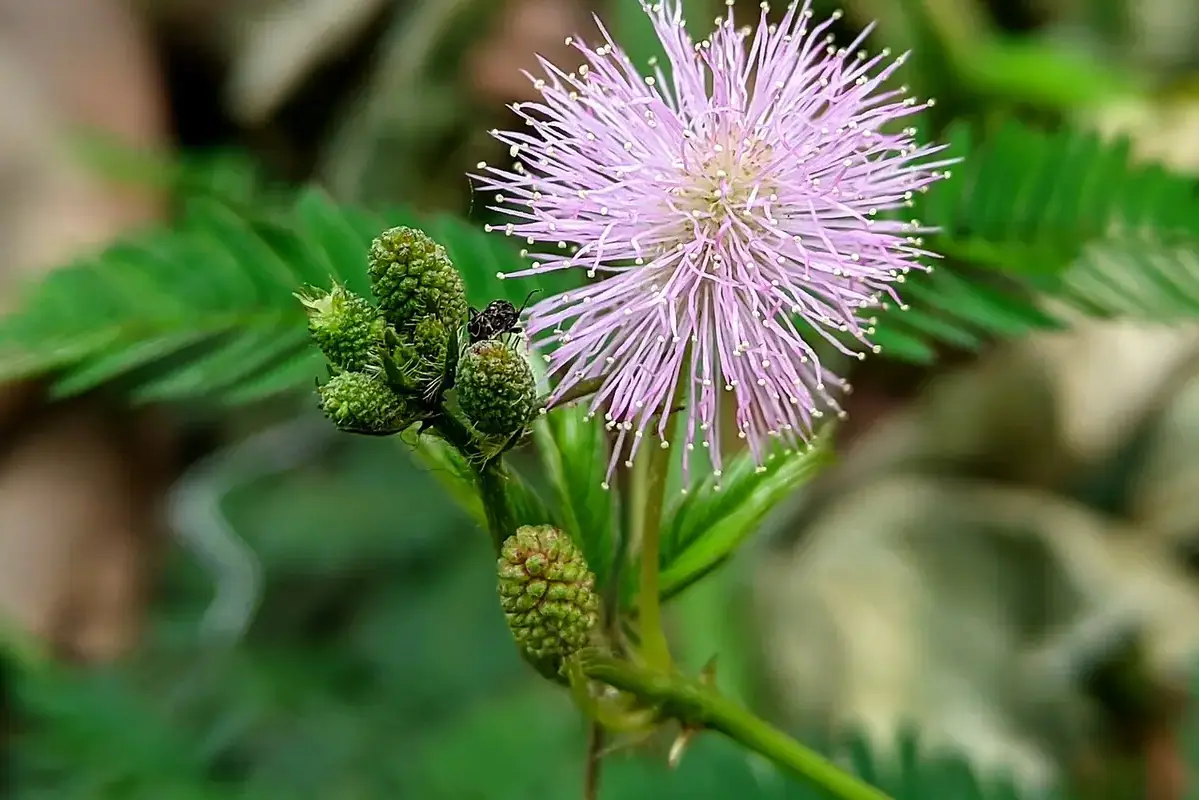
How should you care for cut mimosa? Keep its branching stems in clean water, remove only leaves or side shoots below the waterline, and place the airy flowers away from direct heat and drying drafts. Do not interpret every dry-looking floret as a water failure. This guide works alongside the branching cut-stem care guide so you can separate the first observation from the next action.
Leaves are crisp on the exposed side
Directional dry air can affect fine foliage before the waterline changes.
Lower junctions are clean or crowded
Hidden side shoots and leaves add material to the water.
Fluffy heads are firm or shedding
Flower texture must be read with base firmness and odour.
Vent or heater reaches the branch
Moving warm air increases stress even when the vase is full.
Read the evidence before acting
A measured care sequence
- 01Choose a wide clean vessel
Give branching stems room so leaves do not knot below the waterline.
- 02Make one firm cut
Recut the woody base with a sharp clean tool and place it in water without delay.
- 03Strip the water zone
Remove only leaves and shoots that would be submerged; retain sound upper foliage.
- 04Move from dry air
Use a calm indirect position and compare the branch after several hours.
Keep, adjust or remove?
- Leaves are crisp on the exposed sideDirectional dry air can affect fine foliage before the waterline changes.
- Lower junctions are clean or crowdedHidden side shoots and leaves add material to the water.
- Fluffy heads are firm or sheddingFlower texture must be read with base firmness and odour.
- Vent or heater reaches the branchMoving warm air increases stress even when the vase is full.
Keep the branch while its base is firm and the water neutral, even if a few florets age. Isolate it when softness, sour odour or rapidly changing water joins the shedding. For a related symptom, return to the branching cut-stem care guide rather than applying several changes at once.
Research notes
Sources and editorial method
This guide turns general postharvest and preservation advice into visible household checks. Timing and thresholds are starting points: cultivar, harvest stage, transport, room humidity and vase condition can change how a particular flower responds.


