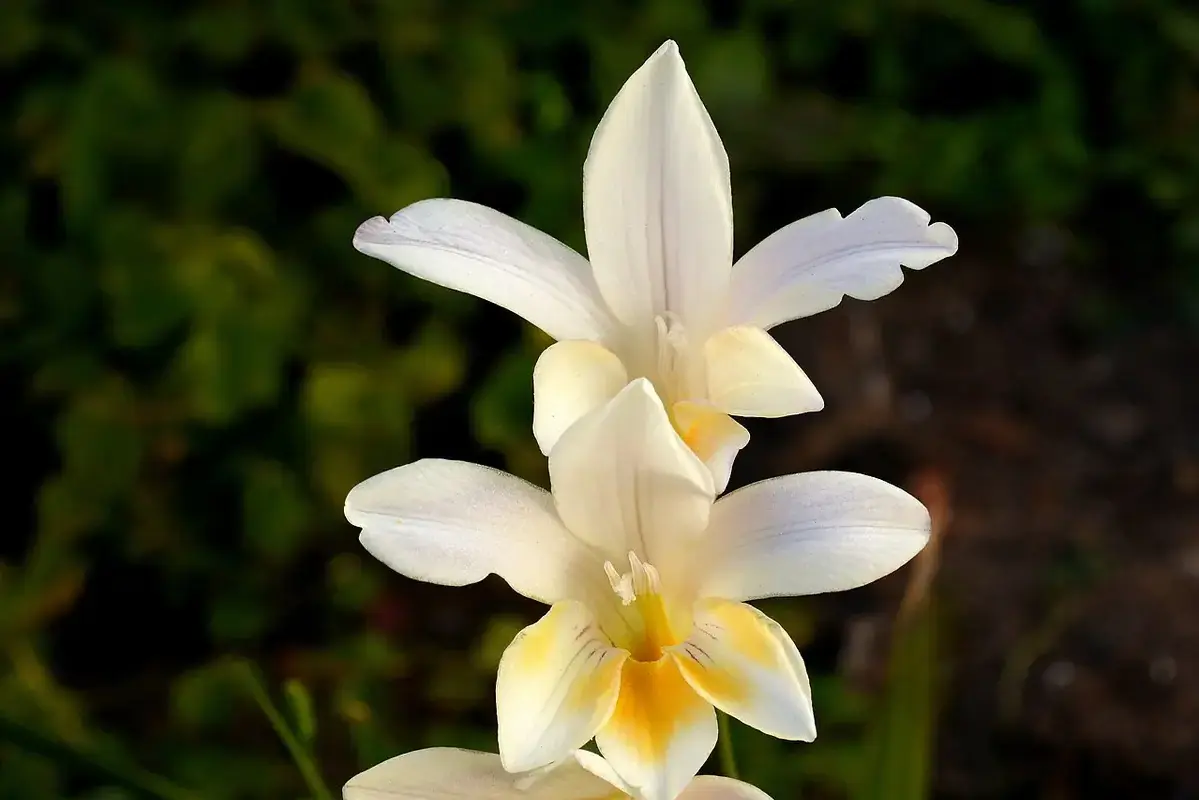
The useful distinction is not “closed versus open”; it is mature versus immature. A mature peony bud has colour, rounded volume and a slight spring under gentle side pressure. Give that bud a clean water pathway using the firm-tissue cut, then leave the petals to move on their own.
If the peonies arrived dry or limp as well as closed, complete the rehydration triage before diagnosing the buds. A dehydrated mature bud may open after recovery; a damaged or prematurely harvested bud will not become mature because the room is warmer.
The two-finger test
Pressure should confirm what colour already suggests
Colour visible, sides softly yielding
Press the widest part once, very lightly. It should feel cushioned rather than rigid and return to shape.
Colour visible, centre still firm
Hydrate it and check the next morning. Do not repeat the squeeze throughout the day.
Small, hard and mostly green
This often indicates an early harvest stage. Good care can prevent further water loss but cannot guarantee opening.

A two-hour opening start—without touching the petals
- 01Wash a tall, narrow vase
Support the flower without crowding it. Mix commercial flower food at its label rate before the stem is cut.
- 02Remove the lower leaves
Keep foliage above the waterline. Peonies can carry large leaves, so removing submerged and damaged ones reduces unnecessary water loss without stripping the whole stem.
- 03Recut 2–3 cm to a clean cross-section
Use a sharp knife or bypass snips. If the base is dark, split or slippery, cut higher until the tissue is firm.
- 04Condition in warm prepared water
Use the warm range in the water-temperature guide—approximately 38–40°C for the first drink, not hot tap water by feel. Move the vase to a calm room after filling.
- 05Leave it alone for two hours
Keep the bloom upright in indirect light. Do not roll the bud, blow into it or peel back an outer petal while the stem is rehydrating.
If the outside feels sticky
Peony buds naturally produce sugary nectar, which is also why ants visit them. Stickiness alone does not mean the petals are glued shut. If clean mature buds have surface nectar or a few ants, hold only the flower head under a very gentle stream of room-temperature water for several seconds, then turn it downward and let it drain. Keep the vase solution and cut stem out of the sink.
What the next 24 hours should tell you
Stem and neck should be firm
The bud may still look closed. Confirm that the water remains clear and the flower is no longer limp.
Outer petals may separate slightly
A mature bud often gains volume or shows a looser seam. Keep the room stable rather than moving it into direct sun.
Choose patience or a lower display
If a coloured, soft bud is healthy but unchanged, give it another day. If it darkens, softens unevenly or smells musty, isolate it.
Four reasons a peony stays closed
When to stop trying
Stop if the bud develops a sour or musty smell, translucent wet patches, a collapsing neck or grey growth. A sound but stubborn bud can stay in a separate vase for up to 48 hours after conditioning; beyond that, repeated warm-water changes and manual petal opening add damage without changing its harvest maturity.
Research notes
Sources and editorial method
These guides begin with university extension and postharvest recommendations, then convert them into observable home-care decisions. Timings are working ranges: cultivar, harvest maturity, transport and room conditions can change how a particular stem responds.


