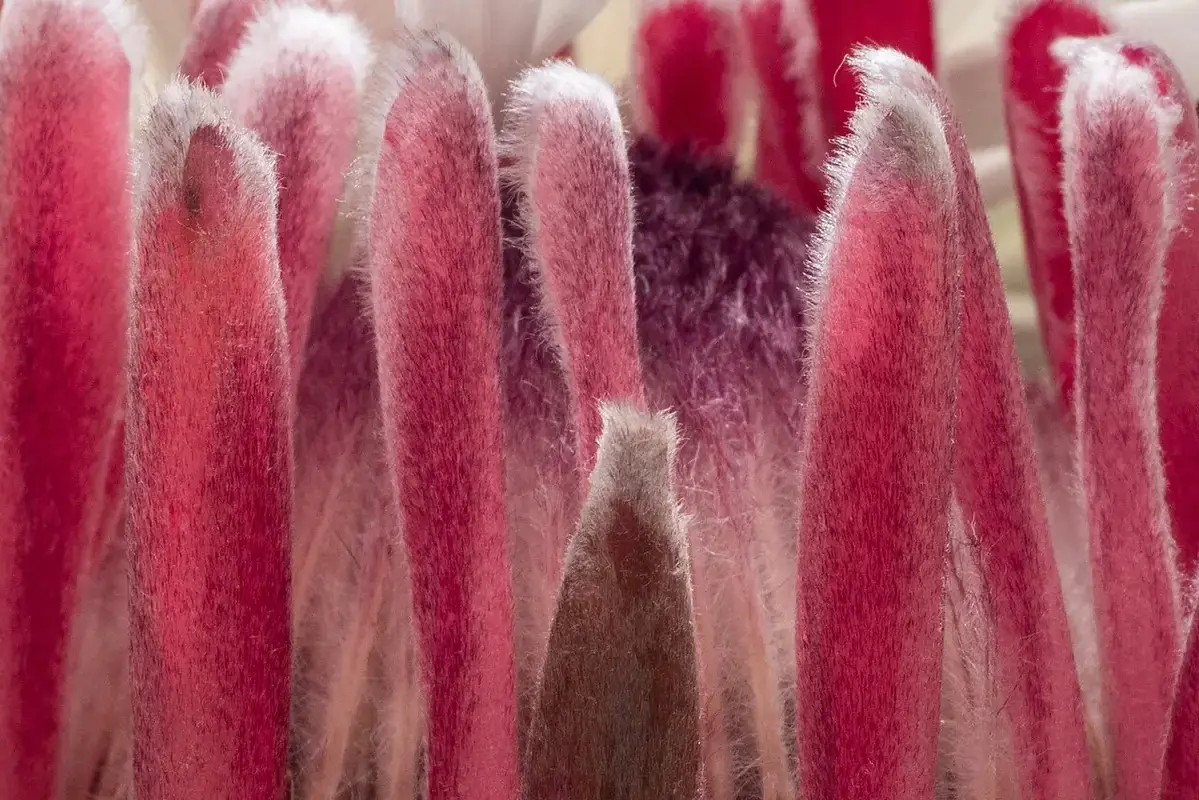
How do you care for a cut protea in a vase? Give the woody stem a clean cut, use a stable vessel that supports the heavy head, keep the display cool and bright without direct heat, and inspect leaves and bracts for darkening without assuming one symptom has one cause. This guide works alongside the heavy-head flower support guide so you can separate the first observation from the next action.
Head pulls the stem outward
A low centre of gravity reduces leverage without wiring the neck.
Woody cut is firm or split
A split end needs a clean recut into sound tissue if length permits.
Lower leaves are submerged
Remove the water-zone leaves while retaining useful upper foliage.
Darkening is crisp or spreading soft
Texture and progression are more useful than colour alone.
Read the evidence before acting
A measured care sequence
- 01Choose support first
Test the empty vase for tipping with a comparable weight before adding water or the protea.
- 02Make one clean recut
Cut into firm tissue, keep the stem end wet and move it to prepared water promptly.
- 03Strip selectively
Remove only submerged leaves or damaged material; do not strip the woody stem aggressively.
- 04Review the head and base
Check after several hours and the next morning for support, odour, softness and directional heat.
Keep, adjust or remove?
- Head pulls the stem outwardA low centre of gravity reduces leverage without wiring the neck.
- Woody cut is firm or splitA split end needs a clean recut into sound tissue if length permits.
- Lower leaves are submergedRemove the water-zone leaves while retaining useful upper foliage.
- Darkening is crisp or spreading softTexture and progression are more useful than colour alone.
Keep a protea when the stem stays firm, the water remains neutral and the head is mechanically supported. Remove it when soft odourous tissue advances or the vessel cannot keep it safe. For a related symptom, return to the heavy-head flower support guide rather than applying several changes at once.
Research notes
Sources and editorial method
This guide turns general postharvest and preservation advice into visible household checks. Timing and thresholds are starting points: cultivar, harvest stage, transport, room humidity and vase condition can change how a particular flower responds.


