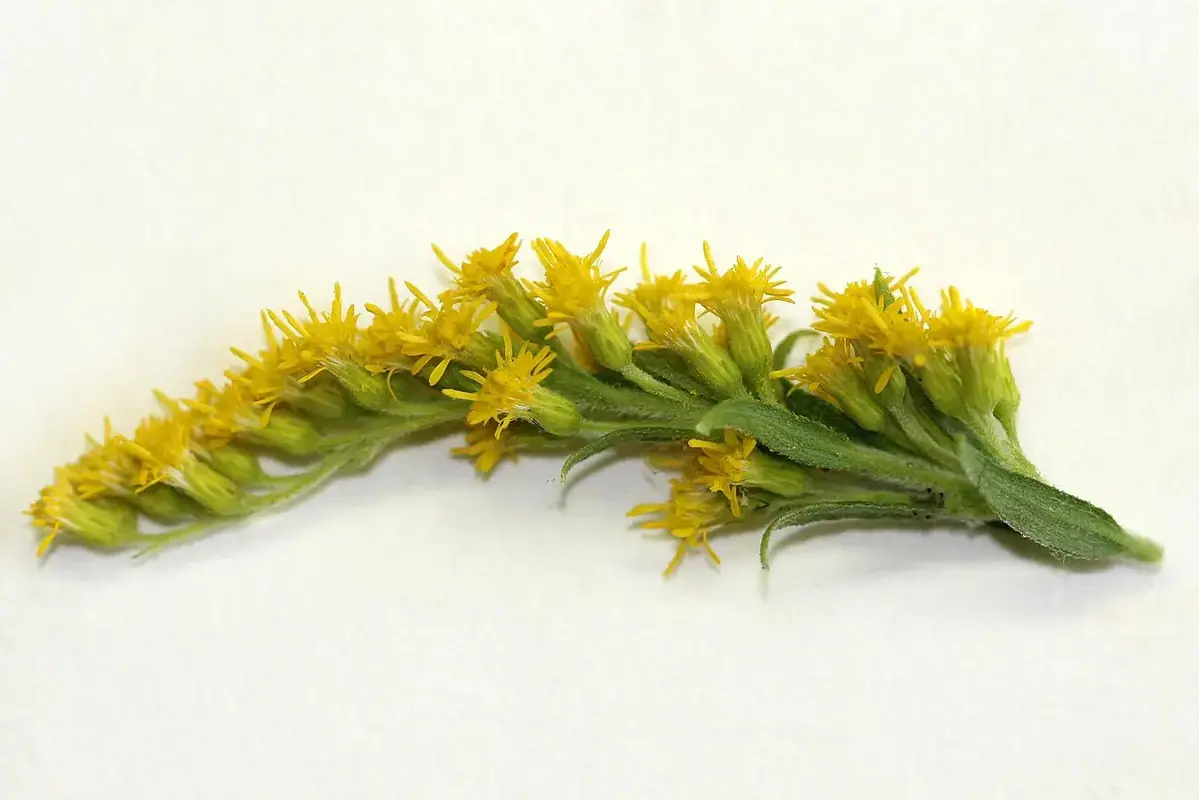
How do you keep Solidago useful as a golden filler without letting its many small florets cloud the vase? This guide works alongside the branching spray care guide so you can separate the first observation from the next action.
Bright florets and firm side branches
A fresh spray has detail and spring rather than a wet collapsing interior.
Leaves crossing the waterline
Dense lower leaves contribute debris and make the stem base difficult to see.
Yellow particles around the vase
Shedding can be normal ageing, but wet accumulation needs grooming.
Side branches leaning into the rim
Support at the vessel prevents repeated rubbing and broken spray joints.
Read the evidence before acting
A measured care sequence
- 01Select and sort
Choose sprays with firm stems and a useful mix of open florets; set aside wet or collapsing branches.
- 02Condition the base
Make a clean cut, remove submerged foliage and place promptly in clean prepared water.
- 03Build with air
Let Solidago sit around, not inside, the focal flowers so side branches do not tangle and rub.
- 04Groom at checks
Catch fallen florets, inspect the waterline and remove a branch when its tissue turns soft or odorous.
Keep, adjust or remove?
- Bright florets and firm side branchesA fresh spray has detail and spring rather than a wet collapsing interior.
- Leaves crossing the waterlineDense lower leaves contribute debris and make the stem base difficult to see.
- Yellow particles around the vaseShedding can be normal ageing, but wet accumulation needs grooming.
- Side branches leaning into the rimSupport at the vessel prevents repeated rubbing and broken spray joints.
Keep clean airy sprays as long as the bases stay firm and the water remains readable; groom or isolate before the whole vase turns dirty. For a related symptom, return to the branching spray care guide rather than applying several changes at once.
Research notes
Sources and editorial method
This guide turns general postharvest and preservation advice into visible household checks. Timing and thresholds are starting points: cultivar, harvest stage, transport, room humidity and vase condition can change how a particular flower responds.