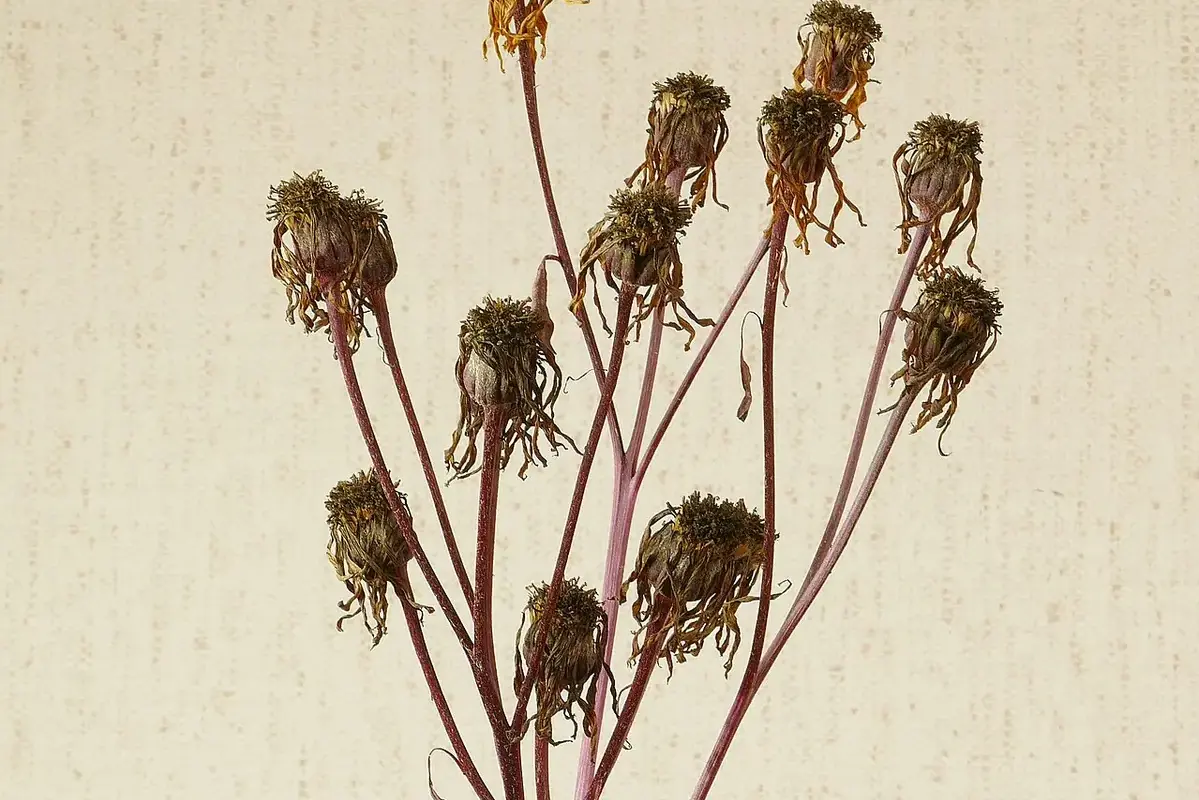
Gerbera “bent neck” can reflect water stress, microbial blockage, an immature weak stem or gravity. Start with the clean-water discipline in the vase refresh guide, then use the firm-tissue cut check before adding any wire or sleeve.
A support can hold a flower in place, but it cannot restore rotten tissue or reopen a blocked base. The two-hour test keeps a salvageable stem from being discarded while preventing an artificial support from hiding failure.
Read the bend
Firm, recoverable or finished?
Firm stem, gentle arc
The flower is hydrated and may simply be responding to gravity or vase position.
Flexible fold, green tissue
Recut, use shallow clean water and support the head for two hours.
Dark, mushy or creased
Shorten below sound tissue if enough stem remains; otherwise discard it.
The two-hour reset
- 01Wash a narrow, stable vase
Its rim should support the stems without squeezing them together.
- 02Add 2–3 cm of fresh solution
Gerbera stems lose water through their surface and are vulnerable to microbial problems; deep water wets more tissue than needed.
- 03Recut the base cleanly
Remove discoloured tissue with a sharp tool. Do not crush or scrape the stem.
- 04Hold heads level
Use the vase rim or a clean mesh above the opening so the stems hydrate without folding further.
- 05Recheck after two hours
Compare firmness above and below the bend; do not judge only by flower angle.
Choose support only after the response check
If the tissue firms but the stem retains a soft curve, shorten the flower and place it near the vase rim. A clean external collar or grid can guide the stem. Avoid pushing wire inside a hollowing or softened stem, which creates a wound and can make later breakdown harder to see.
Daily gerbera check
Lift each stem just enough to inspect the submerged section. Remove any slimy material, refresh the vase, and compare head angle with stem firmness. A flower that remains bright but repeatedly collapses at the same crease is better displayed shorter than forced upright.
Research notes
Sources and editorial method
These recommendations translate horticultural and postharvest guidance into repeatable home checks. Timings are working ranges, not guarantees.


