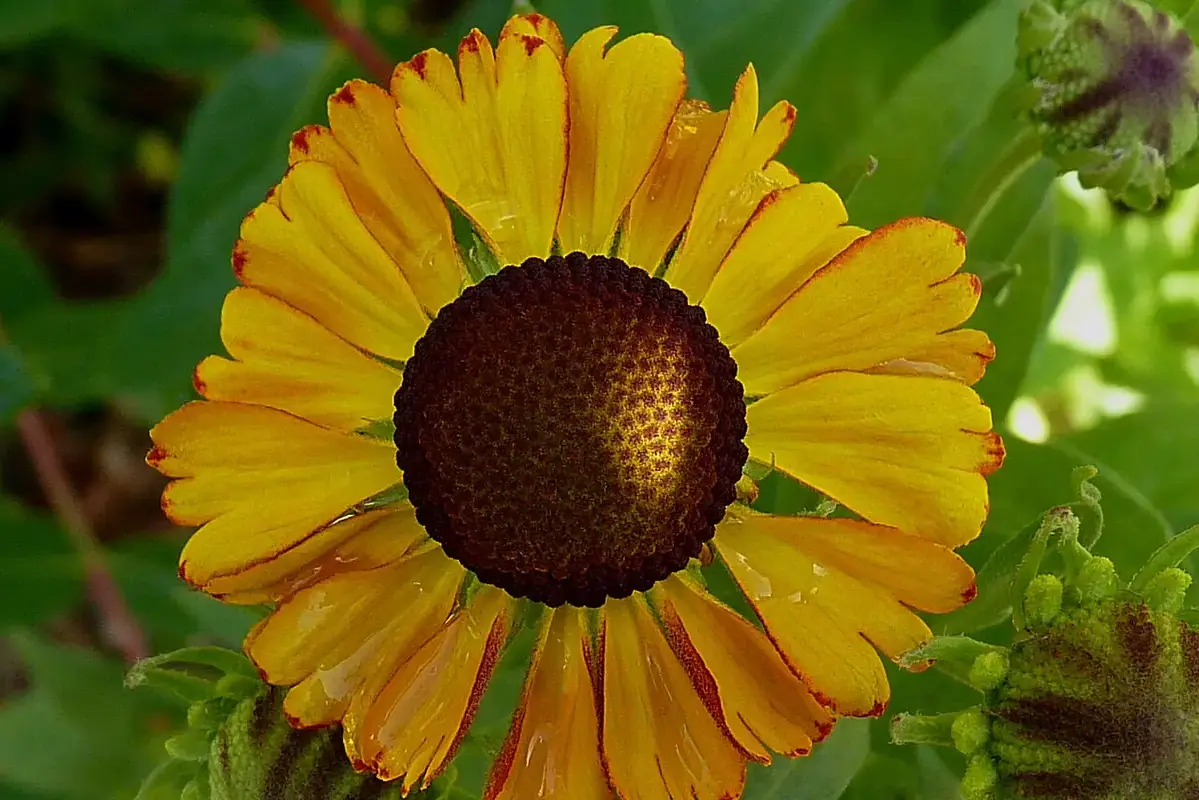
The rays point downward around a rounded center, so the flower appears to droop even while its stalk stands firmly. Helenium autumnale naturally has wedge-shaped, notched rays that can droop away from the central disk. This guide works alongside the checking actual petal-edge damage so you can separate the first observation from the next action.
Notched wedge-shaped rays
The petal-like ray tips can have a characteristic lobed outline rather than damage from trimming.
Raised center
A rounded center with rays falling away from it is consistent with the species description.
New collapse versus stable form
A photograph from arrival is useful when deciding whether the flower actually changed.
Head neck and main stem
Natural ray position does not explain a newly creased or soft supporting stalk.
Read the evidence before acting
A measured care sequence
- 01Compare matching heads
Use flowers from the same identified bunch rather than a different daisy as the standard of uprightness.
- 02Inspect the supporting tissue
Look below the disk and along the main stem without pushing the rays upward.
- 03Correct only the observed problem
Relieve pressure or restore clean water contact; do not wire the flower face into another shape.
- 04Review the change
Check the same head later for firmness and spreading damage instead of judging only its angle.
Keep, adjust or remove?
- Notched wedge-shaped raysThe petal-like ray tips can have a characteristic lobed outline rather than damage from trimming.
- Raised centerA rounded center with rays falling away from it is consistent with the species description.
- New collapse versus stable formA photograph from arrival is useful when deciding whether the flower actually changed.
- Head neck and main stemNatural ray position does not explain a newly creased or soft supporting stalk.
Allow a sound helenium to have its own silhouette. Treat changes in tissue and support, not the fact that it does not resemble a flat daisy. For a related symptom, return to the checking actual petal-edge damage rather than applying several changes at once.
Research notes
Sources and editorial method
This guide turns general postharvest and preservation advice into visible household checks. Timing and thresholds are starting points: cultivar, harvest stage, transport, room humidity and vase condition can change how a particular flower responds.


