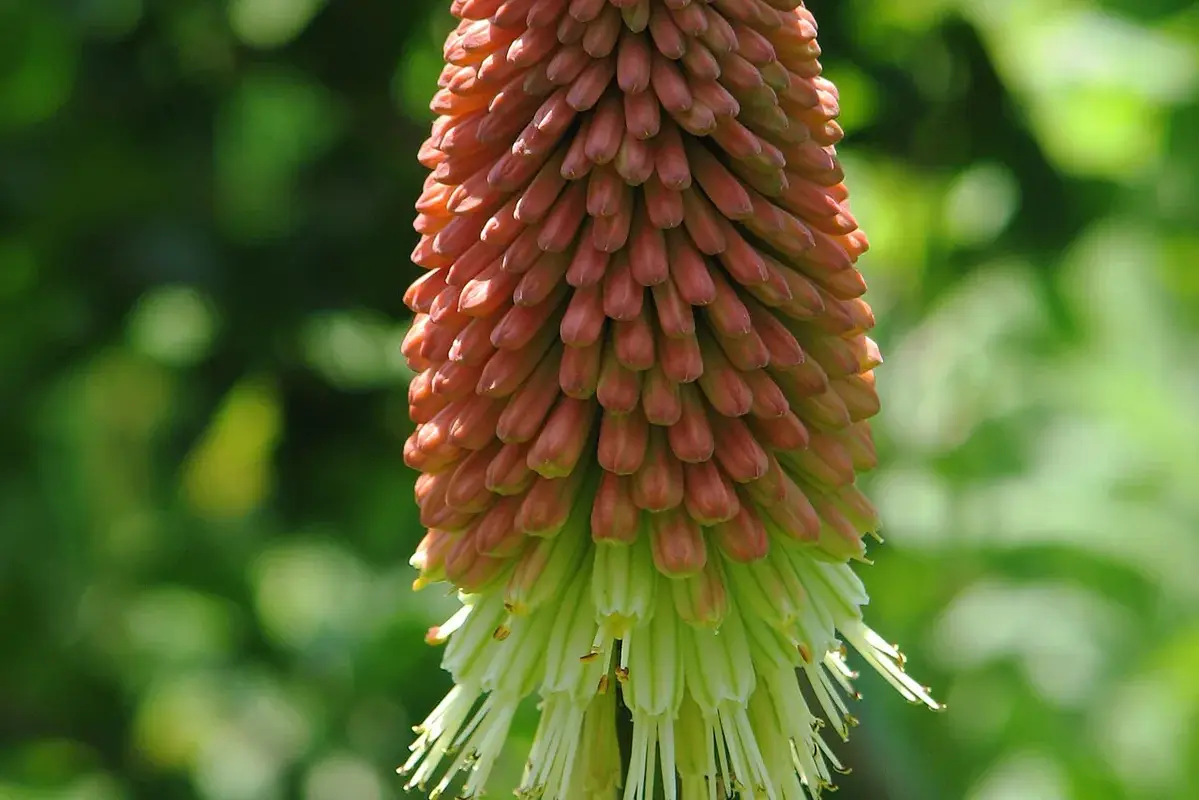
The upper part of a red-hot-poker flower is orange-red while the lower tubes are yellow. Is the bottom half already finished? Before stripping the spike, distinguish a colour transition from actual deterioration. Kniphofia is not a single bloom that should keep one uniform shade from top to bottom. This guide works alongside the checking individual florets on a cut spike so you can separate the first observation from the next action.
Compare tubes rather than whole halves
A yellow band with plump intact flowers differs from a brown band of collapsed, papery tubes.
Flowers remain connected to the axis
Inspect without shaking; a spike dropping many units during ordinary handling needs a different assessment from one changing colour.
Continuous support beneath the flower
A tall bare scape gives leverage to the head, so inspect the rim contact and any new crease.
Species or cultivar on the label
Not all Kniphofia cultivars share the classic red-and-yellow palette; compare the supplied flower with its own original appearance.
Read the evidence before acting
A measured care sequence
- 01Record the starting pattern
Photograph the whole spike in ordinary daylight. Note which tubes are open and firm, not merely the position of the red-yellow boundary. This gives later colour changes a useful reference.
- 02Fit the stalk before cutting
Choose a stable vessel that supports the lower scape while keeping every flower clear of the rim. Make a clean basal cut and place the stem promptly in prepared water.
- 03Groom with the axis supported
Hold the stalk below the spike over paper. Remove only clearly spent loose material; do not rake fingers upward through sound tubes or pull a band away as one strip.
- 04Review structure at the next check
Compare stalk firmness, attachment and water condition with the first photograph. If appearance alone changed, keep observing rather than shortening the spike or changing several care variables together.
Keep, adjust or remove?
- Compare tubes rather than whole halvesA yellow band with plump intact flowers differs from a brown band of collapsed, papery tubes.
- Flowers remain connected to the axisInspect without shaking; a spike dropping many units during ordinary handling needs a different assessment from one changing colour.
- Continuous support beneath the flowerA tall bare scape gives leverage to the head, so inspect the rim contact and any new crease.
- Species or cultivar on the labelNot all Kniphofia cultivars share the classic red-and-yellow palette; compare the supplied flower with its own original appearance.
Judge this flower by the condition of its individual tubes and supporting stalk. A two-tone spike can still be useful; a richly coloured spike with a collapsing axis is not rescued by its colour. For a related symptom, return to the checking individual florets on a cut spike rather than applying several changes at once.
Research notes
Sources and editorial method
This guide turns general postharvest and preservation advice into visible household checks. Timing and thresholds are starting points: cultivar, harvest stage, transport, room humidity and vase condition can change how a particular flower responds.