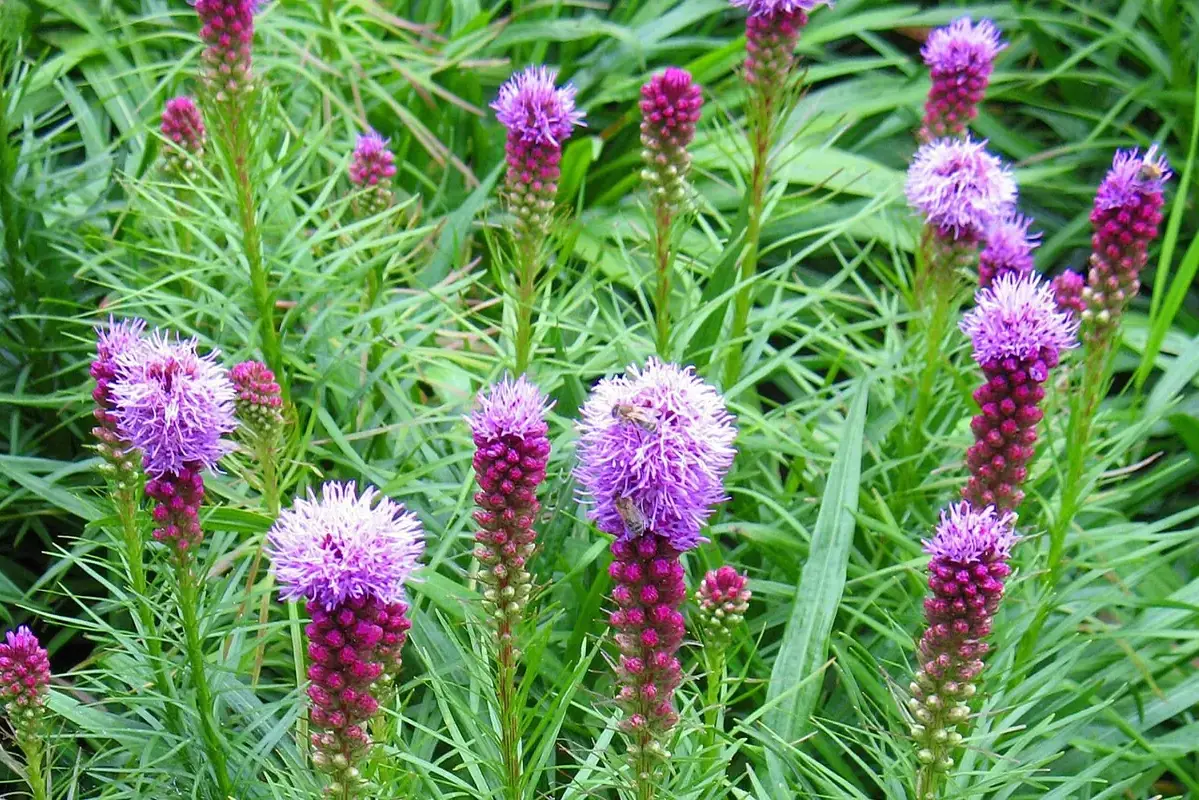
The top of a liatris spike looks older while the lower section is still tight. That can look backwards if you usually arrange gladiolus. Liatris spicata normally opens from the top down, so the oldest zone is not necessarily the lowest one. This guide works alongside the the contrasting flowering sequence of gladiolus so you can separate the first observation from the next action.
Older flowers near the top
Top-down opening is characteristic of Liatris spicata, unlike many familiar flower spikes.
Firm lower buds
Closed lower florets may represent a younger stage rather than failed flowering.
Dry versus wet decline
Dry spent tufts differ from soft spreading tissue that warrants removing the stem.
Condition of the main stalk
A sound flower zone cannot compensate for a collapsing water-bearing stem.
Read the evidence before acting
A measured care sequence
- 01View the whole spike
Follow it from top to bottom in good light and identify which flowers are actually open.
- 02Choose a minimal edit
Support the stalk and snip accessible spent pieces rather than running fingers down the entire spike.
- 03Preserve the lower developing zone
Keep it above the waterline and out of pressure from neighbouring flowers.
- 04Compare the next day
Look for change in the same lower buds and check the base before deciding that more trimming will help.
Keep, adjust or remove?
- Older flowers near the topTop-down opening is characteristic of Liatris spicata, unlike many familiar flower spikes.
- Firm lower budsClosed lower florets may represent a younger stage rather than failed flowering.
- Dry versus wet declineDry spent tufts differ from soft spreading tissue that warrants removing the stem.
- Condition of the main stalkA sound flower zone cannot compensate for a collapsing water-bearing stem.
Keep the spike while its remaining flowers, buds and stalk justify the space. Let actual tissue condition, not an assumed bottom-up timetable, decide when it leaves the arrangement. For a related symptom, return to the the contrasting flowering sequence of gladiolus rather than applying several changes at once.
Research notes
Sources and editorial method
This guide turns general postharvest and preservation advice into visible household checks. Timing and thresholds are starting points: cultivar, harvest stage, transport, room humidity and vase condition can change how a particular flower responds.


