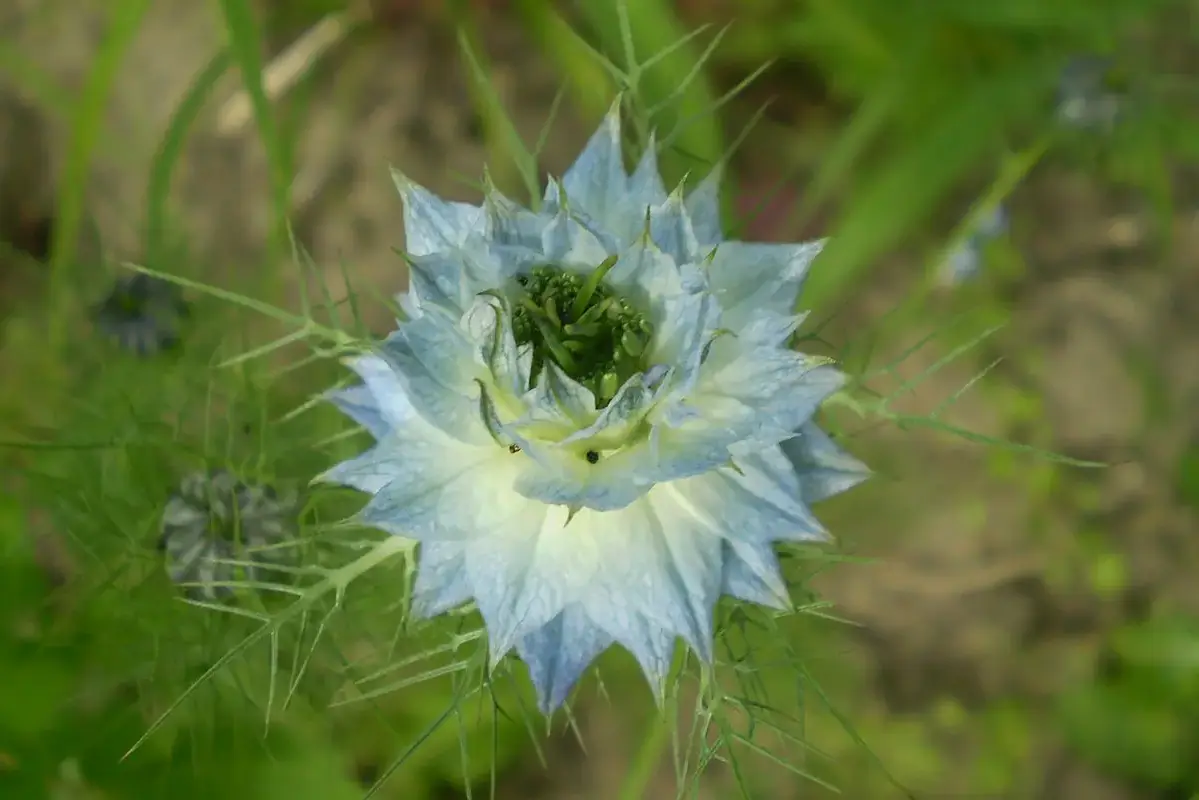
The bouquet contains nigella flowers and green balloon-like forms surrounded by fine foliage. Those inflated forms may be post-flowering capsules, not large buds waiting to produce blue petals. This guide works alongside the planning a separate seed-pod drying project so you can separate the first observation from the next action.
Inflated balloon-like capsule
Nigella damascena produces decorative pods after its flowers, often with green and darker striping.
Flower and pod on different stems
A mixed bunch can intentionally include both, each contributing a different shape.
Firm stalk beneath the pod
The pod's surface appearance does not establish the condition of its water-bearing stem.
Opening or shedding
A maturing capsule may need a catch surface and a revised display plan rather than more feeding.
Read the evidence before acting
A measured care sequence
- 01Compare flower and capsule anatomy
Use the supplier label or a species reference rather than opening the pod to investigate.
- 02Prepare the lower stem
Remove foliage that would enter water while preserving the decorative fine structure above it.
- 03Allow space around each pod
Avoid squeezing the inflated forms between heavy flower heads or against the vase rim.
- 04Inspect maturity during care
Catch loose material and decide whether to retain the fresh stem, start a separate drying project or remove it.
Keep, adjust or remove?
- Inflated balloon-like capsuleNigella damascena produces decorative pods after its flowers, often with green and darker striping.
- Flower and pod on different stemsA mixed bunch can intentionally include both, each contributing a different shape.
- Firm stalk beneath the podThe pod's surface appearance does not establish the condition of its water-bearing stem.
- Opening or sheddingA maturing capsule may need a catch surface and a revised display plan rather than more feeding.
Fresh nigella pods are already a finished visual feature. Maintain their shape and stem condition rather than trying to restart flowering. For a related symptom, return to the planning a separate seed-pod drying project rather than applying several changes at once.
Research notes
Sources and editorial method
This guide turns general postharvest and preservation advice into visible household checks. Timing and thresholds are starting points: cultivar, harvest stage, transport, room humidity and vase condition can change how a particular flower responds.


