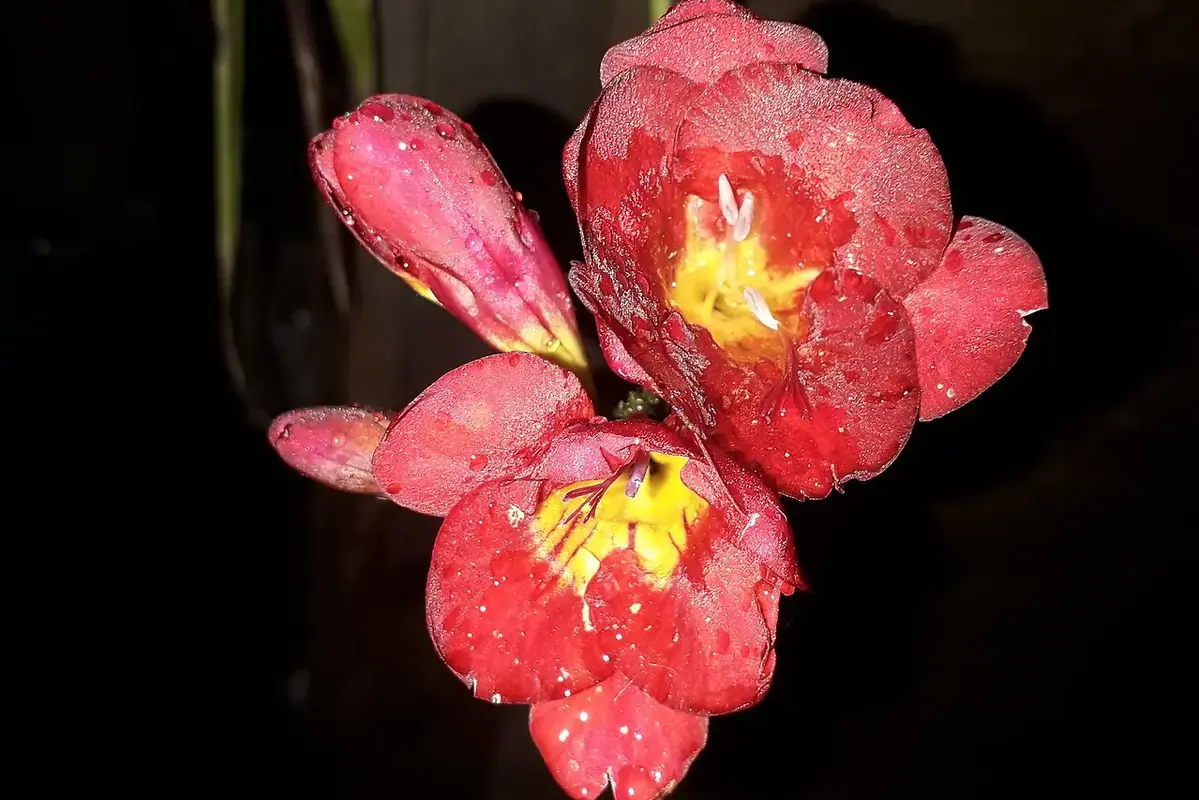
Ranunculus can look sturdy from the front and surprisingly delicate from the side. The flower head is broad, the stem is often slim, and the lower section may curve naturally as the bloom develops. A wide bowl asks that stem to carry every gram of the flower without help. For the next step, read the wide-vase support options.
Start with mechanics that do not touch the bloom: a smaller opening, a loose crossed-stem structure or a taller vessel. Only add a stake or tie when the flower still needs it after the water path has been checked.
Curve with a firm neck
A living stem can have a graceful bend. Keep it if the head is supported and the tissue does not crease.
Floppy from base upward
Recut into firm tissue and hydrate in a cool place before deciding on extra mechanics.
Flat mark at the rim
The vase opening is pinching the stem. Change the opening or move the flower; do not tape harder.
Sharp crease or split
Shorten to sound tissue if possible, or let that stem leave the design.
Build support from the vessel
A low-contact care routine
- 01Choose blooms with dry petals
Handle the stem rather than squeezing the flower. Pass on heads already translucent, bruised or collapsing at the neck.
- 02Make a clean proportional cut
Remove only the damaged end. A dramatic shortening can leave a thin stem with too little depth to anchor.
- 03Use a moderate waterline
Cover the cuts and keep leaves dry. Inspect the bases through the first hour instead of assuming more water will help.
- 04Add external support only after hydration
Use a loose ring, neighbouring stems or a discreet stake below the bloom. Never wrap tape across a soft neck.
What the next morning tells you
- Head upright, stem firmLeave the mechanics alone and keep the water clean.
- Head upright only because it is trappedOpen the arrangement slightly and see whether the stem can carry itself.
- One stem softensRemove it before it changes the shared water.
- All flowers soften togetherCheck heat, water quality and the first cut before adding support.
A narrow claim
What support can and cannot solve
The advice combines general hydration, clean-cut and placement guidance with a low-contact design approach. Ranunculus cultivars differ in stem strength, so the article uses visible response rather than a universal wire or water formula.


