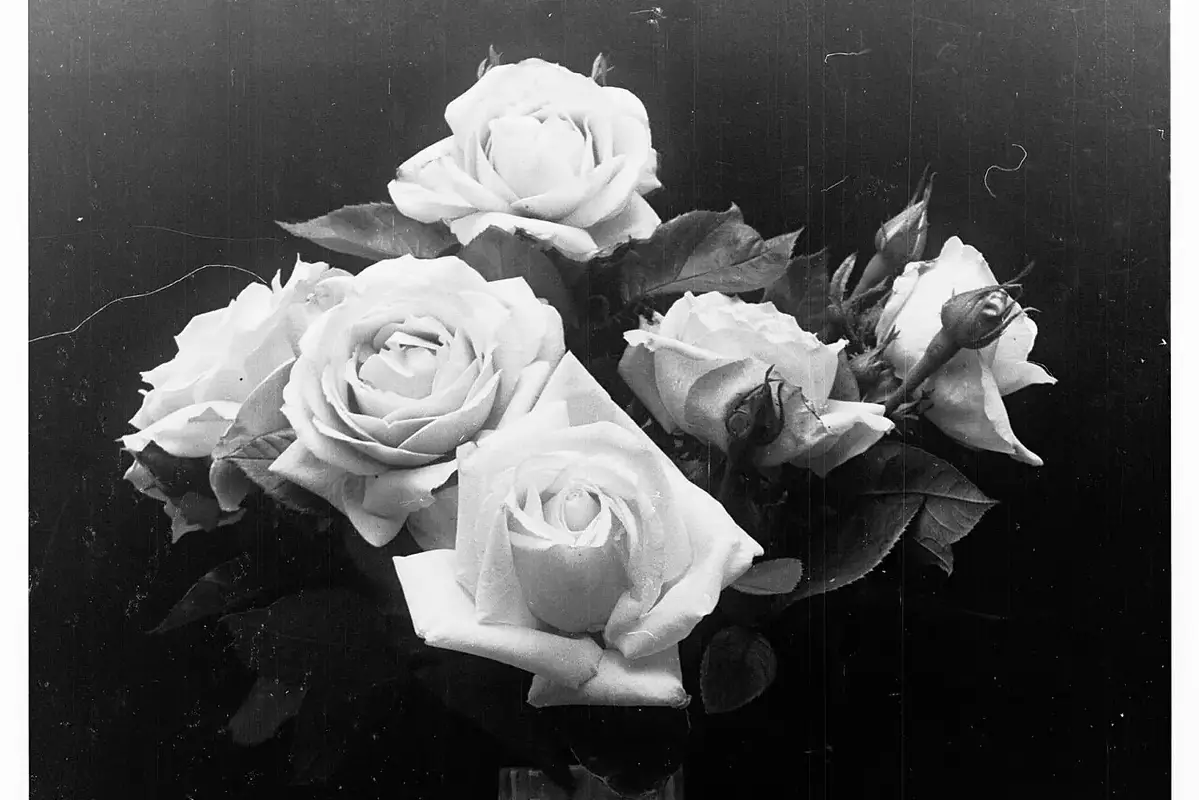
Guard petals are outer petals that protect a rose and may be bruised or browned without the centre failing. Gray mold is a different concern: damp, fuzzy or spreading tissue calls for isolation and removal, not cosmetic grooming. This guide works alongside the brown petal diagnosis guide so you can separate the first observation from the next action.
Dry mark or fuzzy growth?
A dry paper-like bruise and a damp fuzzy patch need different actions.
Is the area expanding?
Movement toward the centre increases the removal priority.
Is the base firm and neutral?
A healthy-looking face does not outweigh a soft or odorous base.
Read the evidence before acting
A measured care sequence
- 01Inspect dry and in good light
Do not mist or rub the rose to identify the mark.
- 02Lift only a loose guard petal
Use clean fingers or a tool and keep the removed material away from the vase.
- 03Isolate suspicious blooms
Place them in a disposable container and avoid shaking fuzzy tissue into the room.
- 04Reset when needed
Wash the vase and change water if wet debris or odour reached the shared solution.
Keep, adjust or remove?
- Dry mark or fuzzy growth?A dry paper-like bruise and a damp fuzzy patch need different actions.
- Is the area expanding?Movement toward the centre increases the removal priority.
- Is the base firm and neutral?A healthy-looking face does not outweigh a soft or odorous base.
When uncertain between a harmless guard petal and a wet spreading patch, isolate first. A sound rose can be returned; a contaminated vase is harder to inspect. For a related symptom, return to the brown petal diagnosis guide rather than applying several changes at once.
Research notes
Sources and editorial method
This guide turns general postharvest and preservation advice into visible household checks. Timing and thresholds are starting points: cultivar, harvest stage, transport, room humidity and vase condition can change how a particular flower responds.


