A pale pink spray is labelled soapwort, but it resembles several other small-flowered fillers. Does that name mean it needs soap in the vase, or that bubbles prove the stems are cleaning their own water? Neither inference follows from the name. Start with identification, then treat the cut spray as flowers rather than a homemade detergent. This guide works alongside the retaining the identity of unfamiliar bouquet stems so you can separate the first observation from the next action.
Botanical identity rather than filler name
Soapwort species and cultivars differ; a trade name alone should not determine special treatment or edibility.
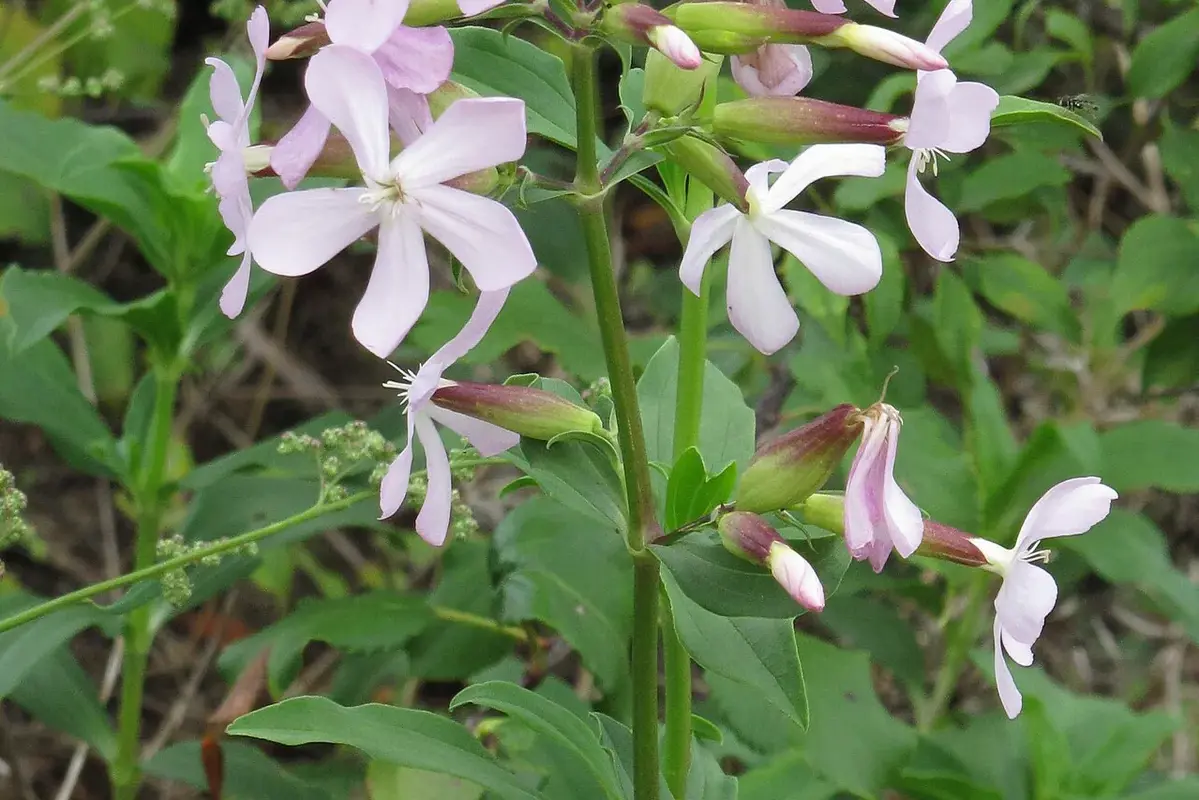
Opposite leaves and a tubular calyx
Single flowers commonly have five petals; double forms exist, so petal count is a supporting clue rather than a complete identification.
Small side shoots remain free
A spray hidden between heavy focal heads may lose flowers through pressure even when its main stem is well hydrated.
Clarity, odor and lower-stem texture
Bubbles alone cannot show whether the water is clean or identify the substance producing them.
Read the evidence before acting
A measured care sequence
- 01Save an identification reference
Photograph the original label, a complete stem and the flowers before mixing. Compare opposite leaves and calyx structure, but use the supplier to resolve uncertainty rather than tasting plant material.
- 02Prepare the water-bearing section
Snip off only leaves that would be submerged, keeping the branch junctions intact. Make a clean basal cut and transfer the spray promptly to a clean holding vessel.
- 03Place the spray where it remains visible
Give individual side branches room above the rim. Check from the side that the lower flowers are not pressed against a neighboring bloom or dipping toward the water.
- 04Review water and flowers independently
At the next daily inspection, look for detached florets, soft bases and changes in the solution. Remove a spent branch locally when possible, but retire tissue that is wet or deteriorating.
Keep, adjust or remove?
- Botanical identity rather than filler nameSoapwort species and cultivars differ; a trade name alone should not determine special treatment or edibility.
- Opposite leaves and a tubular calyxSingle flowers commonly have five petals; double forms exist, so petal count is a supporting clue rather than a complete identification.
- Small side shoots remain freeA spray hidden between heavy focal heads may lose flowers through pressure even when its main stem is well hydrated.
- Clarity, odor and lower-stem textureBubbles alone cannot show whether the water is clean or identify the substance producing them.
Retain an airy sound spray without asking it to act as a cleaning ingredient. If its identity or water behavior remains uncertain, use a separate small vase while seeking advice instead of experimenting in the entire bouquet. For a related symptom, return to the retaining the identity of unfamiliar bouquet stems rather than applying several changes at once.
Research notes
Sources and editorial method
This guide turns general postharvest and preservation advice into visible household checks. Timing and thresholds are starting points: cultivar, harvest stage, transport, room humidity and vase condition can change how a particular flower responds.