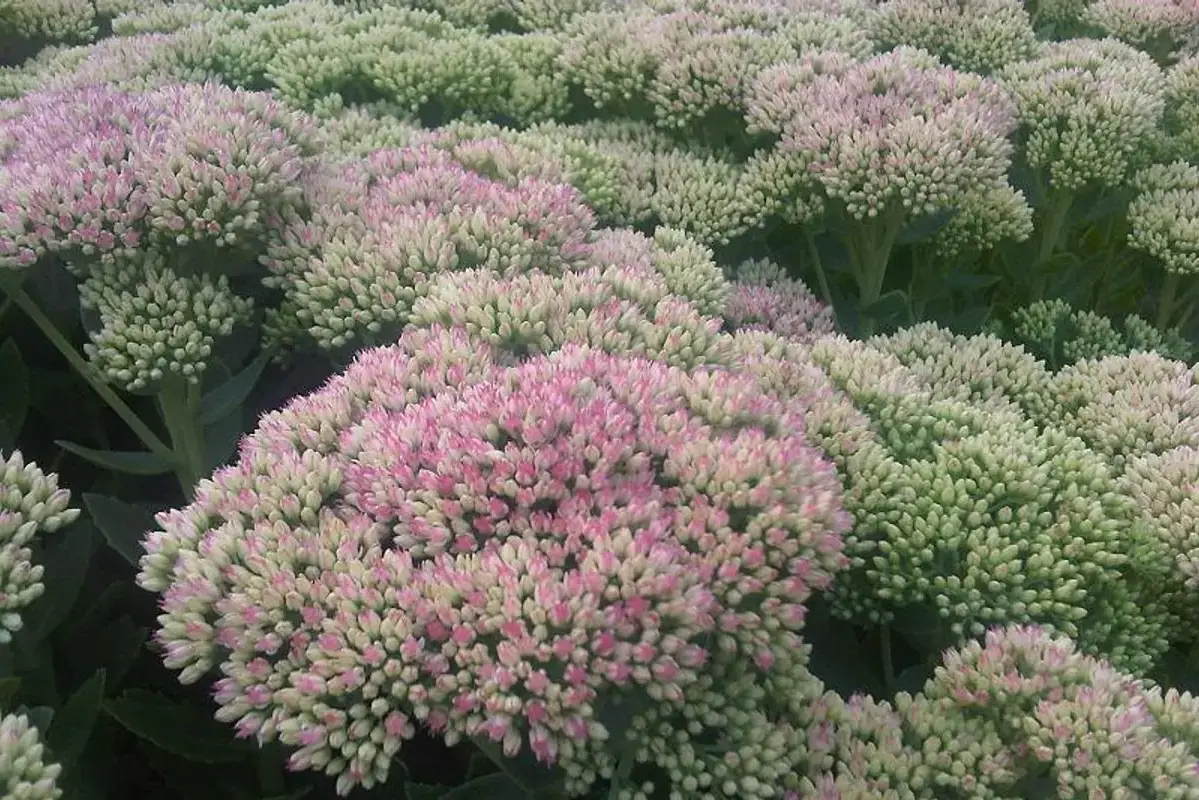
A low sedum arrangement looks compact, but the broad branching crown and fleshy leaves can end up close to the water. Cutting the stem too short may leave no clear section for both hydration and support. This guide works alongside the supporting broad flower heads so you can separate the first observation from the next action.
Where the broad head branches
The waterline should remain below the flower-bearing structure, not halfway through it.
Fleshy lower attachments
Hylotelephium spectabile is succulent, but detached wet foliage still creates unwanted vase debris.
Clear stem for water and support
A short display needs a suitable vessel rather than a submerged crown.
Firm tissue after preparation
A torn or softened lower section deserves assessment before it disappears into the vase.
Read the evidence before acting
A measured care sequence
- 01Measure the crown externally
Hold the stem beside the vase and identify both the support height and the water-contact section.
- 02Clear the lower foliage carefully
Use clean snips at unwanted attachments without peeling tissue from the main stem.
- 03Make the final length cut
Preserve enough sound stalk to keep the crown elevated and the base submerged.
- 04Inspect after the heads settle
Broad clusters can lean and lower one side; check that neither leaves nor flowers now touch water.
Keep, adjust or remove?
- Where the broad head branchesThe waterline should remain below the flower-bearing structure, not halfway through it.
- Fleshy lower attachmentsHylotelephium spectabile is succulent, but detached wet foliage still creates unwanted vase debris.
- Clear stem for water and supportA short display needs a suitable vessel rather than a submerged crown.
- Firm tissue after preparationA torn or softened lower section deserves assessment before it disappears into the vase.
At later water checks, inspect the leaf-removal sites as well as the head. Keep the stem while its base is firm and the crown remains clean above the reservoir. For a related symptom, return to the supporting broad flower heads rather than applying several changes at once.
Research notes
Sources and editorial method
This guide turns general postharvest and preservation advice into visible household checks. Timing and thresholds are starting points: cultivar, harvest stage, transport, room humidity and vase condition can change how a particular flower responds.


