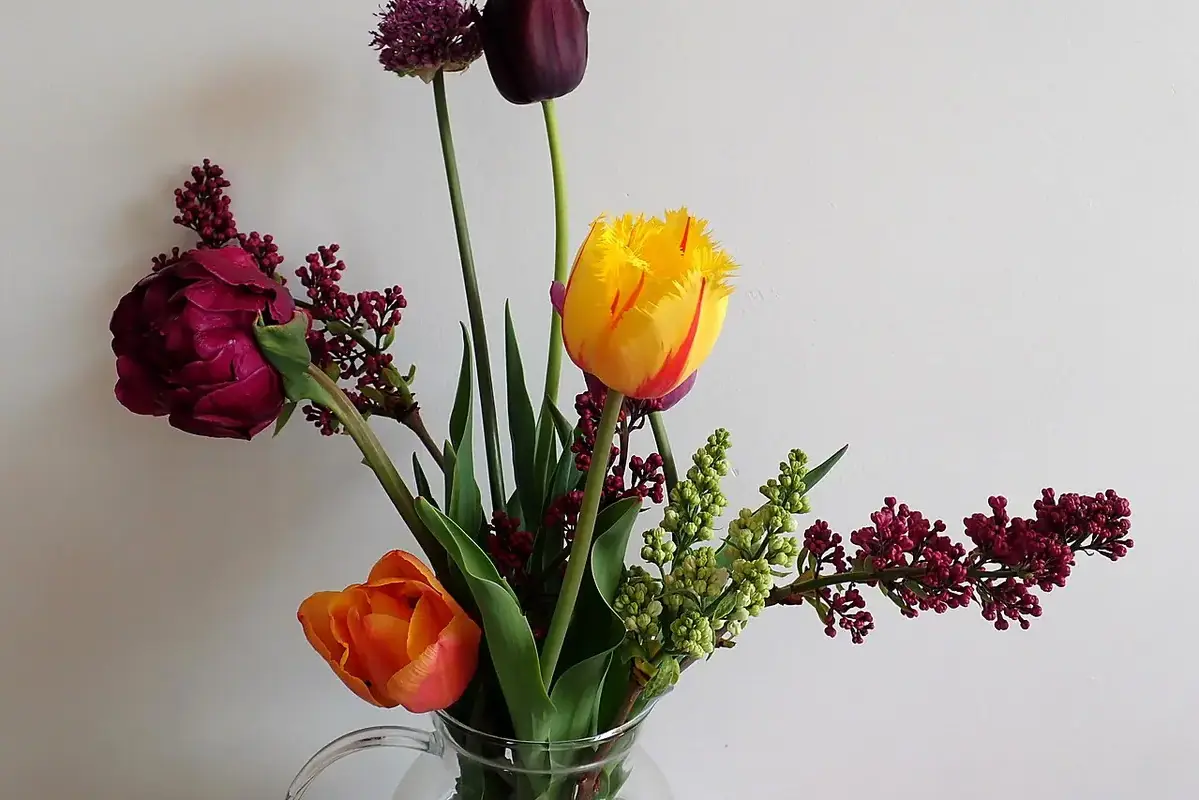
The bouquet opens into a beautiful fan above the tie, but loosening it seems to make every stem move at once. The crossing point is doing structural work: releasing a spiral is not the same as pulling apart a bundle of parallel stems. This guide works alongside the removing transport bands so you can separate the first observation from the next action.
Where stems change direction
Find the shared handhold below the flower heads rather than gripping the delicate upper necks.
A visible release point
Locate a knot or accessible loop before introducing a blade near plant tissue.
Room for the lower fan
A vase mouth that traps the crossing point can compress the arrangement instead of supporting it.
Water contact after release
Relaxing the grip may lift one short stem even while the rest settle lower.
Read the evidence before acting
A measured care sequence
- 01Set a filled vase beside the bouquet
Choose a vessel that accepts the lower spread without pressing the heads together.
- 02Hold at the crossing point
Support the weight with a relaxed grip; keep fingers away from thorns and any cutting path.
- 03Remove the closure and lower the ends
Keep the bunch supported until its cut ends are in water and the vase shares the load.
- 04Release in stages
Ease your hand away, inspect the silhouette and adjust only a stem that is pinched, trapped or above water.
Keep, adjust or remove?
- Where stems change directionFind the shared handhold below the flower heads rather than gripping the delicate upper necks.
- A visible release pointLocate a knot or accessible loop before introducing a blade near plant tissue.
- Room for the lower fanA vase mouth that traps the crossing point can compress the arrangement instead of supporting it.
- Water contact after releaseRelaxing the grip may lift one short stem even while the rest settle lower.
After the first settling period, check the shortest cut end and the crossing point again. A useful spiral remains loose enough to inspect and to dismantle for cleaning. For a related symptom, return to the removing transport bands rather than applying several changes at once.
Research notes
Sources and editorial method
This guide turns general postharvest and preservation advice into visible household checks. Timing and thresholds are starting points: cultivar, harvest stage, transport, room humidity and vase condition can change how a particular flower responds.


