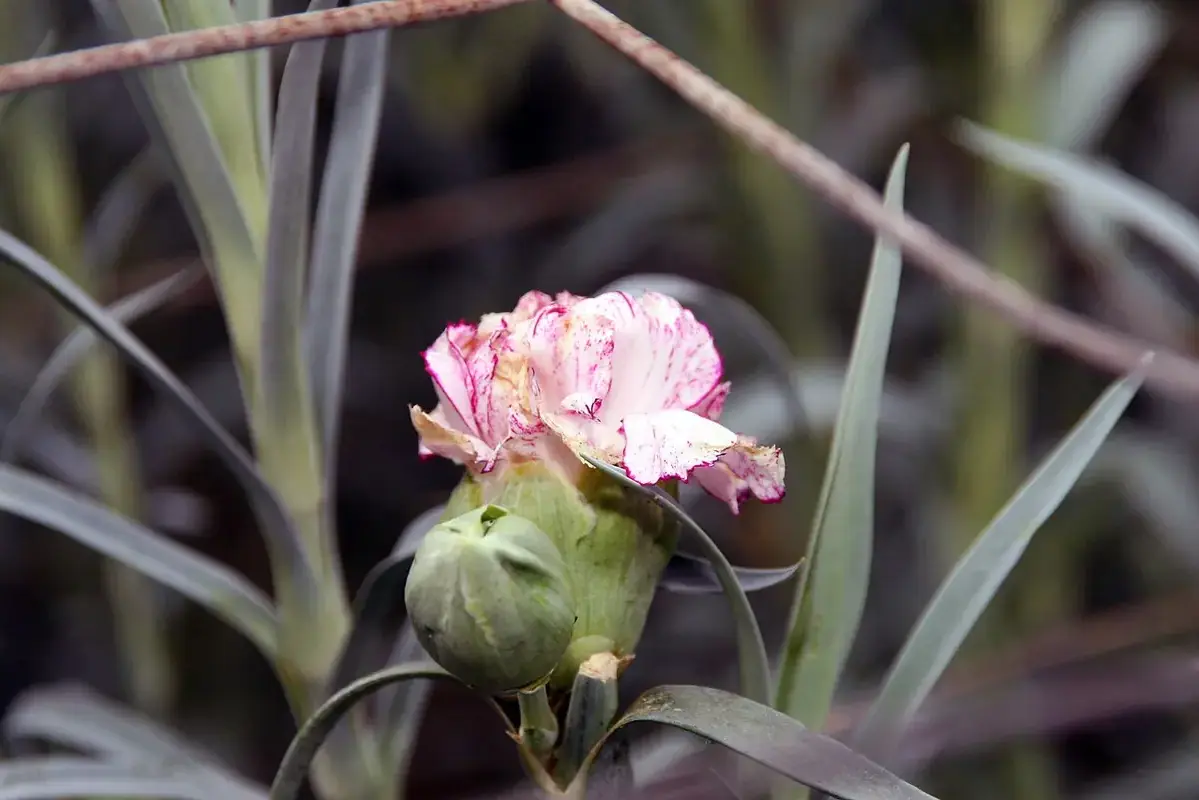
Why are petals spreading out of one side of a carnation even though its stem is firm? This guide works alongside the flower attachment assessment guide so you can separate the first observation from the next action.
Opening along the green cup
Distinguish a calyx split from a fracture below the head.
Petals still held at the base
A splayed flower may remain displayable without being structurally repaired.
Dry split or wet discolouration
Soft or spreading damage changes the decision from cosmetic to removal.
Failure when lifted
Repeatedly testing the head can loosen otherwise retained petals.
Read the evidence before acting
A measured care sequence
- 01Inspect from the side
Support the stem and use good light to locate the precise boundary of the split.
- 02Check without pulling
Look for detached petals but do not tug them to test how much strength remains.
- 03Reduce contact
Move a stable split head away from neighbouring flowers that press against its open side.
- 04Review during grooming
If shedding increases, remove the stem before petals collect in the vase. Photograph the defect if asking the florist about quality.
Keep, adjust or remove?
- Opening along the green cupDistinguish a calyx split from a fracture below the head.
- Petals still held at the baseA splayed flower may remain displayable without being structurally repaired.
- Dry split or wet discolourationSoft or spreading damage changes the decision from cosmetic to removal.
- Failure when liftedRepeatedly testing the head can loosen otherwise retained petals.
Keep a dry, stable cosmetic defect only while it remains useful; once attachment fails, further manipulation usually saves less of the flower. For a related symptom, return to the flower attachment assessment guide rather than applying several changes at once.
Research notes
Sources and editorial method
This guide turns general postharvest and preservation advice into visible household checks. Timing and thresholds are starting points: cultivar, harvest stage, transport, room humidity and vase condition can change how a particular flower responds.


