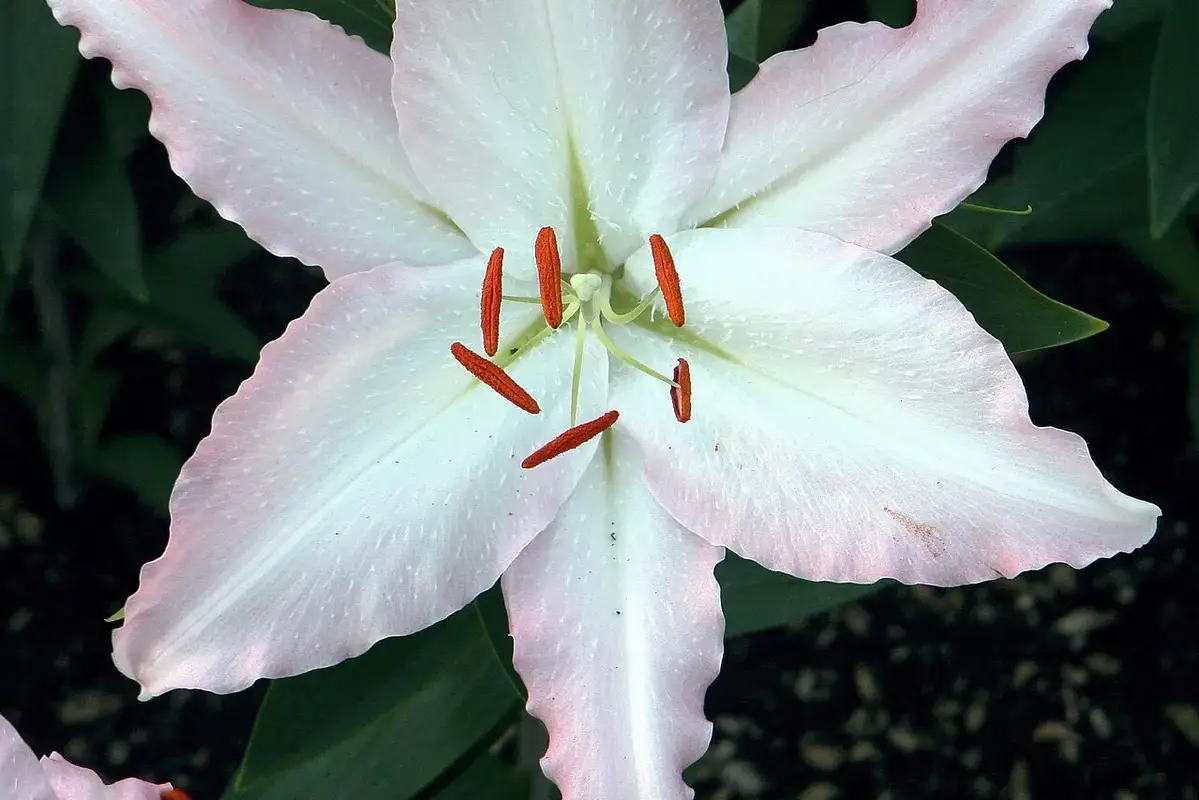
Why is the central tip sticky after all the dusty anthers have been removed? This guide works alongside the pollen handling guide so you can separate the first observation from the next action.
One central structure
The stigma sits at the end of the central style rather than on one of the surrounding stamens.
Sticky tip versus loose dust
Pollen readily marks a surface; a receptive stigma has a different role.
Firm tissue or wet collapse
An intact sticky tip is not the same as a spreading soft lesion.
Any cat access
True lilies remain unsafe for cats even after pollen grooming.
Read the evidence before acting
A measured care sequence
- 01Identify before touching
Compare the single central pistil with the ring of stamens, using a clear botanical diagram if needed.
- 02Keep the face dry
Avoid rubbing the stigma across petals or adding water to remove its tackiness.
- 03Limit cosmetic work
If removing anthers, handle their stalks gently and catch them without dropping pollen onto furniture or clothing.
- 04Recheck structure
Watch whether the centre remains firm as the bloom ages; remove wet, collapsing tissue without trying to disinfect it in place.
Keep, adjust or remove?
- One central structureThe stigma sits at the end of the central style rather than on one of the surrounding stamens.
- Sticky tip versus loose dustPollen readily marks a surface; a receptive stigma has a different role.
- Firm tissue or wet collapseAn intact sticky tip is not the same as a spreading soft lesion.
- Any cat accessTrue lilies remain unsafe for cats even after pollen grooming.
Groom only the structure you have identified. A normal sticky stigma does not need a repair. For a related symptom, return to the pollen handling guide rather than applying several changes at once.
Research notes
Sources and editorial method
This guide turns general postharvest and preservation advice into visible household checks. Timing and thresholds are starting points: cultivar, harvest stage, transport, room humidity and vase condition can change how a particular flower responds.


