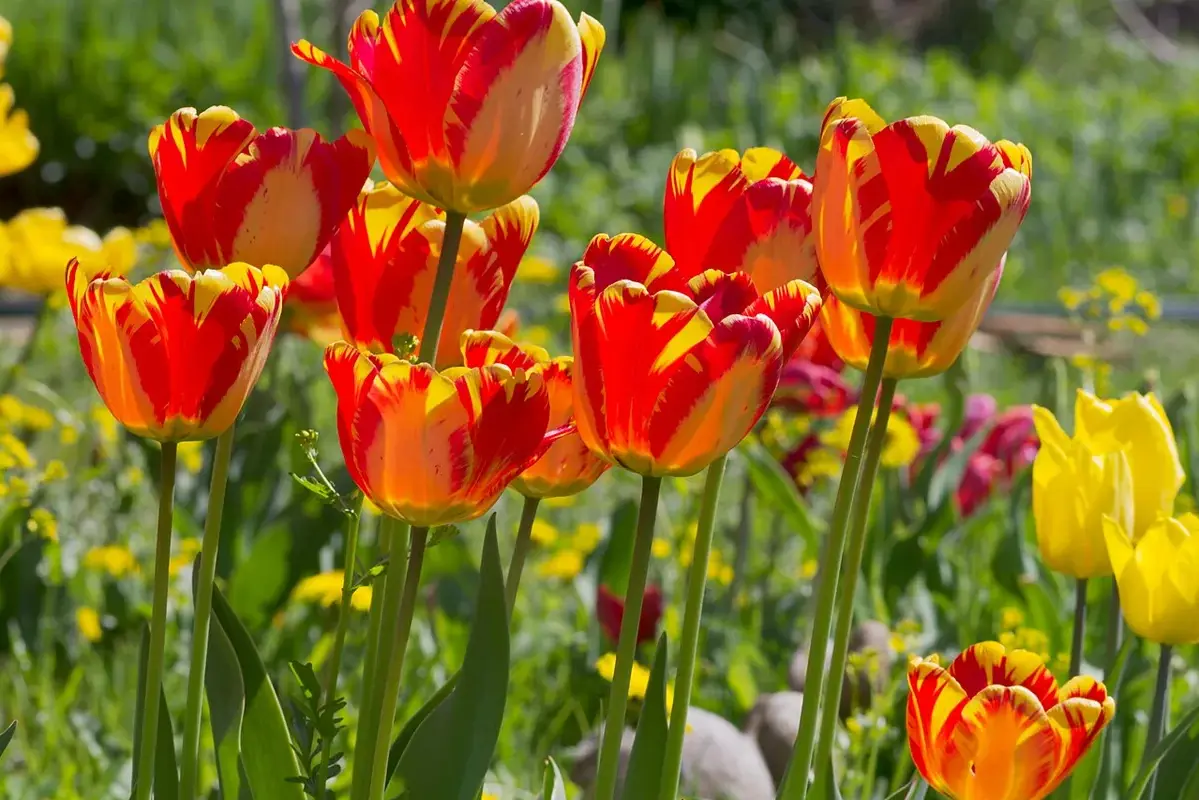
A striped tulip brings to mind the historic flowers associated with tulip breaking virus. Does every flame or streak mean the bouquet is infected? No: modern cultivars can have stable genetically determined patterns. The practical question is whether the pattern fits the labelled cultivar and whether the source planting shows additional unexplained changes. This guide works alongside the routine tulip support once the colour question is separated so you can separate the first observation from the next action.
Find the expected pattern
A named striped or flamed cultivar can legitimately show contrasting colours. Retain the supplier label rather than judging the flower against a plain-coloured tulip.
Compare like with like
Compare flowers of the same named cultivar and maturity. A mixed bunch intentionally assembled from several cultivars is not a valid disease comparison.
Look for foliage and growth changes
Unexpected mottling, distortion or weak growth can add concern, but none is conclusive by itself. Ask about the source plant when the cut stem has little foliage.
Check whether the change is new
A new pattern in a previously uniform garden clump is different from a stable advertised characteristic. Old photographs and bulb labels can make the distinction clearer.
Read the evidence before acting
A measured care sequence
- 01Retrieve the name
Check the sleeve, order record or bulb packaging. Ask the supplier whether the streaking is an expected characteristic rather than demanding a diagnosis from the colour alone.
- 02Photograph comparable blooms
Use neutral daylight and include a whole flower, a close view of the pattern and any attached leaves. Keep lighting changes and intentional dye treatment separate from the botanical question.
- 03Limit unnecessary transfer
Do not take questionable garden material back among healthy growing tulips or propagate its source bulbs while advice is pending. Clean tools between plants according to appropriate horticultural guidance.
- 04Act on the confirmed context
Keep a healthy documented patterned cultivar in the display. If the source plant is suspect, consult a local plant-health service and follow its sampling or disposal instructions rather than trying a household chemical cure.
Keep, adjust or remove?
- Find the expected patternA named striped or flamed cultivar can legitimately show contrasting colours. Retain the supplier label rather than judging the flower against a plain-coloured tulip.
- Compare like with likeCompare flowers of the same named cultivar and maturity. A mixed bunch intentionally assembled from several cultivars is not a valid disease comparison.
- Look for foliage and growth changesUnexpected mottling, distortion or weak growth can add concern, but none is conclusive by itself. Ask about the source plant when the cut stem has little foliage.
- Check whether the change is newA new pattern in a previously uniform garden clump is different from a stable advertised characteristic. Old photographs and bulb labels can make the distinction clearer.
A label and a like-for-like comparison prevent many false alarms. Escalate unexplained pattern changes with source-plant evidence, while leaving normal decorative stripes alone. For a related symptom, return to the routine tulip support once the colour question is separated rather than applying several changes at once.
Research notes
Sources and editorial method
This guide turns general postharvest and preservation advice into visible household checks. Timing and thresholds are starting points: cultivar, harvest stage, transport, room humidity and vase condition can change how a particular flower responds.