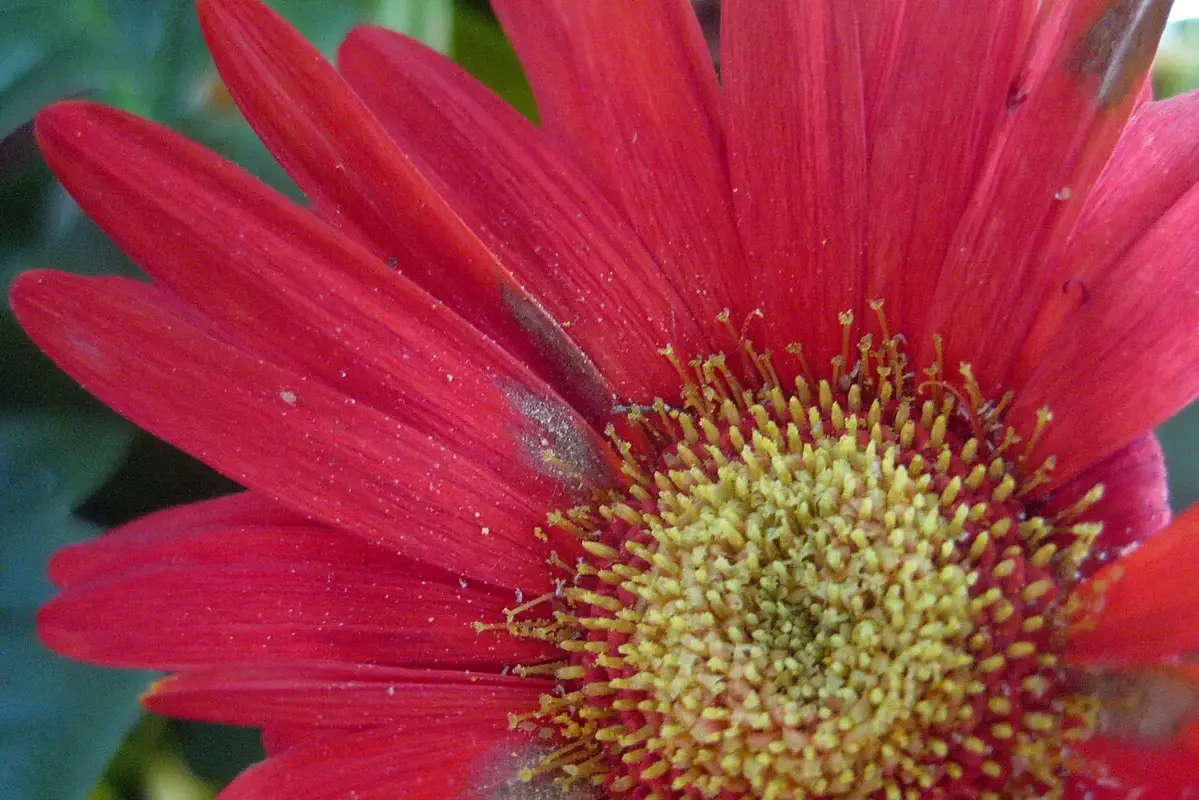
Could spotted petals be botrytis? They could also be bruised, water-spotted or aged. A home check cannot identify the organism, so isolate a petal that is wet, soft, expanding, musty or fuzzy, while a dry local mark can be monitored as likely cosmetic damage. This guide works alongside the brown petal-edge diagnosis so you can separate the first observation from the next action.
Dry and crisp or wet and soft
Softness is a stronger removal signal than a brown colour by itself.
Local mark or expanding patch
Progression changes the decision from grooming to isolation.
Fuzz or no fuzz
Visible fuzz is a stop signal, but its absence does not prove safety.
Clear or changing
A contaminated shared vase needs a reset regardless of exact cause.
Read the evidence before acting
A measured care sequence
- 01Photograph before grooming
Use the same angle and light so you can see whether the boundary changes.
- 02Separate the stem
Place it in a clean temporary container away from healthy blooms; do not shake it.
- 03Keep surfaces dry
Stop misting, remove condensation and avoid pressing petals against sleeves or other heads.
- 04Recheck progression
If softness, odour, fuzz or spread advances, discard the suspect stem and wash the vase.
Keep, adjust or remove?
- Dry and crisp or wet and softSoftness is a stronger removal signal than a brown colour by itself.
- Local mark or expanding patchProgression changes the decision from grooming to isolation.
- Fuzz or no fuzzVisible fuzz is a stop signal, but its absence does not prove safety.
- Clear or changingA contaminated shared vase needs a reset regardless of exact cause.
Treat a suspicious wet or fuzzy spot as a containment problem even when the cause is uncertain. Preserve sound flowers only after the shared water and contact surfaces are clean. For a related symptom, return to the brown petal-edge diagnosis rather than applying several changes at once.
Research notes
Sources and editorial method
This guide turns general postharvest and preservation advice into visible household checks. Timing and thresholds are starting points: cultivar, harvest stage, transport, room humidity and vase condition can change how a particular flower responds.


