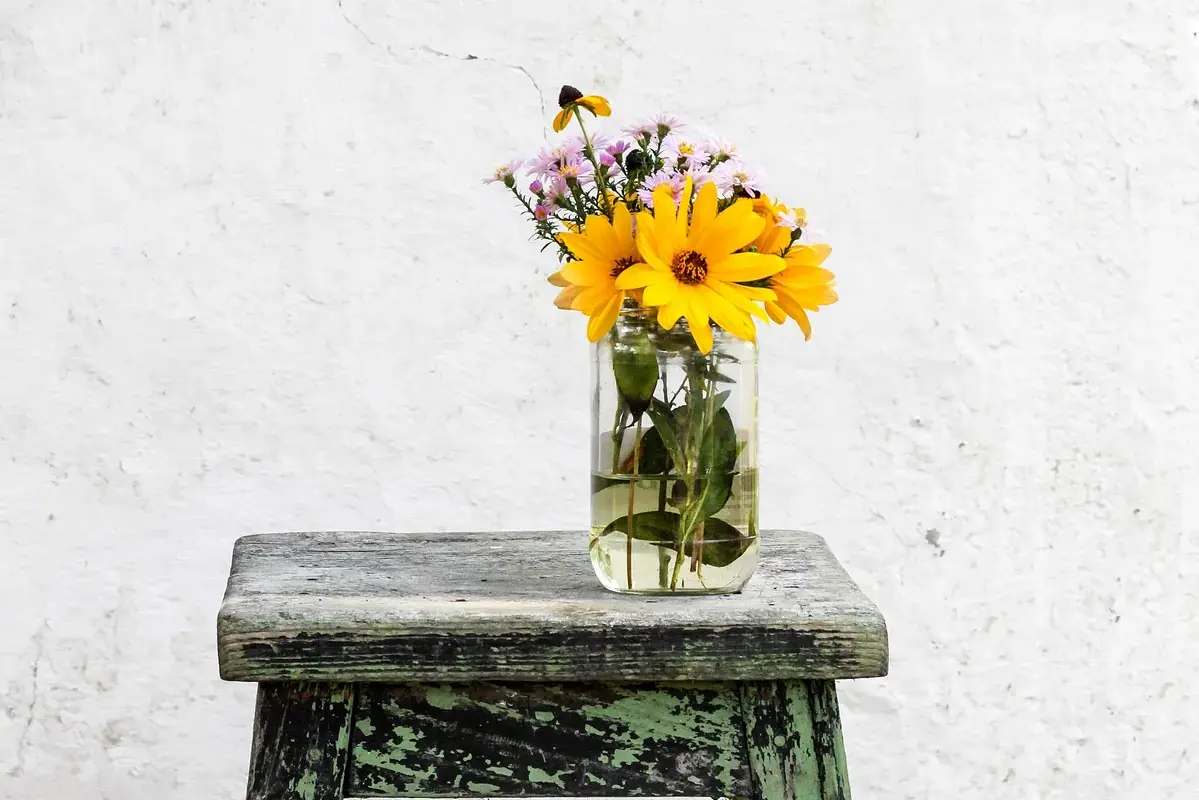
A few petals have dropped into an otherwise clear vase. Is one floating petal enough to discard the entire solution? The decision depends on whether debris is still floating or has been soaking and breaking down among the stem bases. This guide works alongside the the water-quality reset guide so you can separate the first observation from the next action.
Floating intact or lodged among cut ends
A floating petal is easier to remove than fragments trapped in a narrow base.
Fresh fall or long soak
Soft fragments break up easily; inspect for residue rather than stirring them into the water.
Clarity, film and smell
Haze, slick glass and odor change the action even if only one flower is shedding.
Firm head or wet decay
A naturally spent bloom differs from one with wet collapsing petals likely to shed more debris.
Read the evidence before acting
A measured care sequence
- 01Pause and inspect
Look through the vessel in side light before disturbing it. Record where the petals sit and whether the water smells neutral.
- 02Remove what is reachable
Lift floating pieces with a clean dedicated tool. Do not push a finger deep into a narrow vase or crush fragments against stems.
- 03Reset if needed
Prepare clean holding water, remove the flowers, clean the vase and refill according to the flower-food label if used.
- 04Track the source
Identify the shedding head and check again at the next routine water inspection; remove deteriorating material early.
Keep, adjust or remove?
- Floating intact or lodged among cut endsA floating petal is easier to remove than fragments trapped in a narrow base.
- Fresh fall or long soakSoft fragments break up easily; inspect for residue rather than stirring them into the water.
- Clarity, film and smellHaze, slick glass and odor change the action even if only one flower is shedding.
- Firm head or wet decayA naturally spent bloom differs from one with wet collapsing petals likely to shed more debris.
One fresh petal calls for removal and observation; soaked debris or changing water quality calls for a full clean reset. For a related symptom, return to the the water-quality reset guide rather than applying several changes at once.
Research notes
Sources and editorial method
This guide turns general postharvest and preservation advice into visible household checks. Timing and thresholds are starting points: cultivar, harvest stage, transport, room humidity and vase condition can change how a particular flower responds.