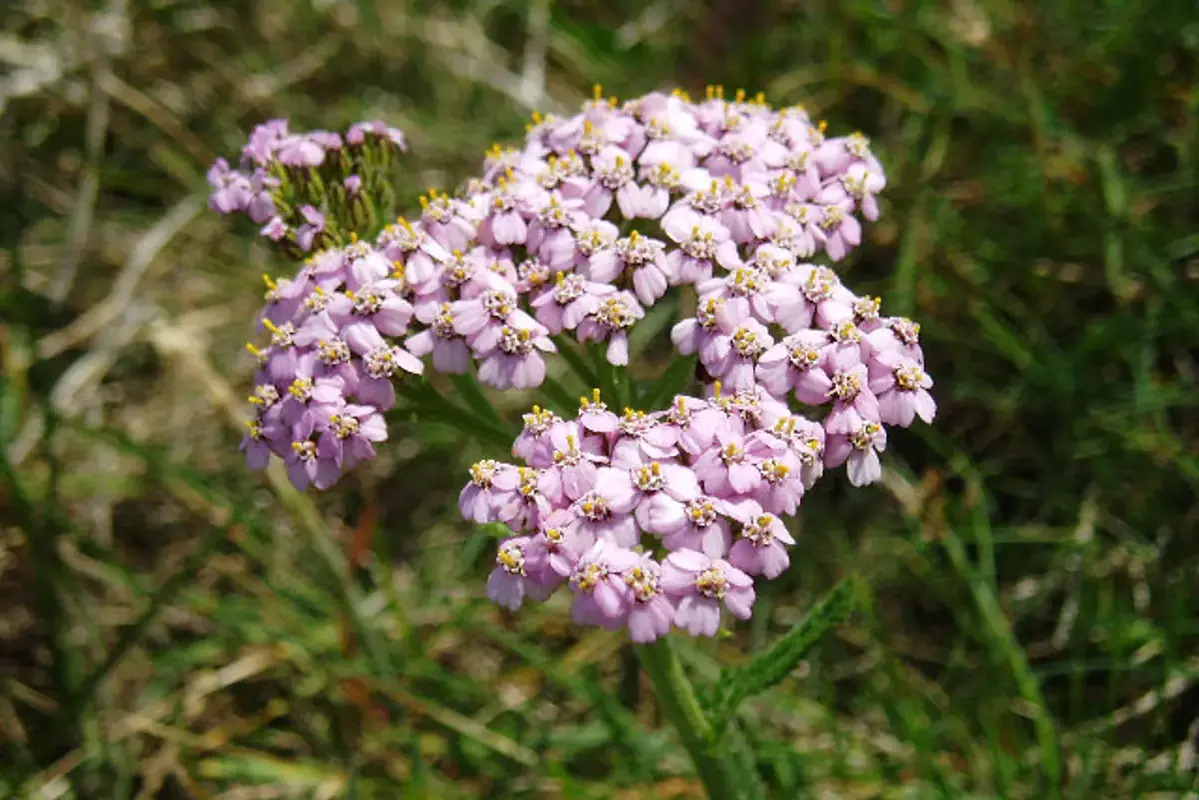
A brown patch spoils one edge of a yarrow head, but clipping across the top would remove many sound tiny flowers. The flat surface is made of smaller branching clusters, not one solid bloom. This guide works alongside the grooming branching cut flowers so you can separate the first observation from the next action.
Many tiny heads in a corymb
Achillea millefolium forms a flat-topped group, allowing some local edits.
One branch or several adjoining areas
A contained dry section offers a different decision from spreading wet tissue.
Branch fork below the patch
Locate the tissue to cut before moving a tool among the small flower heads.
The remaining silhouette
A technically removable patch may leave a gap large enough to make whole-head removal preferable.
Read the evidence before acting
A measured care sequence
- 01Support from below
Keep the flower plane free rather than pinching its surface flat. Wear gloves if handling irritates your skin.
- 02Trace the small branch
Use good light to distinguish its attachment from the neighbouring sound divisions.
- 03Snip over a catch tray
Keep fragments out of the vase and avoid pulling on interlocking tiny heads.
- 04Review from normal viewing distance
Stop if further clipping would dismantle most of the head; choose a smaller display instead.
Keep, adjust or remove?
- Many tiny heads in a corymbAchillea millefolium forms a flat-topped group, allowing some local edits.
- One branch or several adjoining areasA contained dry section offers a different decision from spreading wet tissue.
- Branch fork below the patchLocate the tissue to cut before moving a tool among the small flower heads.
- The remaining silhouetteA technically removable patch may leave a gap large enough to make whole-head removal preferable.
At the next water check, inspect the boundary left by the edit. If browning becomes wet or spreads, retire the head instead of continually carving away at it. For a related symptom, return to the grooming branching cut flowers rather than applying several changes at once.
Research notes
Sources and editorial method
This guide turns general postharvest and preservation advice into visible household checks. Timing and thresholds are starting points: cultivar, harvest stage, transport, room humidity and vase condition can change how a particular flower responds.


