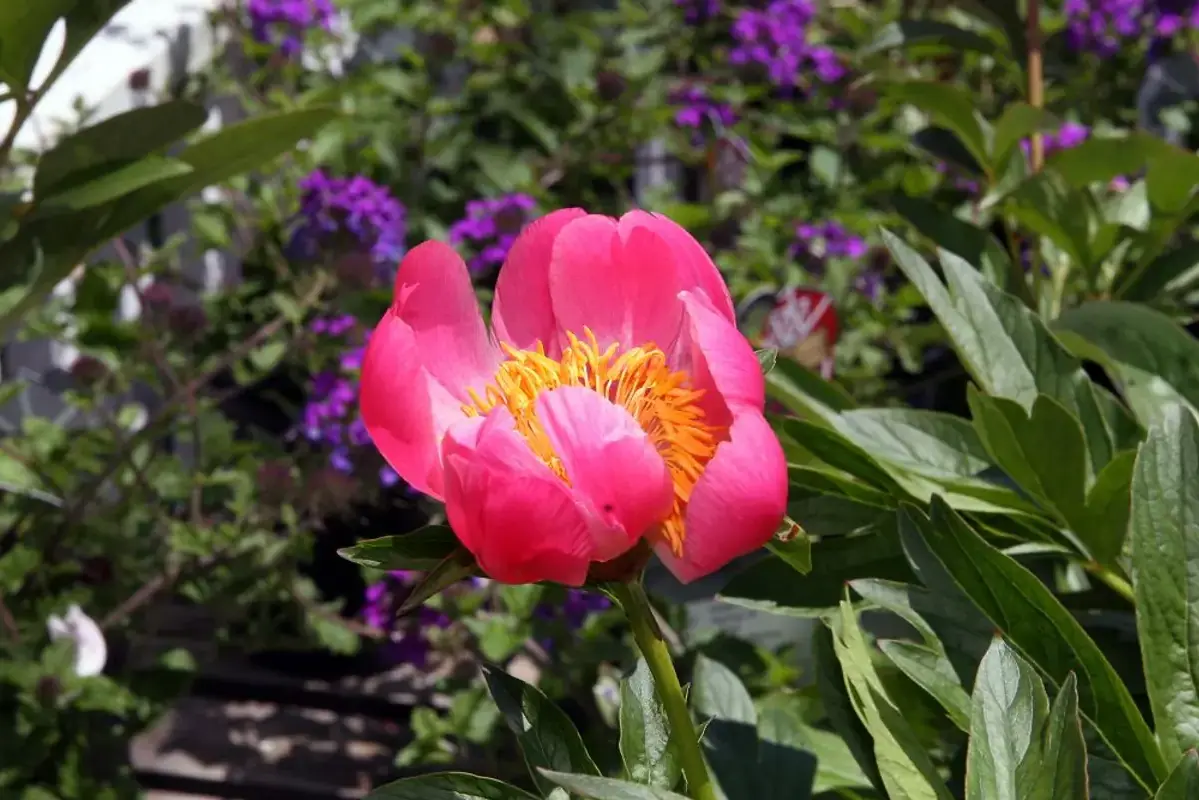
Will brushing the ants from a peony prevent its tight bud from opening? This guide works alongside the peony opening and care guide so you can separate the first observation from the next action.
Shiny nectar on sepals
Sticky outer bud parts can be a normal food source for visiting ants.
Hard bud or yielding bud
A very immature bud is not made ready by the presence of insects.
Ants versus colonies
Check for aphids if leaves carry soft-bodied clusters and widespread honeydew.
Firm neck and dry petals
Damaged tissue needs separate evaluation from normal insect visits.
Read the evidence before acting
A measured care sequence
- 01Inspect before bringing indoors
Look at the green sepals and leaf undersides while stems remain supported.
- 02Remove visitors gently
A soft brush or light shake may suffice. Illinois Extension also describes a brief water dip for peony buds; do not soak an entire mixed bouquet.
- 03Let surfaces shed water
If dipping was needed, drain the head gently and keep petals out of a sealed sleeve or damp crowd.
- 04Check bud progress
Compare the same bud the next day. Record softening or petal expansion rather than counting ants as a maturity test.
Keep, adjust or remove?
- Shiny nectar on sepalsSticky outer bud parts can be a normal food source for visiting ants.
- Hard bud or yielding budA very immature bud is not made ready by the presence of insects.
- Ants versus coloniesCheck for aphids if leaves carry soft-bodied clusters and widespread honeydew.
- Firm neck and dry petalsDamaged tissue needs separate evaluation from normal insect visits.
Cleanly handled peonies can open without their visitors; choose stems by developmental stage, not the amount of ant activity. For a related symptom, return to the peony opening and care guide rather than applying several changes at once.
Research notes
Sources and editorial method
This guide turns general postharvest and preservation advice into visible household checks. Timing and thresholds are starting points: cultivar, harvest stage, transport, room humidity and vase condition can change how a particular flower responds.


