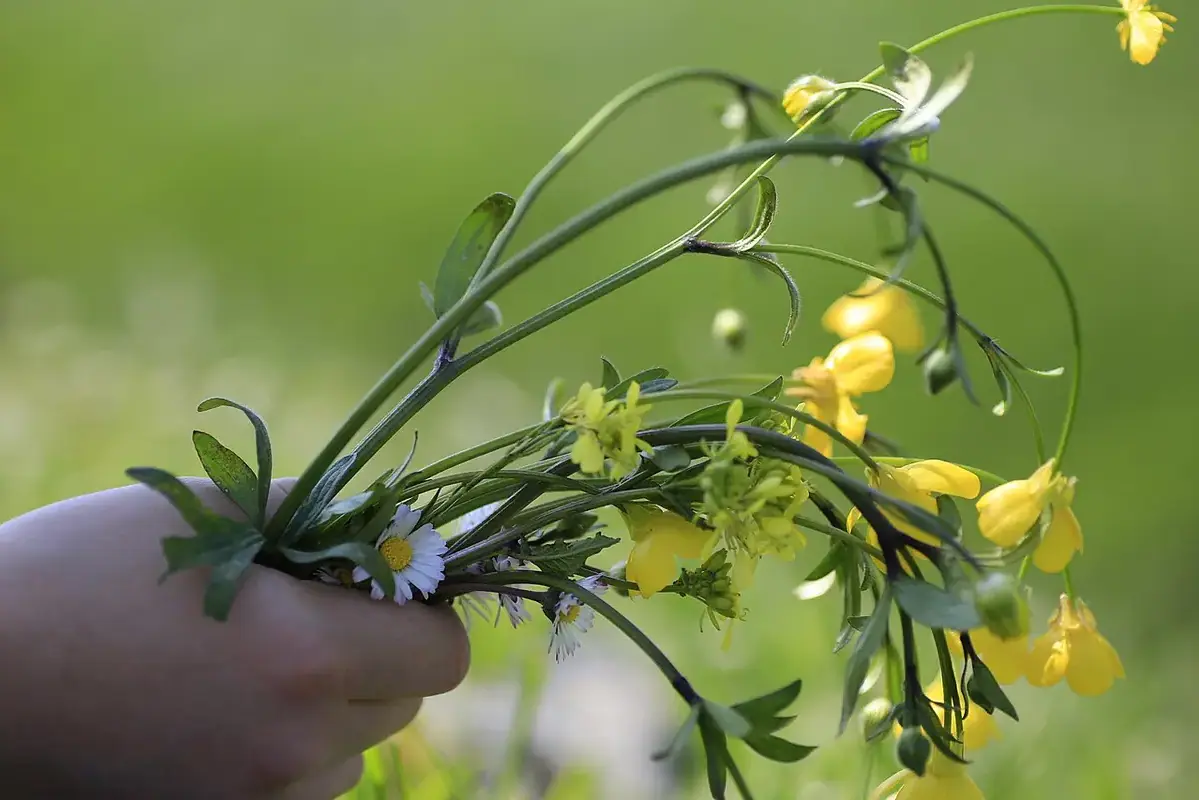
A children's activity table needs a flower display that tolerates bumps and does not invite tasting, sap contact or pollen rubbing. Choose short stems in a broad stable vessel, keep the display out of the work zone and confirm plant identity before bringing unfamiliar flowers into the room. This guide works alongside the safe household placement guide so you can separate the first observation from the next action.
Can a small bump tip it?
Stability matters more than visual height at a busy table.
Is the species identified?
Unknown sap or plant parts should not be used around children.
Can hands grab petals or water?
A display within reach becomes a handling and spill problem.
Read the evidence before acting
A measured care sequence
- 01Confirm the flowers
Record species and avoid plants known to irritate or produce accessible sap and thorns.
- 02Build for stability
Use a broad base, short stems and enough water to support the stems without overflowing.
- 03Place beyond reach
Keep the vase behind the activity boundary and away from scissors, food and drinks.
- 04Supervise and reset
Remove the display immediately after the activity and wash hands after handling.
Keep, adjust or remove?
- Can a small bump tip it?Stability matters more than visual height at a busy table.
- Is the species identified?Unknown sap or plant parts should not be used around children.
- Can hands grab petals or water?A display within reach becomes a handling and spill problem.
If a child touches sap, pollen or an unknown plant and develops symptoms, follow the caregiver's medical plan and contact professional help. Do not wait for the arrangement to “settle.” For a related symptom, return to the safe household placement guide rather than applying several changes at once.
Research notes
Sources and editorial method
This guide turns general postharvest and preservation advice into visible household checks. Timing and thresholds are starting points: cultivar, harvest stage, transport, room humidity and vase condition can change how a particular flower responds.


