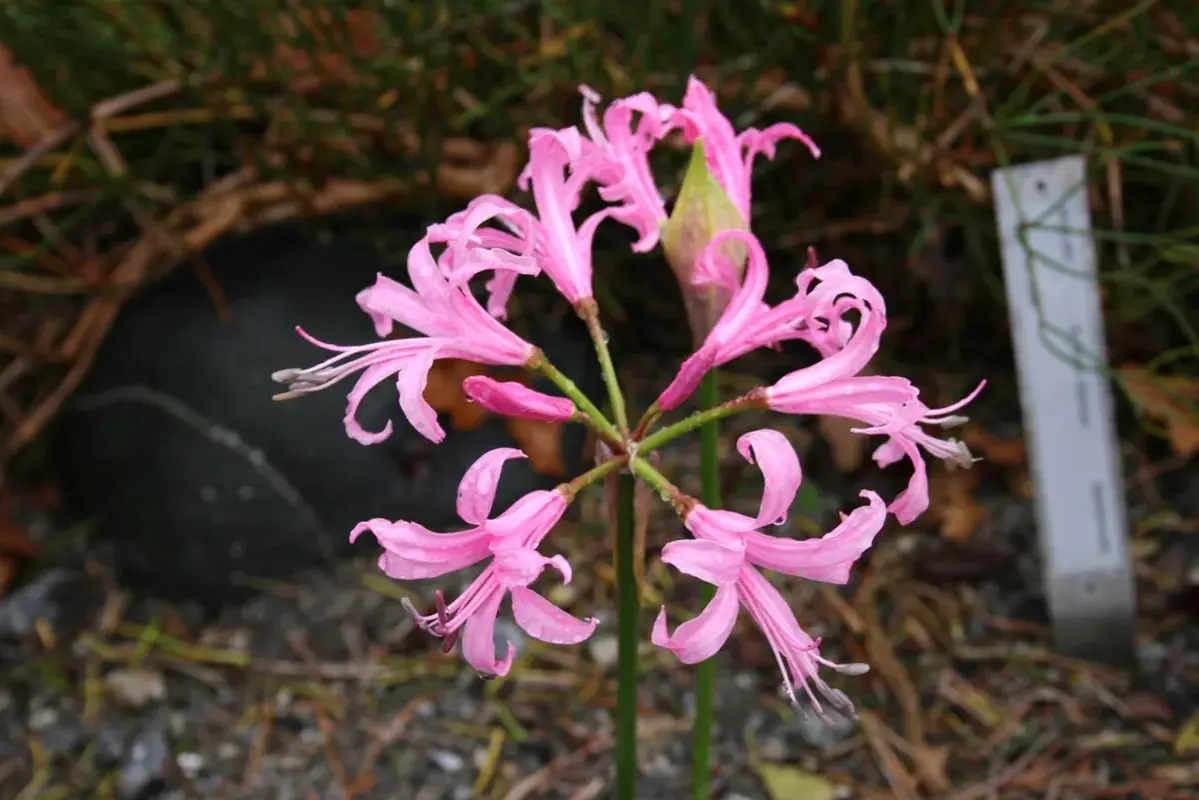
A nerine head looks like a loose starburst: narrow petals curl backward and long filaments reach beyond them. Should the curled petals be flattened or the fine stalks tied together? Those details are part of its normal flower structure. The useful distinction is between an intentional-looking curl on firm tissue and a limp, discoloured flower on a failing stalklet. This guide works alongside the dry handling around pollen-bearing flowers so you can separate the first observation from the next action.
Compare curls across the flower head
Firm, similarly recurved petals on several flowers fit normal nerine form. A single wet or collapsing petal requires a different decision from a consistent curl.
Distinguish stamens from broken stalks
Pollen-bearing anthers sit at the ends of slender filaments. Do not trim all projecting structures simply to tidy the outline.
Check where the small flower stalks meet
The main junction should not carry a tight tie or rest against a hard rim. Compression here can affect several otherwise sound flowers.
Trace its own stalklet before grooming
One flower can fade while others remain attractive. Identify its attachment before cutting so a local removal does not damage the entire cluster.
Read the evidence before acting
A measured care sequence
- 01Unpack without dragging the umbel
Open wrapping outward and hold the main stalk below the branching point. Do not pull the starburst through a tight sleeve or grip it like a compact rose head.
- 02Set support below the branches
Choose a stable vase that contacts the lower stalk without trapping the small flower stalklets. Make a clean basal cut and keep the flower cluster well clear of the water.
- 03Leave a perimeter for the stamens
Turn the vase gently to inspect all sides. Move nearby broad leaves or flower faces away from the projecting anthers rather than bending the filaments back into the head.
- 04Groom one spent flower at a time
When a flower is clearly finished, support its stalklet and use clean small scissors if the attachment is accessible. Leave it alone until you can remove it without slicing a neighbouring stalklet.
Keep, adjust or remove?
- Compare curls across the flower headFirm, similarly recurved petals on several flowers fit normal nerine form. A single wet or collapsing petal requires a different decision from a consistent curl.
- Distinguish stamens from broken stalksPollen-bearing anthers sit at the ends of slender filaments. Do not trim all projecting structures simply to tidy the outline.
- Check where the small flower stalks meetThe main junction should not carry a tight tie or rest against a hard rim. Compression here can affect several otherwise sound flowers.
- Trace its own stalklet before groomingOne flower can fade while others remain attractive. Identify its attachment before cutting so a local removal does not damage the entire cluster.
Recheck the umbel junction and the firmness of individual flowers, not whether every petal lies flat. The graceful curl is a feature to preserve, while wet collapse is a reason to remove affected material. For a related symptom, return to the dry handling around pollen-bearing flowers rather than applying several changes at once.
Research notes
Sources and editorial method
This guide turns general postharvest and preservation advice into visible household checks. Timing and thresholds are starting points: cultivar, harvest stage, transport, room humidity and vase condition can change how a particular flower responds.