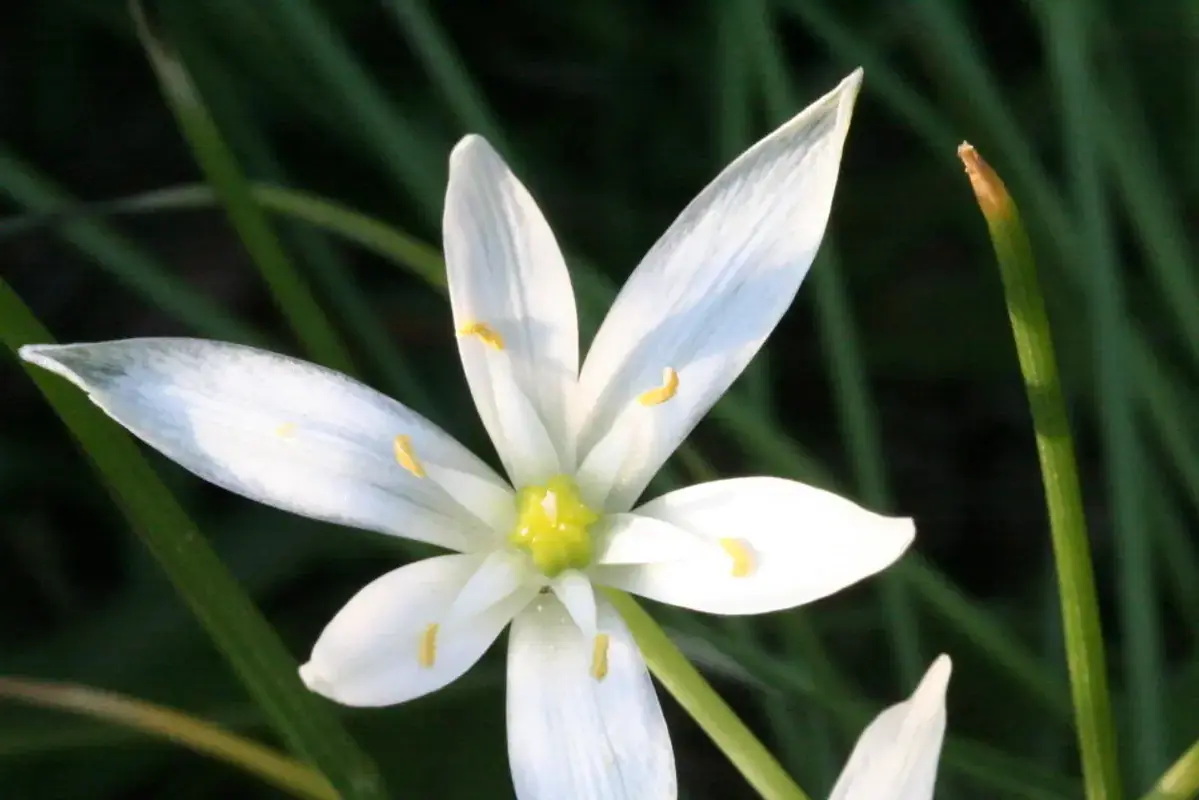
What helps cut Ornithogalum open gradually without bending the spray or burying the lower florets in water? This guide works alongside the bud-opening care guide so you can separate the first observation from the next action.
Lower flowers open before upper buds
A mixed open-and-closed spray can be developing normally rather than failing.
Straight lower stem without a soft bend
The long stem needs support at the vessel, not pressure around the star-shaped flowers.
Leaves dipping into water
Submerged leaves increase debris and can obscure the lower stem.
Dry, firm petals versus translucent tissue
Dry ageing can be groomed; wet spreading tissue should be isolated.
Read the evidence before acting
A measured care sequence
- 01Choose the stem
Select scapes with firm bases and a mix of developing buds and open stars rather than a collapsed top.
- 02Condition promptly
Recut cleanly, place in prepared water and keep the floral spray above the rim.
- 03Give opening room
Use indirect light and a calm position; do not mist the florets or force the stalk straight.
- 04Review the lower flowers
Remove spent or wet florets during the water check and keep the scape if its base remains firm.
Keep, adjust or remove?
- Lower flowers open before upper budsA mixed open-and-closed spray can be developing normally rather than failing.
- Straight lower stem without a soft bendThe long stem needs support at the vessel, not pressure around the star-shaped flowers.
- Leaves dipping into waterSubmerged leaves increase debris and can obscure the lower stem.
- Dry, firm petals versus translucent tissueDry ageing can be groomed; wet spreading tissue should be isolated.
Judge the spray by floret condition and scape firmness together, not by how quickly the highest bud opens. For a related symptom, return to the bud-opening care guide rather than applying several changes at once.
Research notes
Sources and editorial method
This guide turns general postharvest and preservation advice into visible household checks. Timing and thresholds are starting points: cultivar, harvest stage, transport, room humidity and vase condition can change how a particular flower responds.