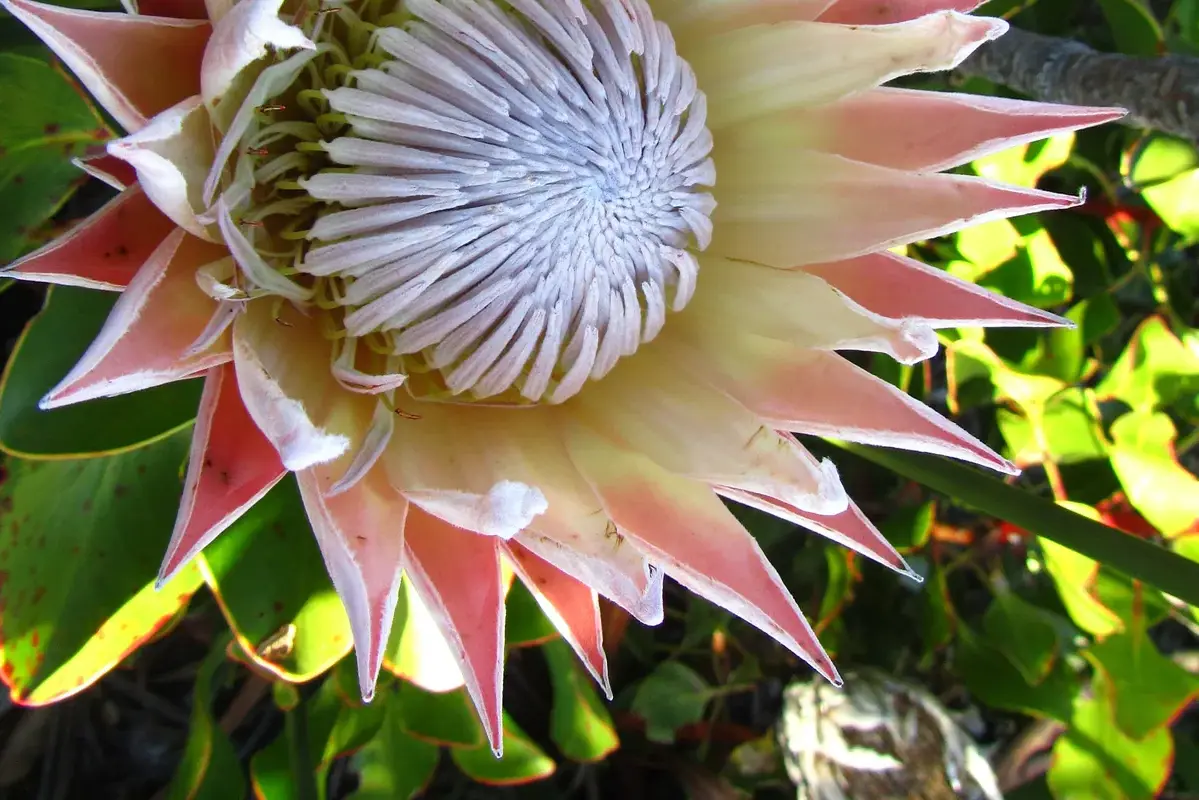
A protea has firm coloured outer structures and a textured centre. The centre looks drier than a rose petal; does it need misting? Protea flower heads contain many small flowers surrounded by showy bracts. Their normal texture should not be confused with a single wet or decaying patch. This guide works alongside the handling another textured flower without rubbing it so you can separate the first observation from the next action.
Compare colour and firmness
Firm bracts can feel stiff without being dehydrated; a wet translucent patch is a different sign.
Look for even texture versus local change
A uniform dry-looking flower structure differs from localized collapse, damp fuzz or an unusual musty smell.
Check rubbing against other stems
Crowding can bruise the bract tips and mask a deteriorating centre.
Inspect the cut stalk
A firm head on a soft or foul lower stalk still needs intervention.
Read the evidence before acting
A measured care sequence
- 01Identify the cut flower
Keep the supplier name and compare the natural bract and central-floret structure before treating a normal feature as a problem.
- 02Prepare the stalk
Use a clean sharp tool on firm tissue and place the cut end in clean water without submerging leaves or the flower head.
- 03Arrange for inspection
Leave open space around the head so you can see the centre and the bract tips without rubbing them.
- 04Check the same patch
Photograph any suspect area and inspect later for spread, softness or odour. Remove deterioration instead of repeatedly wetting the head.
Keep, adjust or remove?
- Compare colour and firmnessFirm bracts can feel stiff without being dehydrated; a wet translucent patch is a different sign.
- Look for even texture versus local changeA uniform dry-looking flower structure differs from localized collapse, damp fuzz or an unusual musty smell.
- Check rubbing against other stemsCrowding can bruise the bract tips and mask a deteriorating centre.
- Inspect the cut stalkA firm head on a soft or foul lower stalk still needs intervention.
Separate normal firm texture from a changing damp patch. Support the stalk and keep the head dry while you observe. For a related symptom, return to the handling another textured flower without rubbing it rather than applying several changes at once.
Research notes
Sources and editorial method
This guide turns general postharvest and preservation advice into visible household checks. Timing and thresholds are starting points: cultivar, harvest stage, transport, room humidity and vase condition can change how a particular flower responds.