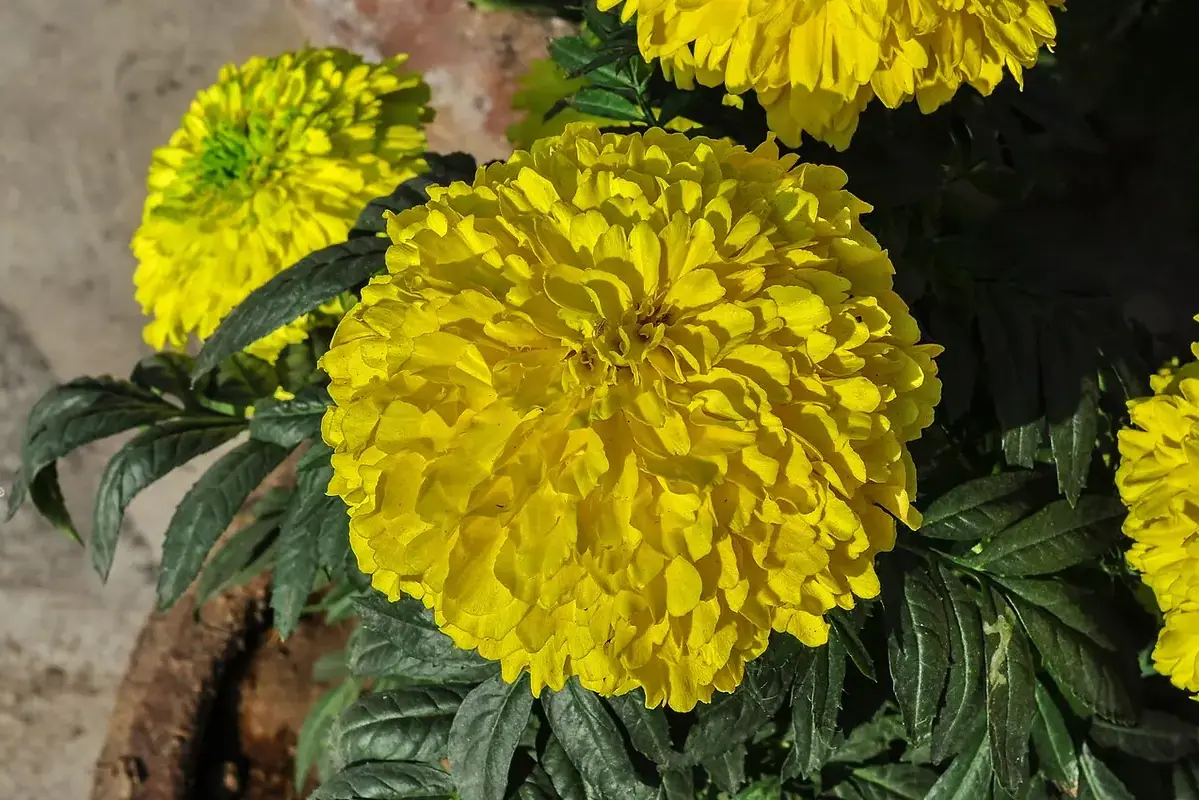
Silica gel is the better choice when the flower's three-dimensional outline matters. It suits roses, zinnias, dahlias, carnations and other blooms that would collapse in a press. If a flower is naturally papery and can hang without losing shape, the air-drying guide uses less material; if you want a flat specimen, use the pressed-flower method.
The practical depth rule
Build support in three layers
Granules above the highest petal keep the flower surrounded and buffer movement when the sealed box is handled.
Pour between petals in small amounts. The gel should support natural spacing without forcing petals closed.
A level base keeps the bloom away from the container floor and absorbs moisture from the underside.
Choose a container before cutting the stem
Use a dry, airtight plastic or glass container at least 3–4 cm wider than the flower head on every side. The lid must close without touching the silica surface. Cut the stem to the length your final project needs—often 2–5 cm for a keepsake bloom—because a full bouquet stem requires a wastefully deep box.
- Use flower-drying silica gel.Small packet desiccants are not a practical substitute for a bed that must surround the petals.
- Start with dry, active granules.Indicator crystals that show saturation should be regenerated according to the manufacturer before use.
- Give each bloom its own clearance.Flower heads must not touch one another or the container wall.
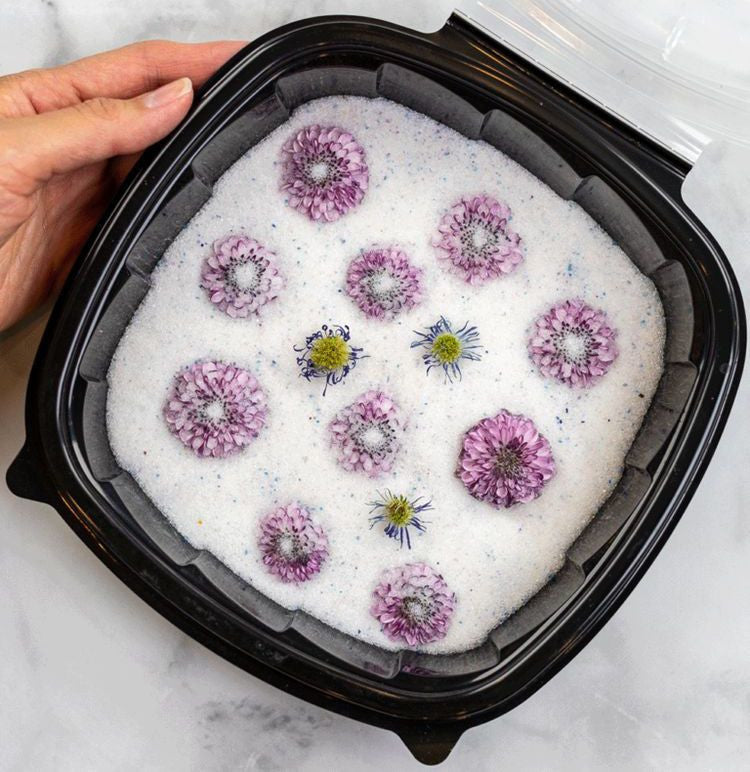
Position the flower by its shape
Roses, zinnias and cup-shaped blooms
Set the shortened stem into the base layer. Spoon gel around the outside first, then into petal gaps so the head does not tip.
Daisies and other flat faces
Rest the face on a smooth gel bed so the ray petals stay level. Cover the back and short stem gradually.
Elongated or asymmetrical flowers
Use only when that is the intended final profile. Support the underside before adding material above it.
Use time as a check schedule, not a promise
Check and remove without snapping petals
- OpenTilt the lid away from the flower
Avoid dropping condensation or loose granules onto the bloom.
- TestTouch one hidden outer petal and the centre lightly
Ready petals feel dry and papery while the centre is firm. A cool flexible centre needs more time.
- PourTip granules away from the flower into a second container
Do not pull the bloom upward through a full bed; unsupported petals can catch and tear.
- CleanUse a soft artist's brush for remaining grains
Support the flower from beneath and brush outward with almost no pressure.
Reuse the gel only after it is dry again
Silica gel can be reused, but absorbed moisture must be removed according to the product instructions; heating temperature and indicator colours vary by brand. Cool regenerated gel completely in a sealed dry container before it touches flowers. Label the storage tub and keep it away from children, pets, food preparation and airborne moisture.
Research notes
Sources and editorial method
University extension guidance supplies the preservation principles and published drying ranges. The household measurements below turn those principles into repeatable checks; they are starting points because bloom thickness, room humidity and desiccant condition change the result.