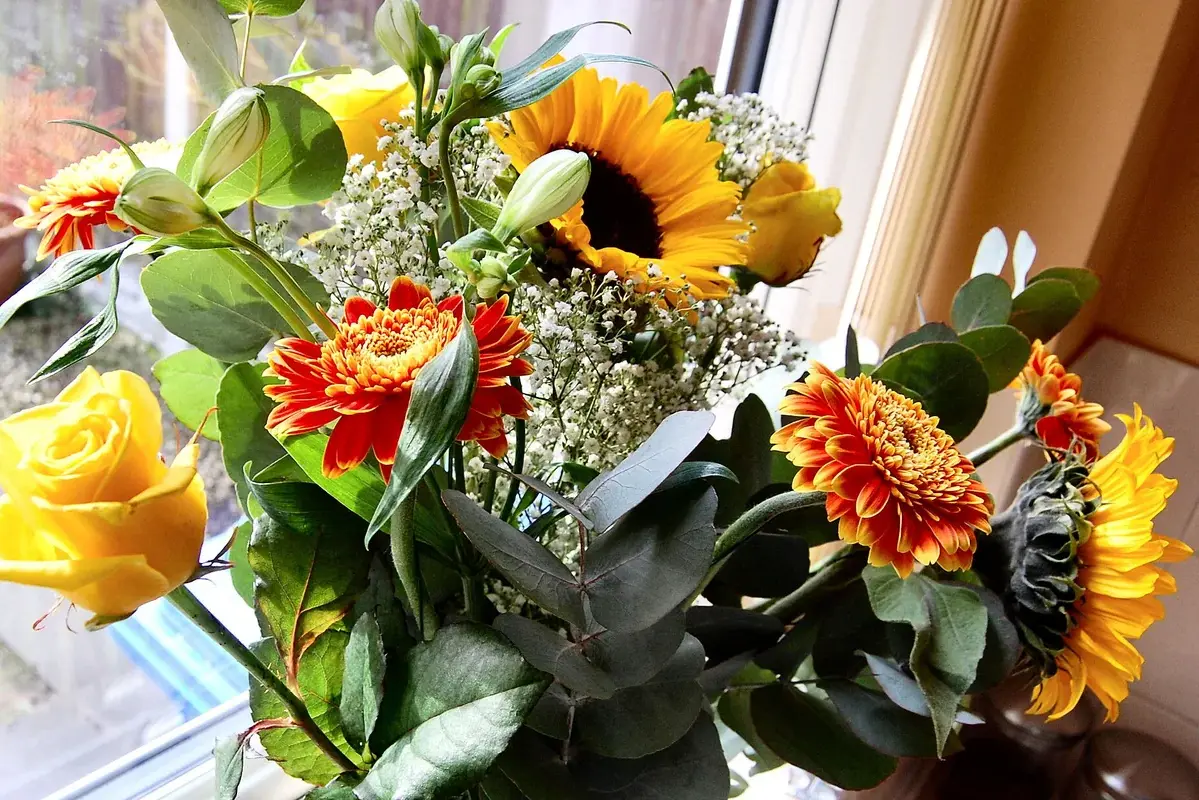
An open kitchen window feels like a fresh place for flowers, but it also sits near cooking, an insect route and frequently used counters. Is the breeze helpful? Watch what happens at petal height while the window and kitchen operate normally. This guide works alongside the the general open-window draft check so you can separate the first observation from the next action.
Test at bloom height
A draft may pass through the flower heads even when it feels pleasant at the sink.
Check frame and blind movement
A casement, curtain or blind can knock an arrangement during normal opening.
Map steam, grease and burner heat
A vase should not sit where splashes or hot pans require people to reach across flowers.
Inspect the heads before closing
An open route can bring visitors onto flowers; identify rather than spray an indoor bouquet.
Read the evidence before acting
A measured care sequence
- 01Clear the working surface
Pick a location away from the sink splash zone, food-contact counter and stove. Test the empty vessel before adding water.
- 02Open the window normally
Observe breeze and the sweep of frames, screens and blinds without holding the vase in place.
- 03Check during cooking
Watch for heat and steam at flower height, then move the display rather than improvising a shield over a burner.
- 04Revisit in different weather
Compare morning and afternoon light and close or relocate flowers during strong wind or rain.
Keep, adjust or remove?
- Test at bloom heightA draft may pass through the flower heads even when it feels pleasant at the sink.
- Check frame and blind movementA casement, curtain or blind can knock an arrangement during normal opening.
- Map steam, grease and burner heatA vase should not sit where splashes or hot pans require people to reach across flowers.
- Inspect the heads before closingAn open route can bring visitors onto flowers; identify rather than spray an indoor bouquet.
The right kitchen spot is determined by actual drafts and work routes, not by how fresh the air feels beside the window. For a related symptom, return to the the general open-window draft check rather than applying several changes at once.
Research notes
Sources and editorial method
This guide turns general postharvest and preservation advice into visible household checks. Timing and thresholds are starting points: cultivar, harvest stage, transport, room humidity and vase condition can change how a particular flower responds.