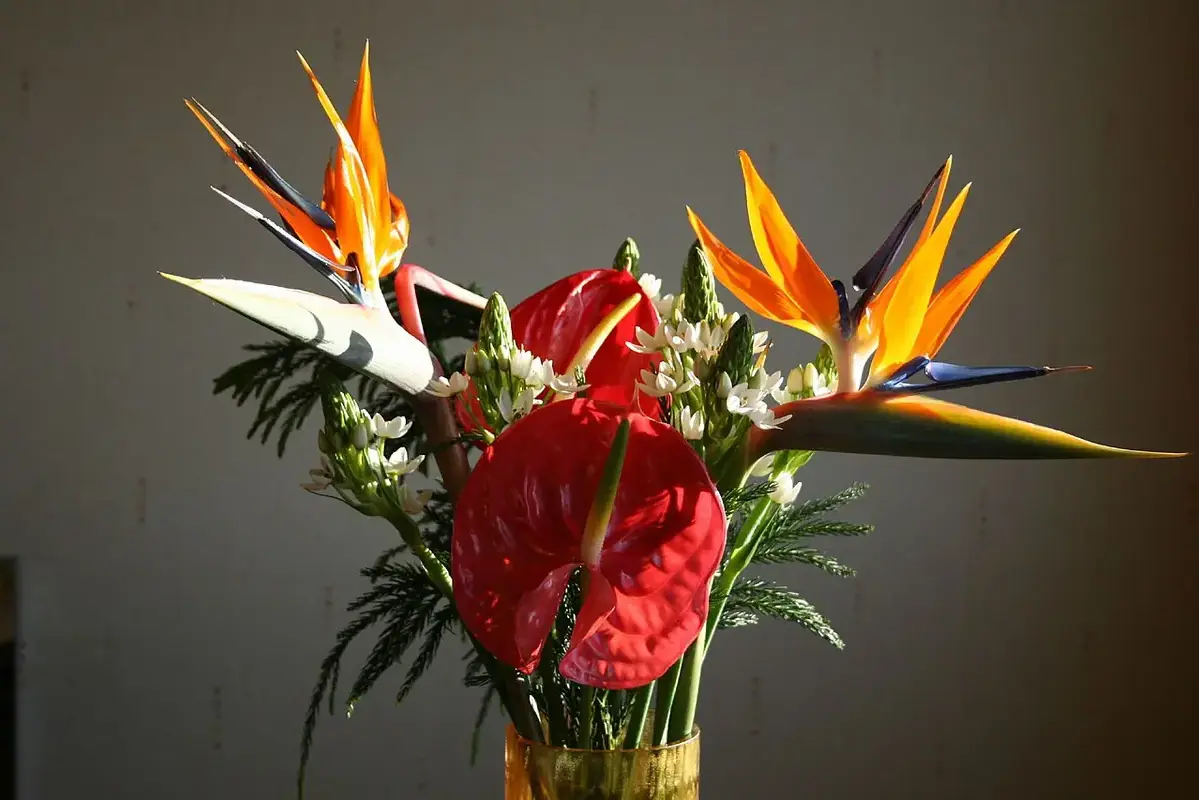
Is a bathroom a suitable overnight place for fresh flowers? This guide works alongside the moisture and mist placement guide so you can separate the first observation from the next action.
Droplets reach the flowers
Visible spray or condensation on petals is a reason to move the vase.
Air exchange after bathing
A fan should not blow directly across the flowers, but the room still needs to dry.
Warm or wet shelf
A damp base can hide a leak and make the vase unstable.
Cleaner or fragrance nearby
Aerosols and vapours can mark petals and contaminate open water.
Read the evidence before acting
A measured care sequence
- 01Map the wet zone
Run the shower normally without flowers and note where steam and droplets collect.
- 02Choose a dry perch
Keep the vase away from the shower, sink edge, radiator and direct fan outlet.
- 03Check after bathing
Wipe condensation from the surrounding surface and inspect petals for droplets or spots.
- 04Move at the first change
Relocate the bouquet if the waterline, scent, petal texture or surface moisture changes.
Keep, adjust or remove?
- Droplets reach the flowersVisible spray or condensation on petals is a reason to move the vase.
- Air exchange after bathingA fan should not blow directly across the flowers, but the room still needs to dry.
- Warm or wet shelfA damp base can hide a leak and make the vase unstable.
- Cleaner or fragrance nearbyAerosols and vapours can mark petals and contaminate open water.
A bathroom is a conditional short-term spot, not a humidity treatment. Dry air, clean surfaces and distance from spray are the deciding factors. For a related symptom, return to the moisture and mist placement guide rather than applying several changes at once.
Research notes
Sources and editorial method
This guide turns general postharvest and preservation advice into visible household checks. Timing and thresholds are starting points: cultivar, harvest stage, transport, room humidity and vase condition can change how a particular flower responds.