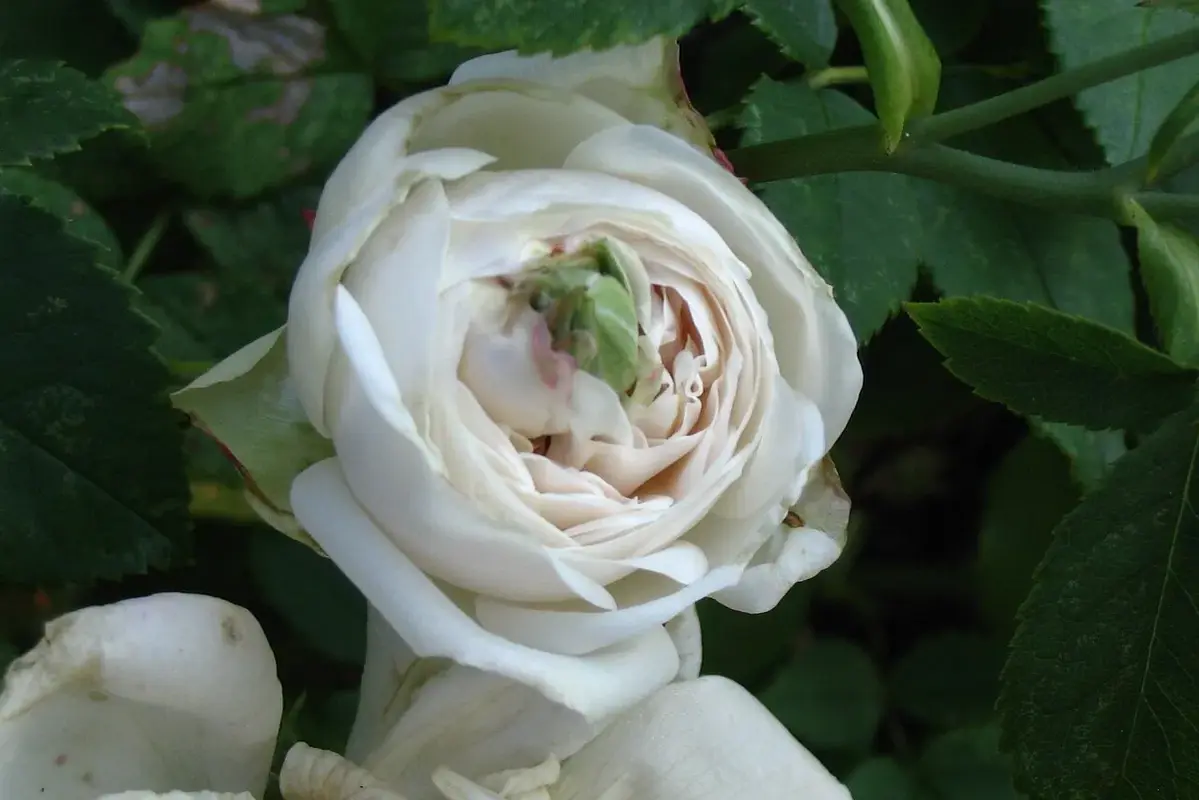
A rose opens around what looks like a second tiny bud or shoot in its center. It may appear to be a weed caught inside the bloom, inviting a quick tug. Before removing it, check whether the new structure is attached as part of the flower. Some roses develop additional growth within a bloom. This guide works alongside the recording an unusual flower before changing it so you can separate the first observation from the next action.
Inner bud grows from the flower center
Do not probe deeply; a visible attachment differs from a loose fragment resting between petals.
Additional bud versus leafy replacement
Proliferation and phyllody describe different appearances; not every green center represents the same disorder.
Firm growth versus wet brown collapse
An unusual structure and ordinary decay can occur together, so assess current condition separately from the shape.
One flower or repeated source-plant symptoms
A single cut rose provides less diagnostic evidence than repeated observations of the living plant and later blooms.
Read the evidence before acting
A measured care sequence
- 01Document before touching the center
Take one whole-flower photograph and a closer side view in diffuse light. Include the label or cultivar name when available and record whether the feature was present on arrival.
- 02Inspect without excavation
Look for visible attachments, fresh petals and the condition of the neck. Do not use tweezers, a knife or forceful petal peeling to prove what is inside.
- 03Choose a display decision
Keep a firm unusual bloom if you like its form. If the appearance does not fit the arrangement, remove the head or stem rather than trying to perform corrective surgery.
- 04Review only actual change
At the next daily check, compare softness, odor and spreading discoloration with the initial record. Maintain ordinary rose care instead of increasing food or heat to force a conventional center.
Keep, adjust or remove?
- Inner bud grows from the flower centerDo not probe deeply; a visible attachment differs from a loose fragment resting between petals.
- Additional bud versus leafy replacementProliferation and phyllody describe different appearances; not every green center represents the same disorder.
- Firm growth versus wet brown collapseAn unusual structure and ordinary decay can occur together, so assess current condition separately from the shape.
- One flower or repeated source-plant symptomsA single cut rose provides less diagnostic evidence than repeated observations of the living plant and later blooms.
Keep curiosity separate from treatment. An unusual attached bud is worth documenting, but there is no need to dismantle a sound flower; the practical vase decision remains whether its tissue is firm, clean and enjoyable. For a related symptom, return to the recording an unusual flower before changing it rather than applying several changes at once.
Research notes
Sources and editorial method
This guide turns general postharvest and preservation advice into visible household checks. Timing and thresholds are starting points: cultivar, harvest stage, transport, room humidity and vase condition can change how a particular flower responds.