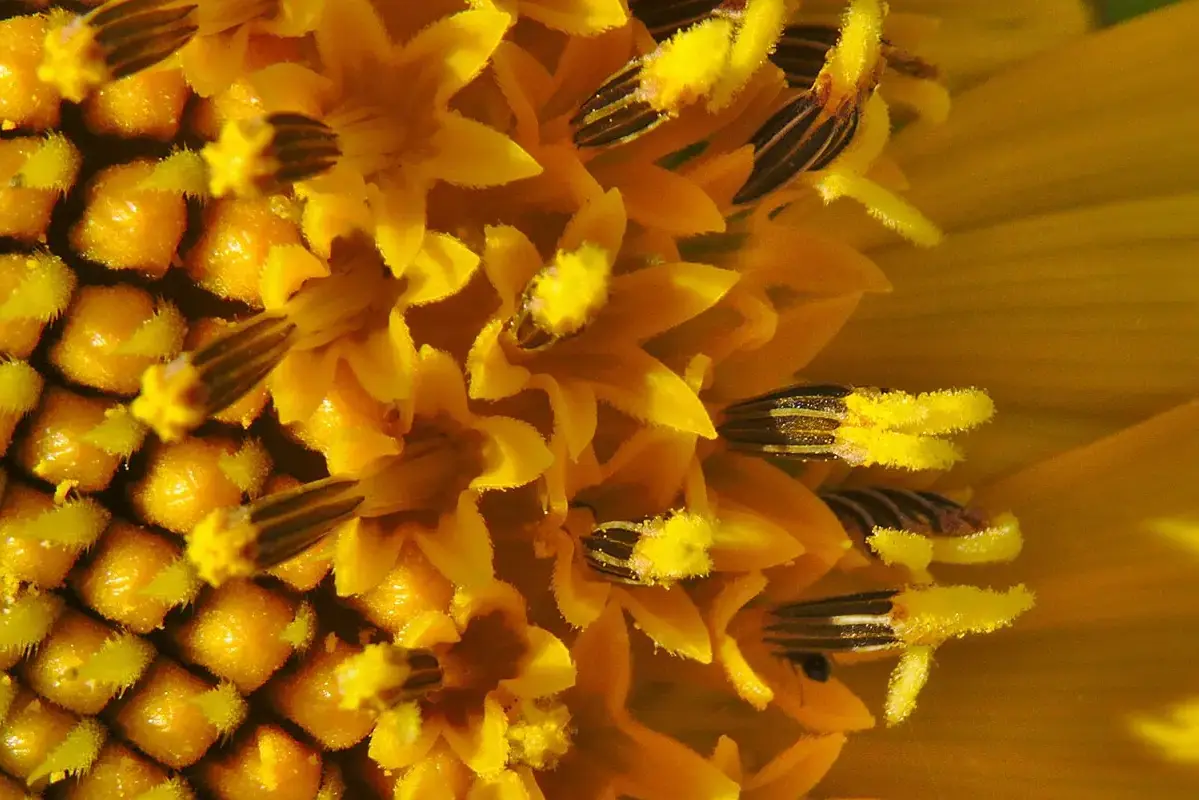
Is the material falling from a sunflower centre a sign that the whole bloom is rotting? This guide works alongside the flower shedding assessment guide so you can separate the first observation from the next action.
Fine powder or recognisable pieces
Pollen and detached small florets have different textures.
Firm dry surface
Check visually and with minimal contact instead of digging into the centre.
Wet clumps or spreading patches
These suggest a different problem from loose dry pollen.
Heavy head and neck
A failing neck may need removal even if the disk looks normal.
Read the evidence before acting
A measured care sequence
- 01Examine fallen material
Use clean paper beneath the head without shaking it hard enough to create additional shedding.
- 02Compare the disk and neck
Look for soft patches, dark wet areas and a crease where the weight is supported.
- 03Choose a display adjustment
Keep a sound shedding bloom away from food and easily stained textiles, using a cleanable surface below it.
- 04Recheck at the same angle
Record whether the head remains firm or develops new wet areas; remove it when structural or tissue failure appears.
Keep, adjust or remove?
- Fine powder or recognisable piecesPollen and detached small florets have different textures.
- Firm dry surfaceCheck visually and with minimal contact instead of digging into the centre.
- Wet clumps or spreading patchesThese suggest a different problem from loose dry pollen.
- Heavy head and neckA failing neck may need removal even if the disk looks normal.
Decide from the condition of the head, not the mere presence of debris, and keep shed material out of the vase water. For a related symptom, return to the flower shedding assessment guide rather than applying several changes at once.
Research notes
Sources and editorial method
This guide turns general postharvest and preservation advice into visible household checks. Timing and thresholds are starting points: cultivar, harvest stage, transport, room humidity and vase condition can change how a particular flower responds.


