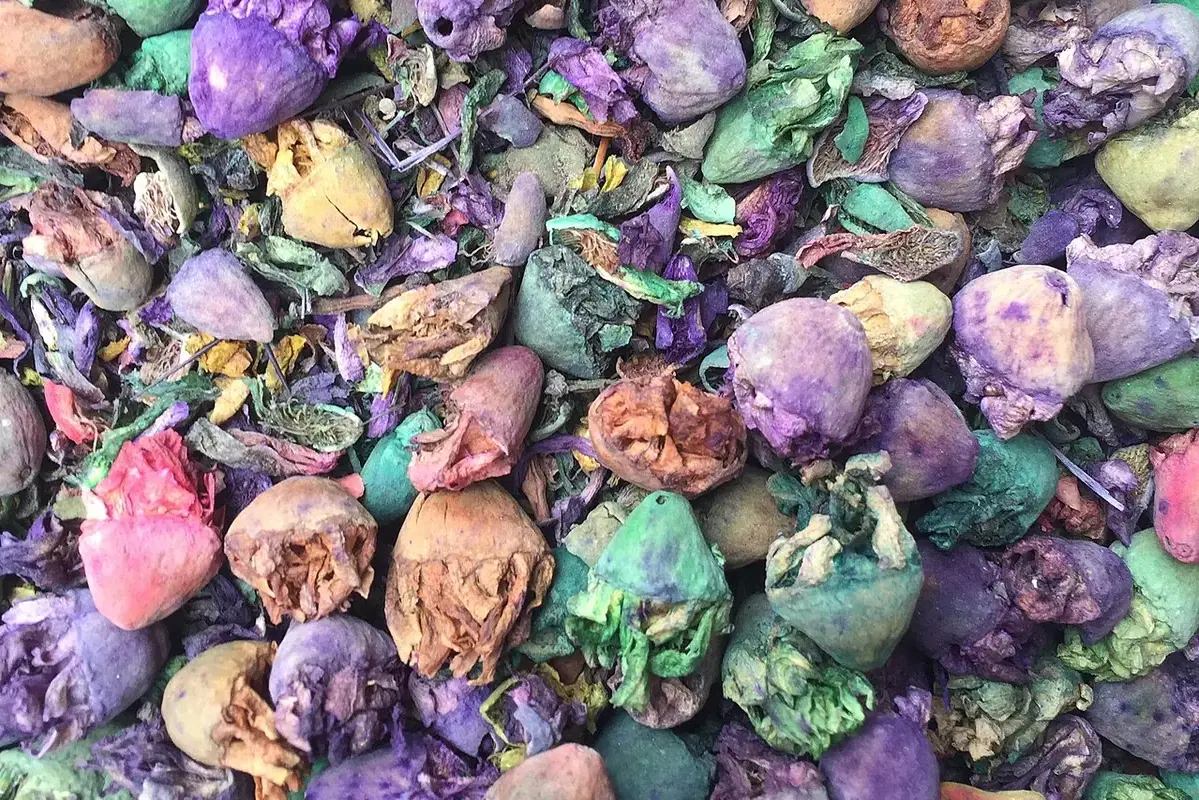
A dried flower is not edible because it is dry, pretty or sold in a craft bundle. Species identity, pesticides, dyes, preservatives, resin, dust, mould and handling history all matter. Food-safe herbs are grown, processed and labelled for consumption; decorative flowers are not automatically interchangeable. This guide works alongside the air-drying candidate guide so you can separate the first observation from the next action.
Do you know the exact species?
Common names do not establish food safety.
Was it dyed, sprayed or preserved?
Craft treatments are not food ingredients.
Is there dust, mould or odour?
Dryness does not make contaminated material safe.
Read the evidence before acting
A measured care sequence
- 01Label the storage
Mark decorative material “not for food” and keep it away from tea, spices and children.
- 02Separate culinary purchases
Do not pour craft flowers into a food jar or reuse a craft container for edible herbs.
- 03Inspect before display
Remove musty or fuzzy material without shaking it through the kitchen.
- 04Respond to ingestion
If someone eats unknown material, retain the packaging and contact local poison or medical services.
Keep, adjust or remove?
- Do you know the exact species?Common names do not establish food safety.
- Was it dyed, sprayed or preserved?Craft treatments are not food ingredients.
- Is there dust, mould or odour?Dryness does not make contaminated material safe.
Never turn a sentimental dried bouquet into tea. If the material was already swallowed, seek product-specific professional advice rather than waiting for a flower-care symptom. For a related symptom, return to the air-drying candidate guide rather than applying several changes at once.
Research notes
Sources and editorial method
This guide turns general postharvest and preservation advice into visible household checks. Timing and thresholds are starting points: cultivar, harvest stage, transport, room humidity and vase condition can change how a particular flower responds.


