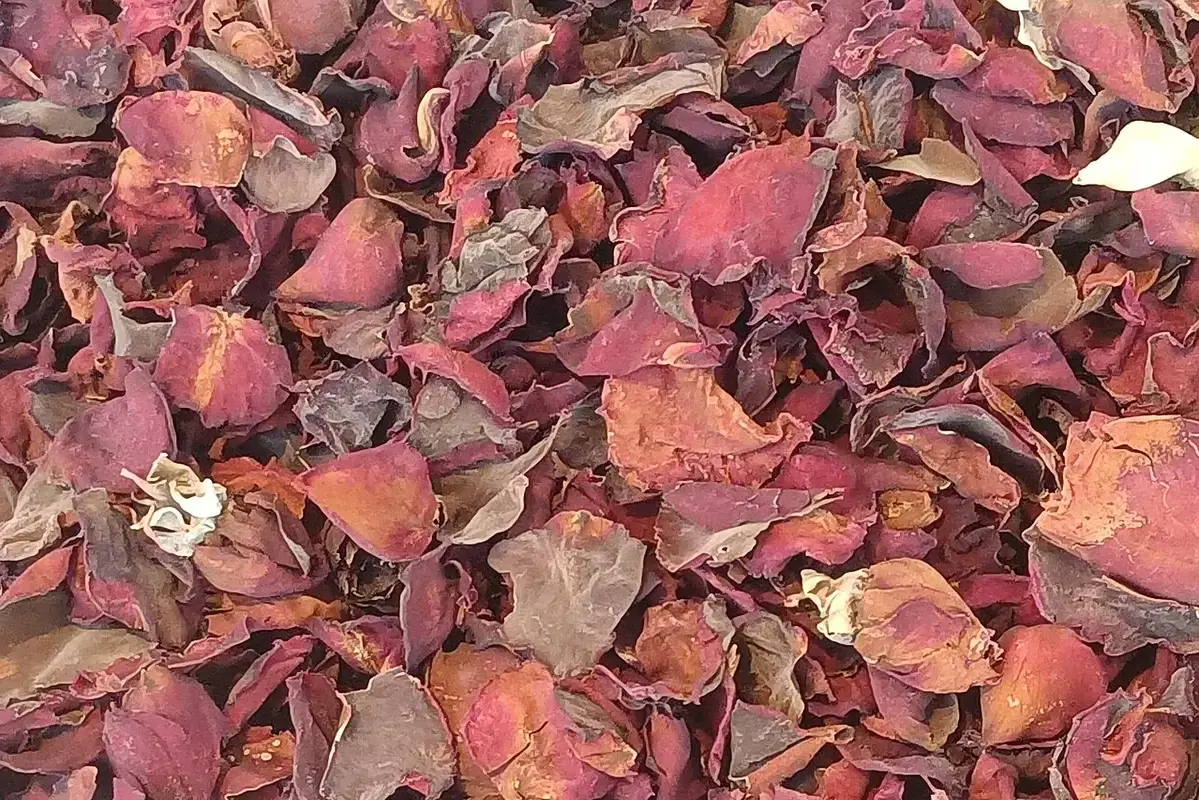
What is the safest simple way to dry rose petals separately for a craft project? This guide works alongside the air-drying candidate guide so you can separate the first observation from the next action.
Dry and unmarked petals
Wet, bruised or already spotted petals are more likely to brown or decay.
Single layer or overlap
Overlapping petals retain moisture at the contact points.
Flexible or crisp
Flexibility can mean the centre is not finished even when the edge feels dry.
Neutral or musty
A musty smell is a reason to discard the batch.
Read the evidence before acting
A measured care sequence
- 01Sort before drying
Remove wet, bruised and strongly stained petals; do not rinse them immediately before the process.
- 02Lay one layer
Keep petals apart on clean paper or mesh in a shaded, dry room.
- 03Check the underside
After the first day, lift a few petals and replace paper if it feels cool or damp.
- 04Store when crisp
Use a labelled airtight container only after the petals are fully dry and free of odour.
Keep, adjust or remove?
- Dry and unmarked petalsWet, bruised or already spotted petals are more likely to brown or decay.
- Single layer or overlapOverlapping petals retain moisture at the contact points.
- Flexible or crispFlexibility can mean the centre is not finished even when the edge feels dry.
- Neutral or mustyA musty smell is a reason to discard the batch.
Separate petals dry more predictably than a whole rose, but only if you keep the layer thin and wait for a crisp, clean finish. For a related symptom, return to the air-drying candidate guide rather than applying several changes at once.
Research notes
Sources and editorial method
This guide turns general postharvest and preservation advice into visible household checks. Timing and thresholds are starting points: cultivar, harvest stage, transport, room humidity and vase condition can change how a particular flower responds.