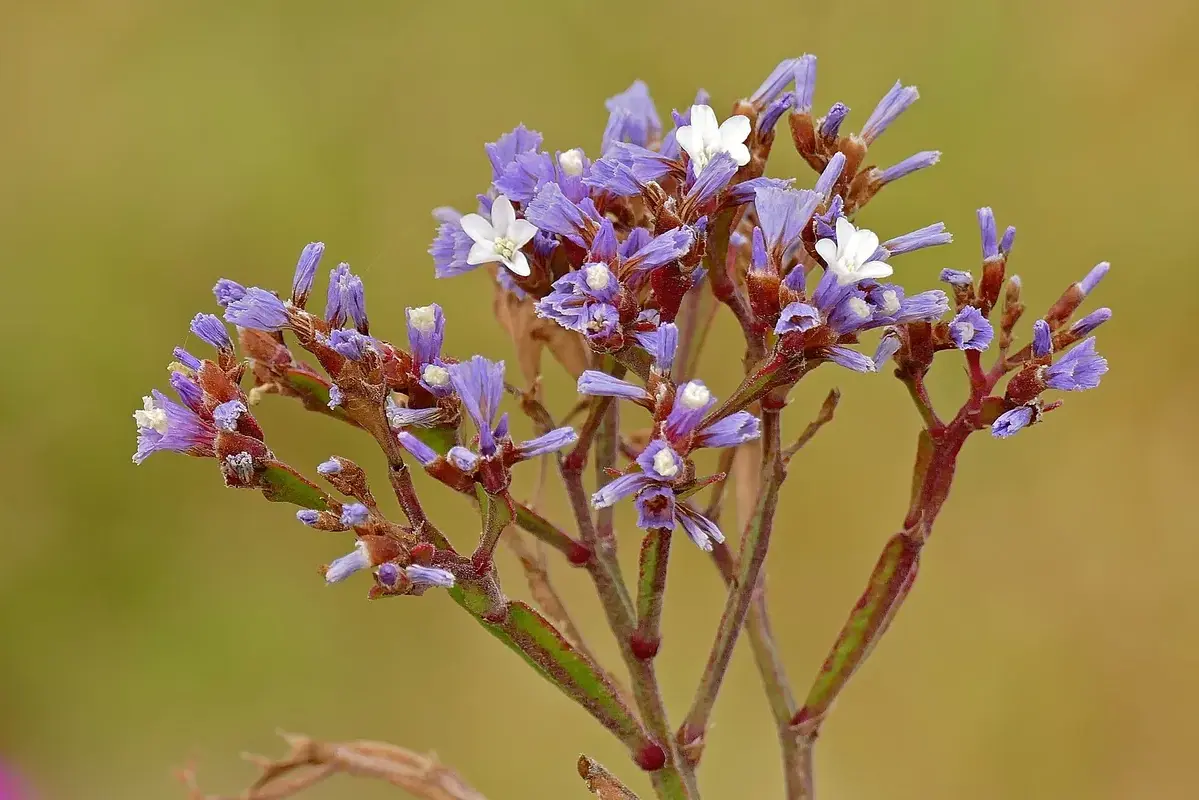
Statice heads feel papery soon after harvest. Can a large bundle be tied and boxed immediately? The colourful papery calyces do not prove that thick stems and the centre of a crowded bunch have finished drying. This guide works alongside the choosing flowers for air drying so you can separate the first observation from the next action.
Papery florets versus actual dryness
Natural crispness of the showy parts is not a moisture measurement for the stem.
Check the hidden middle
Large tied bunches can trap damp leaves and flower clusters against one another.
Feel the thick junctions
A still-flexible or cool thick section can need longer drying than thin branch tips.
Check condensation and odor
A musty room or damp wall is not improved by wrapping the flowers more tightly.
Read the evidence before acting
A measured care sequence
- 01Choose suitable stems
Select undamaged statice with clean firm branches; remove lower leaves that would overlap in a hanging bunch.
- 02Make small bundles
Tie loosely enough to inspect the centre and hang in shade with air around every bunch.
- 03Inspect slow spots
Check the largest branch junction and hidden flowers at intervals without crumbling the papery parts.
- 04Store only sound material
When the stem and head are dry, place them in a rigid dry container; check again for moisture after storage begins.
Keep, adjust or remove?
- Papery florets versus actual drynessNatural crispness of the showy parts is not a moisture measurement for the stem.
- Check the hidden middleLarge tied bunches can trap damp leaves and flower clusters against one another.
- Feel the thick junctionsA still-flexible or cool thick section can need longer drying than thin branch tips.
- Check condensation and odorA musty room or damp wall is not improved by wrapping the flowers more tightly.
Let the thickest part determine storage readiness, not the first papery floret you can feel. For a related symptom, return to the choosing flowers for air drying rather than applying several changes at once.
Research notes
Sources and editorial method
This guide turns general postharvest and preservation advice into visible household checks. Timing and thresholds are starting points: cultivar, harvest stage, transport, room humidity and vase condition can change how a particular flower responds.