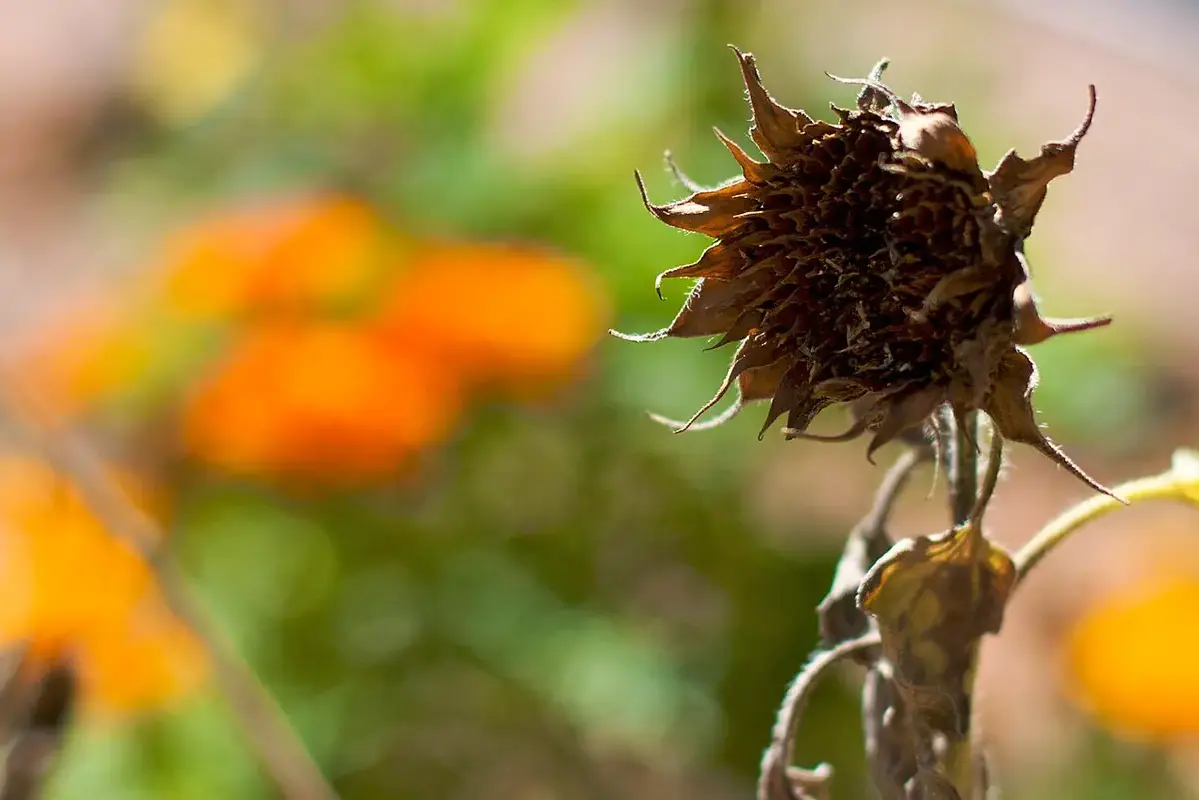
Can a flower that stayed too long in silica be made flexible again? This guide works alongside the dryness and storage assessment guide so you can separate the first observation from the next action.
Fragments from a light touch
Stop testing repeatedly once the flower has demonstrated fragility.
Dry or still soft
Outer brittleness can coexist with an incompletely dried thick centre.
Long time after the first check
A fixed schedule may have left thin petals drying unnecessarily.
Weight borne by the petals
An unsupported extraction can mimic or worsen drying damage.
Read the evidence before acting
A measured care sequence
- 01Stop the drying exposure
Uncover slowly over a tray rather than pulling the flower up through resisting granules.
- 02Assess once
Check the thick centre with minimal handling and note where breakage occurred.
- 03Choose a lower-contact format
Use a shallow protected support for a sound dry head, or preserve loose petals as an explicitly reconstructed design.
- 04Adjust the next batch
Group similar flowers and use an accessible witness bloom so thin material can leave the medium earlier.
Keep, adjust or remove?
- Fragments from a light touchStop testing repeatedly once the flower has demonstrated fragility.
- Dry or still softOuter brittleness can coexist with an incompletely dried thick centre.
- Long time after the first checkA fixed schedule may have left thin petals drying unnecessarily.
- Weight borne by the petalsAn unsupported extraction can mimic or worsen drying damage.
Judge success by how much original material remains safely supported, not by whether it can still tolerate being handled like a fresh bloom. For a related symptom, return to the dryness and storage assessment guide rather than applying several changes at once.
Research notes
Sources and editorial method
This guide turns general postharvest and preservation advice into visible household checks. Timing and thresholds are starting points: cultivar, harvest stage, transport, room humidity and vase condition can change how a particular flower responds.


