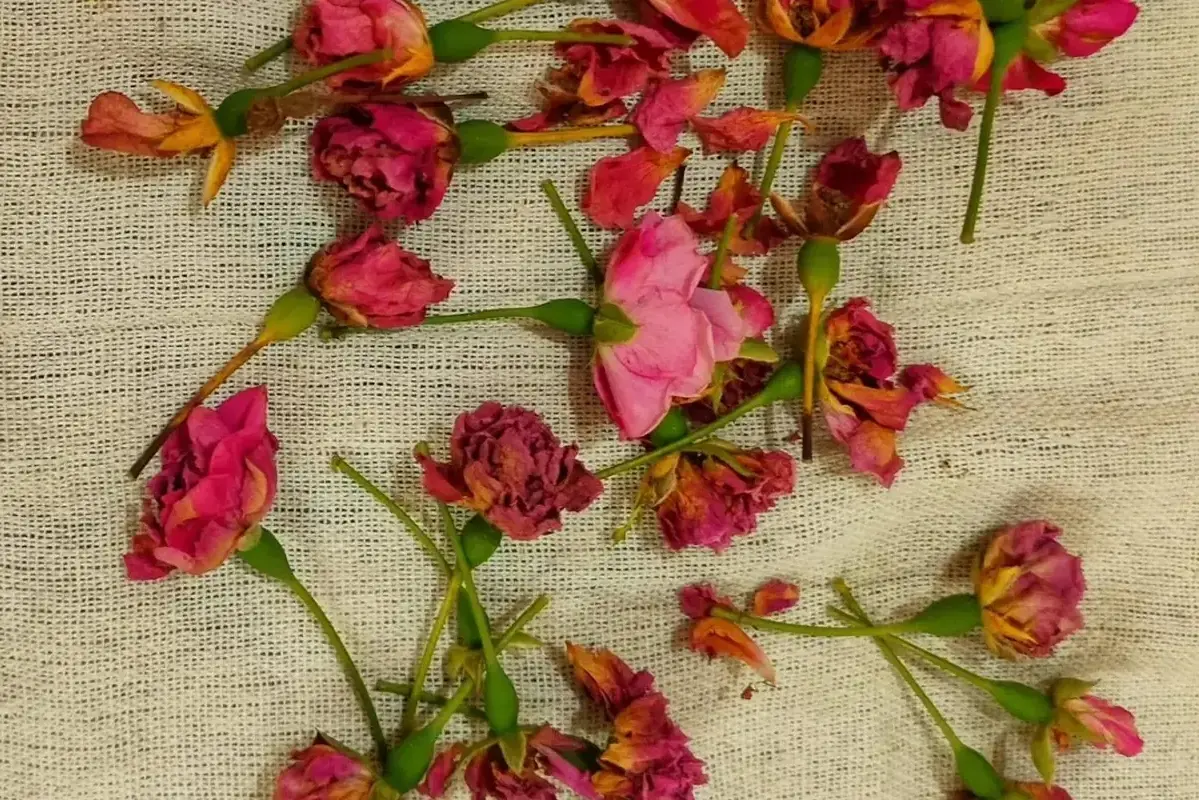
What should you inspect before sealing dried flowers inside a keepsake enclosure? This guide works alongside the dried flowers becoming damp guide so you can separate the first observation from the next action.
Crisp or cool and flexible tissue
A cool flexible centre can still hold moisture even when the outer petals look dry.
Neutral or musty smell
Mustiness is a stop signal for sealing and a reason to isolate the batch.
Powder, fuzz or unexplained specks
Loose plant dust differs from fuzzy growth or active pest evidence.
Shape holds during a gentle lift
A collapsing attachment needs support or a different display plan.
Read the evidence before acting
A measured care sequence
- 01Prepare a clean station
Use white paper, dry hands and a well-lit room away from food, humidity and direct sun.
- 02Inspect the thickest areas
Lift by the strongest stem or backing and check centres, joints and undersides without shaking the specimen.
- 03Separate uncertain pieces
Use a temporary labelled envelope or open tray; do not place questionable material with sound flowers.
- 04Seal only after review
Choose a dry enclosure with clearance, record the date and check the keepsake again after it settles.
Keep, adjust or remove?
- Crisp or cool and flexible tissueA cool flexible centre can still hold moisture even when the outer petals look dry.
- Neutral or musty smellMustiness is a stop signal for sealing and a reason to isolate the batch.
- Powder, fuzz or unexplained specksLoose plant dust differs from fuzzy growth or active pest evidence.
- Shape holds during a gentle liftA collapsing attachment needs support or a different display plan.
A keepsake should preserve a known dry condition, not hide an unresolved one; leave the enclosure open whenever smell, softness or growth remains uncertain. For a related symptom, return to the dried flowers becoming damp guide rather than applying several changes at once.
Research notes
Sources and editorial method
This guide turns general postharvest and preservation advice into visible household checks. Timing and thresholds are starting points: cultivar, harvest stage, transport, room humidity and vase condition can change how a particular flower responds.